A commercial curved treadmill can deliver a demanding, self-powered workout without relying on a motor. Its curved belt encourages natural foot placement while letting you control pace, effort, and acceleration.
We compared 10 curved treadmills across resistance options, displays, belt construction, intended use, and overall practicality to help you choose the right model for a gym, studio, or serious home setup.
Best 10 Commercial Curved Treadmill Picks for 2026
Balanced Resistance Trainer
CT400 Self-Generated Curved Treadmill
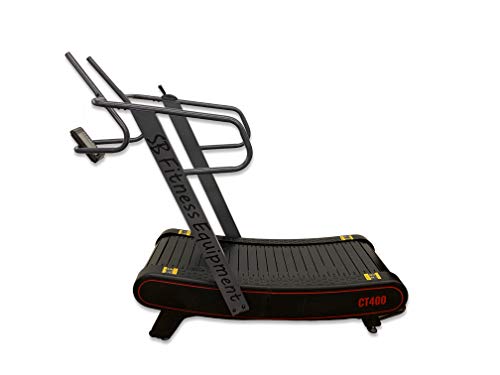
- Self-powered belt with three resistance levels
- Flexible slats help absorb impact
- 375-pound capacity with workout metrics display
Best For: HIIT, sport-specific training, and natural-pace workouts
Heavy-Duty Commercial Pick
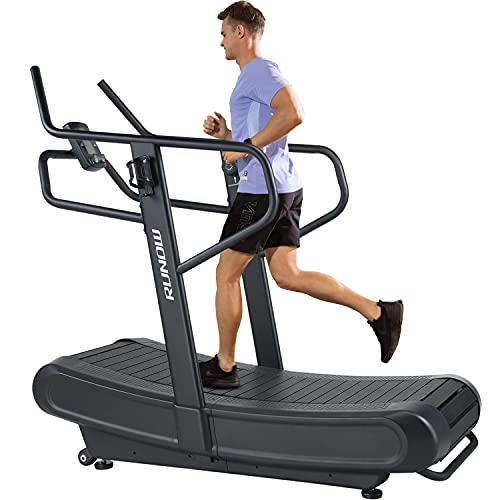
- Commercial-grade frame with 450-pound capacity
- Four resistance levels for varied training
- LCD tracks pace, watts, calories, and resistance
Best For: Gyms, athletes, and high-capacity training
Connected Home Option

- Eight magnetic resistance levels
- Bluetooth access to the SunnyFit app
- 59-inch belt with shock absorption and mobility features
Best For: Home workouts with app connectivity and flexible resistance
Wide-Belt Powerhouse
450-LB Commercial Manual Treadmill

- Spacious 63-by-19-inch curved running belt
- Four resistance levels with self-powered operation
- Heavy-duty steel frame rated near 450 pounds
Best For: Intense training and users who need extra running space
Best Home Gym Pick
Sole Fitness C80 Curved Manual Treadmill

- Self-powered slat belt needs no electricity
- Eight magnetic resistance levels
- 330-pound capacity with Bluetooth LCD console
Best For: Home runners and sprint-focused cardio sessions
Best High-Capacity Choice
Curved Manual Treadmill with 8 Resistance Levels

- 500-pound maximum weight recommendation
- Large 78.74-by-35.43-inch running surface
- Eight resistance levels and transport wheels
Best For: Users wanting a stable, spacious manual treadmill
Best Light Commercial Option
SB Fitness CT550 Curved Treadmill

- Rated for home or light commercial use
- Eight magnetic resistance levels
- Five-year manufacturer warranty
Best For: Light commercial gyms and versatile home training
Best Value Manual Trainer

- Eight magnetic resistance levels
- LCD tracks six workout metrics
- Self-powered design with 440-lb listed capacity
Best For: Adjustable, metric-focused training without electricity
Best Wide-Belt Pick
Commercial-Grade Motorless Curved Treadmill

- 63-by-19-inch running surface
- Eight manual resistance levels
- Speed controlled by body position
Best For: Runners wanting extra belt width and responsive pacing
Best for HIIT
Shock-Absorbing Self-Powered Treadmill

- Five-layer shock-absorbing belt
- Six-level metal resistance control
- Digital monitor includes pulse and wattage
Best For: HIIT and sprint training with responsive manual control
Balanced Resistance Trainer – CT400 Self-Generated Curved Treadmill
The SB Fitness Equipment CT400 is a practical commercial curved treadmill for users who want self-powered running, walking, or HIIT without a motor. Its three resistance levels, shock-absorbing flexible slats, and front digital display support varied training while keeping speed changes immediate and user-controlled.
Best For: Sport-specific training, HIIT, and users who want a self-generated treadmill with straightforward resistance adjustment.
Pros:
- Self-generated design supports running at the user’s natural pace.
- Three resistance levels add training variety and challenge.
- Display tracks time, distance, speed, calories, and total miles.
- Flexible track slats provide shock absorption, and the treadmill supports up to 375 pounds.
Cons:
- The 18-inch deck is narrower than some larger curved treadmill options.
- Its 145-pound build may provide less mass than heavier commercial models.
- The product is listed as open box, so condition should be confirmed before purchase.
The CT400 is a well-rounded choice when adjustable resistance, self-powered operation, and useful workout metrics matter more than a larger running surface. Its included transport wheels and leveling feet also make positioning more manageable.
Heavy-Duty Commercial Pick – RUNOW 6310CB Curved Treadmill
The RUNOW 6310CB is a heavy-duty commercial curved treadmill designed for running, jogging, sprinting, and HIIT. Its manual operation eliminates motor acceleration and deceleration, while four resistance settings and a 450-pound weight recommendation make it suitable for demanding shared-use environments.
Best For: Commercial gyms, athletes, and larger users who need a sturdy, high-capacity manual treadmill.
Pros:
- Commercial-grade construction supports users up to 450 pounds.
- Four manual resistance levels allow more workout customization.
- Five-inch LCD tracks time, distance, calories, watts, speed, pace, and resistance load.
- Transport wheels, a cup holder, and shock-absorbing rubber tread add practical convenience.
Cons:
- At 287 pounds, it is substantially heavier than many home-oriented models.
- The 48-inch deck is shorter than the running surface on some competing curved treadmills.
- Its listed 25-mile-per-hour maximum speed may not align with every specification or use case.
For buyers prioritizing capacity and commercial-grade durability, the RUNOW stands out among these options. The four resistance levels and detailed LCD make it particularly useful for structured training, though its weight calls for a permanent or carefully planned location.
Connected Home Option – Sunny Smart Curved Treadmill
The Sunny Health & Fitness Smart Curved Treadmill brings a more home-friendly approach to the commercial curved treadmill category. It combines a self-powered belt, eight magnetic resistance levels, Bluetooth access to the SunnyFit app, and a 59-inch running surface for walking, jogging, running, or sprinting.
Best For: Home users who want app connectivity, multiple resistance settings, and a lighter treadmill that is easier to reposition.
Pros:
- Eight magnetic resistance levels offer fine workout adjustment.
- Bluetooth connects users to the SunnyFit app without membership fees.
- LED monitoring covers time, calories, speed, distance, pace, and pulse.
- Shock absorption, transport wheels, handlebars, and floor stabilizers support home use.
Cons:
- The 330-pound maximum is lower than the 450-pound capacity of some commercial options.
- It is listed as a home-use product rather than commercial grade.
- Heart-rate monitoring requires the separately sold HR200.
This model is a strong fit for buyers who value digital features and manageable home placement over maximum commercial capacity. Its eight resistance levels and no-speed-limit design still provide room for progressive workouts.
Wide-Belt Powerhouse – 450-LB Commercial Manual Treadmill
This commercial curved treadmill emphasizes a spacious running surface, self-powered operation, and heavy-duty stability. The 63-by-19-inch belt gives users more room for walking, jogging, sprinting, and HIIT, while four resistance levels and a front LCD help make training easier to customize and monitor.
Best For: Users who want a wide, long belt, high weight capacity, and a durable manual treadmill for intense training.
Pros:
- Wide 63-by-19-inch curved belt accommodates varied strides and body sizes.
- Four resistance levels support progression from light jogging to high-intensity work.
- Heavy-duty steel construction is rated for approximately 450 pounds.
- Self-powered operation, low-maintenance crawler components, and transport pulleys simplify ownership.
Cons:
- The 79-inch length and 35-inch width require substantial floor space.
- The supplied notes do not specify the LCD screen size.
- Heart-rate tracking is listed among the metrics, but no separate sensor or connectivity detail is provided.
The wide belt is the key advantage here, especially for larger users or those who want extra stride room during sprint and HIIT sessions. Its large footprint makes it better suited to a dedicated home gym or commercial training area than a compact room.
Best Home Gym Pick – Sole Fitness C80 Curved Manual Treadmill
The Sole Fitness C80 is a practical commercial curved treadmill alternative for home users who want self-powered sprinting and steady-state cardio without a motor or electrical outlet. Its curved slat belt, eight magnetic resistance levels, and Bluetooth LCD console support varied training sessions.
Best For: Home gym users focused on running, sprint intervals, and resistance-based cardio.
Pros:
- Self-powered, motorless design requires no electricity and may need less maintenance.
- Eight magnetic resistance levels accommodate walking, running, and sprint training.
- 19-by-62-inch deck and 330-pound capacity provide useful room and support.
- Bluetooth LCD console tracks speed, distance, time, and heart rate.
Cons:
- Product grade is listed as home use rather than commercial.
- Its one-year parts-and-labor warranty is shorter than some alternatives.
The C80 stands out when you want a quiet, non-motorized curved treadmill with useful resistance control and connected tracking for demanding home workouts.
Best High-Capacity Choice – Curved Manual Treadmill with 8 Resistance Levels
This curved manual treadmill emphasizes stability, space, and user capacity for home workouts. Its heavy-duty steel frame, large running surface, rubber belt, and eight resistance levels make it suitable for walking, running, and HIIT without requiring an outlet.
Best For: Users who prioritize a sturdy frame, generous capacity, and adjustable resistance.
Pros:
- 500-pound maximum weight recommendation and reinforced steel construction support demanding use.
- 78.74-by-35.43-inch running surface gives taller users more stride room.
- Eight resistance levels can be adjusted with a side-mounted tension knob.
- LED display, phone holder, transport wheels, and 90% pre-assembly add convenience.
Cons:
- Heart-rate tracking requires a compatible chest strap or fitness watch, which is not included.
- At 418.5 pounds, it is considerably heavier than many home treadmills.
- Periodic bolt checks and belt cleaning are required for maintenance.
Choose this model if stability and capacity matter more than portability. The broad deck and resistance adjustment suit varied training, while the self-powered design allows flexible placement.
Best Light Commercial Option – SB Fitness CT550 Curved Treadmill
The SB Fitness CT550 is the clearest fit for shoppers specifically comparing a commercial curved treadmill for home or light commercial use. It combines self-generated power with eight magnetic resistance levels, an LCD display, a 20-inch running surface, and a five-year manufacturer warranty.
Best For: Home users or light commercial spaces needing self-generated running and interval training.
Pros:
- Light-commercial product grade supports home, jogging, running, HIIT, and interval training.
- Eight magnetic resistance levels allow adjustable workout intensity.
- Backlit LCD tracks time, speed, distance, calories, and heart rate.
- Built-in water-bottle holder and 20-inch running surface improve workout convenience.
Cons:
- Its 350-pound maximum weight recommendation is lower than the largest model here.
- The supplied specifications list a 22-mile-per-hour maximum speed, but do not describe a wider commercial-duty feature set.
The CT550 is a balanced choice for light commercial or home settings, especially if you value simple self-generated operation, resistance control, workout metrics, and longer warranty coverage.
Best Value Manual Trainer – 2026 8-Level Curved Treadmill
This commercial curved treadmill is a practical choice for users who want self-powered training without a motor or electrical outlet. Its curved deck, eight magnetic resistance levels, LCD tracking, and 440-pound listed capacity make it suitable for varied cardio and anaerobic workouts in a home gym, fitness studio, or commercial-style training space.
Best For: Buyers seeking adjustable resistance, detailed workout metrics, and a heavy-duty non-electric treadmill.
Pros:
- Eight magnetic resistance levels support walking, jogging, and sprint-focused training.
- LCD display tracks time, distance, pace, calories, speed, and heart rate.
- Self-powered operation eliminates the need for a motor or power outlet.
- Built-in transport wheels and a listed 440-pound maximum user capacity add practical versatility.
Cons:
- At 354 pounds, this is a substantial machine to move or reposition.
- The curved manual design requires users to generate the belt movement themselves.
Choose this model if resistance customization and broad metric tracking matter more than powered convenience. Its large, heavy construction is better suited to a dedicated workout area than frequent room-to-room relocation.
Best Wide-Belt Pick – Commercial-Grade Motorless Curved Treadmill
This commercial curved treadmill emphasizes running freedom with a 63-by-19-inch belt, manual speed control, and a motorless design. It is built for users who want to adjust pace through body position while using resistance settings for walking, jogging, or higher-intensity sessions.
Best For: Runners and fitness enthusiasts who prioritize a spacious belt and responsive, self-powered speed control.
Pros:
- The 63-by-19-inch running area provides more lateral room than a narrower belt.
- Eight resistance levels accommodate different workout intensities.
- Speed changes naturally by moving forward or backward on the belt.
- LCD monitor displays workout time, speed, steps, and calories.
Cons:
- The supplied specifications list inconsistent capacity and speed information, so buyers should verify these details before purchase.
- At approximately 77 inches long and 35 inches wide, it requires a dedicated footprint.
This model stands out for its wide running surface and intuitive manual pacing. Confirm the listing’s specifications before ordering, particularly if user capacity or speed limits are important to your training plan.
Best for HIIT – Shock-Absorbing Self-Powered Treadmill
This commercial curved treadmill is designed around self-powered interval work, with a five-layer shock-absorbing belt, six-level metal resistance control, and a heavy-duty steel frame. Its digital monitor and listed 400-pound capacity make it a strong option for demanding home-gym or light-commercial conditioning sessions.
Best For: HIIT, sprint, CrossFit, and conditioning workouts where rapid speed response and impact-conscious belt construction are priorities.
Pros:
- Five-layer rubber belt is designed to absorb impact and provide a high-grip surface.
- Six-level metal resistance knob allows quick intensity changes without motor delay.
- Digital monitor tracks speed, time, distance, calories, pulse, and wattage.
- Heavy-duty steel frame supports a listed maximum user weight of 400 pounds.
Cons:
- The 16.5-inch belt width is narrower than the wide-belt model in this roundup.
- At 316 pounds, it is portable with its wheels and handle but not lightweight.
- The supplied listing includes broad performance and durability claims that may warrant verification.
Consider this treadmill when belt cushioning, instant manual response, and workout-data tracking are central to your training. Its sturdy build and compact-for-its-class dimensions suit a permanent training zone better than casual storage.
How We Picked the Best Commercial Curved Treadmills
We focused on features that matter most in frequent-use cardio equipment: self-powered operation, belt design, resistance adjustment, frame stability, display information, shock absorption, and stated suitability for commercial or light-commercial environments. We also considered whether each treadmill is better suited to sprint intervals, steady running, walking, or mixed training.
Because product specifications and construction can vary, confirm the manufacturer’s weight capacity, dimensions, warranty, assembly requirements, and recommended usage before buying. A treadmill described as commercial-grade may still be intended for light commercial or home use rather than continuous gym traffic.
Quick Comparison
| Feature | What to look for |
|---|---|
| Power source | Self-generated operation eliminates motor maintenance and often reduces energy use. |
| Resistance | Three to eight levels can help tailor effort for walking, running, and interval work. |
| Display | Basic LCD screens commonly show time, speed, distance, calories, or heart-rate data. |
| Best setting | Some models target commercial gyms, while others are more appropriate for home or light-commercial use. |
Key Buying Factors for a Commercial Curved Treadmill
Belt and Frame Construction
Look for a wide, durable running surface, a stable frame, and a belt designed to handle repeated foot strikes. A curved profile should feel smooth rather than jerky, especially during acceleration and deceleration. Check overall dimensions and clearance so the unit fits comfortably in your training area.
Resistance and Workout Control
Adjustable resistance lets multiple users create different training loads. Lower settings are useful for walking and longer efforts, while higher settings can increase the challenge of sprints, hill-style work, and strength-focused intervals. More levels provide finer control, but only if the adjustment mechanism is easy to reach and operate.
Display, Comfort, and Maintenance
A digital display is useful for tracking basic workout metrics, but it should not outweigh belt quality or stability. Handrails, a water-bottle holder, shock absorption, and a comfortable running surface can improve usability. Self-powered designs simplify electrical installation, yet the belt and moving components still require regular cleaning, inspection, and lubrication or adjustment according to the manual.
Capacity and Intended Use
For a busy facility, prioritize a robust frame, higher stated user capacity, replaceable components, and a strong warranty or service network. For home use, footprint, noise, storage, and value may matter more than maximum-duty construction.
Who Should Buy Which Commercial Curved Treadmill?
Choose a commercial-focused model if you are outfitting a gym, training studio, or shared facility where multiple users will run frequently. Choose a light-commercial or home model if one or two people will use the treadmill and you want self-powered training without a motor. Choose a higher-resistance model for sprint intervals and demanding conditioning; models with fewer settings may be better for straightforward walking, jogging, and general cardio.
Before ordering, compare the exact specifications for belt size, user capacity, warranty coverage, delivery access, and assembly. The best Commercial Curved Treadmill is the one whose durability and workout controls match your actual traffic and training goals.