A functional trainer can deliver cable crossovers, rows, presses, pulldowns, and more without requiring a full commercial gym footprint. The best compact models make smart use of wall height, folding hardware, or integrated storage.
These 10 picks cover space-saving cable machines for different training styles, budgets, and installation needs. Use the guide below to compare layouts, resistance systems, adjustability, and practical fit before buying.
Best 10 Functional Trainers for Small Spaces Picks for 2026
Compact Cable Powerhouse
Inspire Fitness FTX Functional Trainer

- Two 165-lb weight stacks
- 40-inch-wide trainer footprint
- Includes accessories and Centr trial
Best For: Full-featured home cable training in a comparatively compact footprint
Fold-Flat Wall Trainer
GMWD Wall Mounted Cable Machine

- Folds flat against the wall
- 26 height and 13 angle settings
- Switchable 2:1 and 1:1 ratios
Best For: Cable workouts where preserving floor space is the priority
Apartment-Friendly Starter

- 22-pound compact design
- Supports 7+ strength exercises
- Adjustable resistance up to 100 lb
Best For: Basic full-body workouts in apartments and very tight spaces
Foldaway Rack System

- Folds to 4.3 square feet
- Five rack and cable configurations
- Dual independent 1:1 pulleys
Best For: Small-space lifters wanting rack work and cable training in one station
Most Streamlined
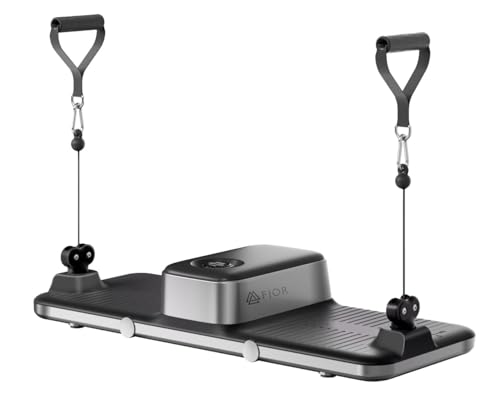
- Compact resistance system for limited spaces
- More than 85 targeted workouts
- App guidance and real-time progress feedback
Best For: Guided full-body training in a compact home setup
Most Foldable
Mikolo Cheetah 2.0 Elite Functional Trainer

- Folds to approximately 3 square feet
- Combines rack, crossover, lat pulldown, and pull-up functions
- Offers 28 pulley height options and five configurations
Best For: Versatile wall-mounted training where floor space is limited
Most Full-Featured
Centr 1 Compact Functional Trainer

- 160-pound weight stack with two adjustable pulleys
- 33 positions and 165 pulley adjustments
- Steel construction with a limited lifetime warranty
Best For: Comprehensive cable training in a dedicated home gym space
Best Compact Plate-Loaded Pick

- Approximately 20-square-foot footprint
- 17 pulley adjustment positions
- Includes bars, handles, and storage
Best For: Plate-loaded full-body training in a home-gym corner
Best Foldable Smart Option

- Foldable for easier storage
- 8-150-pound adjustable resistance
- App access with workout auto-logging
Best For: Space-conscious users wanting guided digital workouts
Best Stable Crossover Design

- Approximately 12.1-square-foot footprint
- Triangular frame for added stability
- 15 pulley positions and pull-up bars
Best For: Compact home gyms needing versatile cable and pull-up training
Compact Cable Powerhouse – Inspire Fitness FTX Functional Trainer
For shoppers comparing functional trainers for small spaces, the Inspire Fitness FTX combines a relatively compact 40-inch-wide footprint with two 165-pound weight stacks. Its sliding pulleys, pull-up bar, and included attachments support a broad range of home strength exercises.
Best For: Home users who want a full functional trainer with weight stacks, accessory storage, and guided digital workout content.
Pros:
- Compact design for a full functional trainer, measuring 54″D x 40″W x 82″H.
- Two 165-pound stacks and smooth-gliding pulleys support varied resistance training.
- Includes four accessory types, a pull-up bar, phone or tablet space, and storage.
- Includes three months of Centr programming with workouts, nutrition, and mindfulness content.
Cons:
- At 544 pounds, it is substantially heavier than more minimalist cable systems.
- Its 82-inch height may require careful ceiling-clearance planning.
The FTX is a strong choice when you want the versatility of a conventional functional trainer without a particularly wide frame. Confirm both ceiling height and floor access before purchasing, since its substantial weight makes repositioning difficult.
Fold-Flat Wall Trainer – GMWD Wall Mounted Cable Machine
The GMWD is a practical option for functional trainers for small spaces because it mounts to the wall and folds flat when not in use. Its dual swivel arms, adjustable positions, and selectable 2:1 or 1:1 cable ratios provide substantial exercise flexibility without occupying a large permanent floor area.
Best For: Apartment, garage, or home-gym users who can securely mount equipment and need a cable station that stores against the wall.
Pros:
- Foldable wall-mounted design minimizes its storage footprint.
- Dual arms offer 26 height positions, 13 arm-angle settings, and 180-degree movement.
- Supports more than 100 listed exercises, including presses, rows, curls, and woodchoppers.
- Includes mounting hardware, lat bar, cable bar, dual-cable bracket, and leg holder.
Cons:
- Wall installation is required, so the mounting surface must be suitable and secure.
- It does not include integrated weight stacks; resistance depends on the cable setup and attached loading arrangement.
This machine makes the most sense when wall space is easier to dedicate than floor space. Its adjustable arms and dual cable ratios add versatility, but measure the 77-inch height and verify the installation surface before committing.
Apartment-Friendly Starter – Compact Full-Body Home Gym
This compact system is an approachable alternative for people seeking functional trainers for small spaces without a large machine footprint. It supports more than seven movements, including squats, presses, deadlifts, curls, and rows, while using adjustable resistance rated at 100 pounds.
Best For: Beginners and apartment residents who want a lightweight, compact setup for basic full-body strength training.
Pros:
- Very light at 22 pounds and measures 31″D x 8.6″W x 7.3″H.
- Supports multiple compound and isolation movements from one system.
- Adjustable resistance can accommodate lighter training and progressive increases.
- Includes a wooden base, barbell, cable components, and squat belt.
Cons:
- Its 100-pound tension capacity is more limited than that of larger trainers.
- The supplied notes list only a single handle and squat belt among the included components.
- It offers fewer exercise options than a full-size functional trainer.
This is best viewed as a compact, low-commitment home-gym system rather than a commercial-style cable crossover. Its small dimensions and light weight are valuable in tight rooms, while the lower resistance ceiling may matter to experienced lifters.
Foldaway Rack System – WM3-V4 Folding Squat Rack
For shoppers comparing functional trainers for small spaces, the WM3-V4 stands out by combining a folding squat rack with a dual independent pulley system. It folds to 4.3 square feet for storage, expands to 12.3 square feet when deployed, and offers five configurations for lifting and cable work.
Best For: Garage, basement, and apartment users who need both rack-based strength training and cable exercises from a foldable station.
Pros:
- Folds down to 4.3 square feet and expands to 12.3 square feet for use.
- Combines a power rack, cable crossover, lat pulldown, pull-up bar, and adjustable pulleys.
- Dual independent 1:1 pulleys allow simultaneous training and supersets.
- Offers 15 pulley heights and supports more than 80 listed exercises.
Cons:
- The supplied notes do not specify included weight plates or a weight-stack system.
- Its broad functionality may require more setup and configuration than a simple cable machine.
- Users need adequate clearance to expand the rack from its folded position.
The WM3-V4 is compelling when storage efficiency and exercise variety matter equally. Its folding design helps reclaim floor space, while the rack and pulley modes make it more versatile than a cable-only station; plan the surrounding clearance carefully.
Most Streamlined – XT Trainer Compact Home Gym
For shoppers comparing functional trainers for small spaces, the XT Trainer stands out as a compact resistance system that combines cable-style training with guided digital workouts. Its streamlined layout and minimal setup make it suitable when floor space is limited.
Best For: Beginners and home users who want varied full-body resistance workouts with app-guided feedback in a compact format.
Pros:
- Compact, space-efficient design for smaller workout areas.
- Supports more than 85 targeted workouts.
- Offers real-time exercise guidance, progress tracking, and app integration.
- Combines a resistance system with cable-weight-machine functionality.
Cons:
- Its plastic material may feel less substantial than steel-framed alternatives.
- Concentric resistance focuses on the lifting phase rather than traditional lifting and lowering resistance.
The XT Trainer is a practical choice when versatility and guided training matter more than a traditional rack-style setup. Its compact profile and broad exercise selection make it one of the easier options to fit into a small home gym.
Most Foldable – Mikolo Cheetah 2.0 Elite Functional Trainer
If you need functional trainers for small spaces but still want a rack and cable setup, the Mikolo Cheetah 2.0 Elite is designed to fold away when not in use. It occupies about 9.5 square feet when open and folds down to roughly 3 square feet, making it a strong fit for compact gyms, basements, and garages.
Best For: Space-conscious lifters who want a wall-mounted rack with cable crossover, lat pulldown, and pull-up capabilities.
Pros:
- Folds from approximately 9.5 square feet to 3 square feet.
- Combines a power rack, cable crossover, lat pulldown, and pull-up bar.
- Provides five configurations and 28 pulley height options.
- Steel construction is rated to handle up to 1,000 pounds.
Cons:
- Requires secure wall mounting and available floor support space.
- The listed package uses a 100-pound weight stack, which may limit heavier cable work.
- Its rack-style installation is more involved than a standalone compact machine.
The Cheetah 2.0 Elite offers the most flexibility for users who need serious rack functionality without leaving the equipment permanently open. Its folding design is particularly useful in multipurpose rooms.
Most Full-Featured – Centr 1 Compact Functional Trainer
The Centr 1 is a substantial option among functional trainers for small spaces, pairing a low-profile steel frame with a 160-pound weight stack and two adjustable pulleys. Its 33 vertical positions and 165 pulley adjustments provide extensive exercise variety while keeping the system organized in one machine.
Best For: Home gym users who want a durable, cable-focused strength system with a broad adjustment range and a lifetime warranty.
Pros:
- Includes a 160-pound weight stack and two adjustable pulleys.
- Provides 33 vertical positions and 165 pulley adjustments.
- Frictionless pulleys support smooth cable movement.
- Uses industrial-grade steel with a matte black powder-coat finish and limited lifetime warranty.
Cons:
- Its listed dimensions—81.5 inches high by 51 inches wide by 62 inches long—require careful measuring.
- At roughly 312 to 350 pounds depending on the listed specification, it is difficult to move after installation.
- It may be less suitable for very tight spaces than folding or compact resistance systems.
The Centr 1 is best viewed as a compact complete gym rather than a minimal-footprint trainer. It makes sense for buyers who can accommodate its dimensions and want durable construction, smooth pulleys, and extensive adjustment options.
Best Compact Plate-Loaded Pick – Mikolo Cable Crossover
For shoppers comparing functional trainers for small spaces, the Mikolo Cable Crossover combines a 52-by-56-inch footprint with high- and low-pulley training. Its 17 adjustment positions, storage hooks, and included bars and handles make it a versatile choice for a dedicated home-gym corner.
Best For: Lifters who want a compact, plate-loaded cable station for full-body training and organized accessory storage.
Pros:
- Occupies approximately 20 square feet and measures 52 x 56 x 82 inches.
- Offers 17 pulley height positions for movements including pulldowns, rows, and cable flyes.
- Includes a lat pulldown bar, row bar, and two strap cable handles.
- Features storage hooks and weight-storage poles to help keep equipment organized.
Cons:
- At 154 pounds, it requires substantial floor space and careful assembly planning.
- It is plate loaded, so weight plates are needed separately for resistance.
- The 82-inch height may not suit rooms with low ceilings.
The Mikolo is a practical middle ground for users who want broad cable functionality without a commercial-scale footprint. Its compact design and storage features are especially useful where every square foot matters.
Best Foldable Smart Option – SQUATZ Apollo Board Mini
The SQUATZ Apollo Board Mini is a strong option for functional trainers for small spaces because its cable system is foldable and designed for easy storage. It provides digitally adjustable resistance from 8 to 150 pounds and includes several attachments for full-body workouts.
Best For: Busy home exercisers who prioritize compact storage, quick resistance changes, and app-supported workouts.
Pros:
- Foldable design helps conserve space when the trainer is not in use.
- Offers adjustable resistance from 8 to 150 pounds.
- Includes a resistance bar, handles, ankle straps, and waist belt.
- Works with the FITZ by SQUATZ app without requiring a subscription, with workout auto-logging.
Cons:
- Its 150-pound maximum resistance is lower than the capacity of some full-size cable stations.
- The compact system uses elastic resistance straps rather than a traditional weight-stack system.
- At approximately 20.91 kilograms, it may still require a secure storage location when folded.
The Apollo Board Mini stands out when storage convenience is more important than maximum resistance. Its foldable format and digital features make it particularly suitable for apartments, multipurpose rooms, and busy users.
Best Stable Crossover Design – CC01 Cable Crossover Machine
For functional trainers for small spaces, the CC01 uses a triangular frame to provide a 12.1-square-foot footprint while retaining high and low pulley capability. With 15 adjustment levels, pull-up bars, and included cable attachments, it supports a wide range of upper- and lower-body exercises.
Best For: Home-gym users who want a stable, space-efficient crossover machine with pull-up and cable-training options.
Pros:
- Occupies approximately 12.1 square feet and measures 64.17 x 53.94 x 81.89 inches.
- Triangular construction is designed for stability and provides a 64-inch front training space.
- Offers 15 pulley height positions for rows, pulldowns, chest flyes, and other movements.
- Includes a pulldown bar, low-row bar, two cable handles, triceps rope, and pull-up handles.
Cons:
- Its nearly 82-inch height may be unsuitable for rooms with limited ceiling clearance.
- Assembly is estimated at about 1.5 hours and is recommended for two or three people.
- The listed warranty is one year.
The CC01 is compelling for small gyms that still need a sturdy, multi-exercise station. Its compact footprint, triangular frame, and broad accessory package make it a flexible choice for apartment or garage setups.
How We Picked the Best Functional Trainers for Small Spaces
We focused on machines that provide broad exercise coverage while minimizing their floor and storage demands. Key considerations included overall footprint, wall-mounting or folding options, pulley adjustability, resistance capacity, included accessories, and the type of installation required.
We also looked for useful training flexibility. A compact trainer should support more than one movement pattern, such as presses, rows, pulldowns, squats, curls, and cable flyes. Product descriptions and specifications should be checked carefully for exact dimensions, weight-stack details, attachment packages, and whether mounting hardware or professional installation is included.
Quick Comparison
| Trainer type | Best for | Main space advantage | Potential trade-off |
|---|---|---|---|
| Wall-mounted cable machine | Dedicated home gym users | Uses vertical wall space | Requires secure installation |
| Folding rack with pulleys | Strength training and barbell work | Folds closer to the wall | Needs adequate ceiling and wall clearance |
| Compact freestanding trainer | Renters or flexible setups | Usually easier to reposition | Can occupy more floor space |
| Smart or resistance-based cable system | Guided home workouts | Often replaces several machines | May depend on electronics or an app |
Key Buying Factors for Functional Trainers for Small Spaces
Measure the Complete Operating Area
Do not measure only the machine’s footprint. Account for the cable travel, handle length, bench position, pull-up clearance, and space needed to load plates or access a weight stack. Confirm ceiling height before choosing a rack or high-pulley model.
Choose the Right Installation Style
Wall-mounted systems save floor space but need a structurally suitable wall and careful anchoring. Folding racks also require clearance to open and close safely. Freestanding models can be more convenient for renters, though they may need a larger base and added stability.
Compare Pulley Adjustment and Resistance
More pulley positions generally make it easier to train users of different heights and perform movements from multiple angles. Check the stated resistance, pulley ratio, weight-stack increments, and whether resistance feels consistent through the full range of motion.
Check Included Accessories and Compatibility
Look for handles, bars, ankle straps, lat bars, safety arms, and storage pegs that match your routine. If you already own Olympic plates, verify plate-sleeve compatibility. Also review warranty coverage, replacement-part availability, and assembly requirements.
Who Should Buy Which Functional Trainers for Small Spaces?
Choose a wall-mounted crossover if conserving floor space is your top priority and you can install it securely. A folding squat rack with an integrated pulley system is better for lifters who want barbell squats, presses, and cable exercises in one setup. Pick a freestanding compact trainer if you need easier placement or cannot make permanent wall modifications.
Smart resistance systems suit users who value guided workouts, digital tracking, and quick resistance changes. For straightforward strength training, a conventional cable machine with adjustable pulleys may offer better simplicity and fewer electronics. Whichever style you choose, prioritize safe clearance, stable mounting, and the exercises you will perform most often over the highest advertised accessory count.