The right front rack can improve weight distribution, expand carrying capacity, and make a loaded touring bike feel more balanced. The wrong one may rattle, interfere with steering, or fail to fit your fork.
We’ve gathered 10 bike front racks for touring, including lowrider pannier racks, platform-style cargo carriers, and adjustable options for gravel, mountain, city, and touring bikes. Use the guide below to narrow the list by compatibility, load needs, and riding style.
Best 10 Bike Front Racks for Touring Picks for 2026
Classic Touring Support

- Steel tube construction
- 9mm QR skewer included
- 10 kg load capacity
Best For: Touring or cyclocross bikes with canti brake mounts
Proven Lowrider Design

- 18 kg load capacity
- Lightweight aluminum construction
- Flexible fork mounting
Best For: Touring and commuting with compatible fork mounts
Versatile Pizza Rack

- 6061-T6 aluminum build
- Adjustable 11–15.35-inch legs
- Fits many forks without eyelets
Best For: Light touring, bikepacking, and commuting
Heavy-Duty Universal Carrying

- 24.3-pound load capacity
- Rubberized frame-protecting grips
- Adjustable deck and pannier rails
Best For: Heavy-duty rear cargo on touring bikes
Best Adjustable Option
Adjustable Front Rack with 8L Bag

- Adjustable fork-crown mounting
- Includes waterproof 8L bag and rain cover
- Designed for stable, quiet carrying
Best For: Touring and gravel riders needing integrated front storage
Best Lightweight Carrier

- Lightweight 6061-T6 alloy construction
- Fits 26-inch, 700C, and 29-inch bikes
- Supports up to 40 pounds
Best For: Basket or non-pannier front cargo
Best Heavy-Duty Versatility
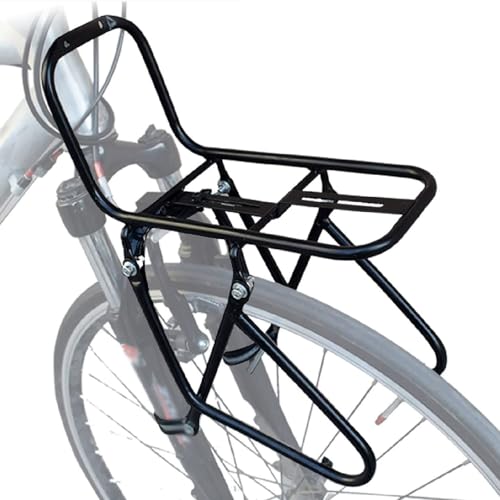
- 15 kg load capacity
- Protective side supports for luggage
- Detachable basket-style cargo design
Best For: Shopping, utility riding, and short touring trips
Lightweight Touring Pick

- Lightweight aluminum construction
- 6.6-pound load capacity
- For mountain and road bikes
Best For: Light touring loads and commuting
Heavy-Duty Utility Choice

- 15 kg load capacity
- Steel construction with bag protection
- Multiple mounting methods
Best For: High-capacity commuting and short tours
Adjustable Aluminum Option
15 kg Adjustable Front Cargo Rack

- 15 kg aluminum load capacity
- No eyelets required
- Fits 26-inch through 700c wheels
Best For: Touring and bikepacking with varied bike fits
Classic Touring Support – Minoura FRP-3000
For riders comparing bike front racks for touring, the Minoura FRP-3000 is a steel-tube front rack designed for touring or cyclocross bikes. It mounts to canti brake mounts, includes a 9mm quick-release skewer, and supports loads up to 10 kg.
Best For: Touring or cyclocross bikes with compatible canti brake mounts.
Pros:
- Steel tube construction offers a sturdy rack platform.
- Includes a 9mm QR skewer for front mounting.
- Rated for loads up to 10 kg.
- Made in Japan.
Cons:
- Requires compatible canti brake mounts.
- At 1.3 kg, it is heavier than some aluminum alternatives.
The FRP-3000 is a practical choice when your bike has the required brake mounts and you want a straightforward front rack with a 10 kg capacity.
Proven Lowrider Design – Tubus Tara Lowrider
The Tubus Tara is a long-established lowrider option for shoppers seeking bike front racks for touring. Its aluminum construction, fork-mount design, flexible mounting holes, and 18 kg load capacity suit riders carrying panniers on compatible forks.
Best For: Touring and commuting with fork-mounted panniers.
Pros:
- High 18 kg load capacity.
- Improved fork mounting allows flexible positioning.
- Lightweight 0.5 kg aluminum construction.
- Includes the rack and associated bolts.
Cons:
- Not suitable for spring or carbon forks without eyelets.
- Requires a compatible fork-mount setup.
The Tara stands out for its low weight and generous capacity, but compatibility should be checked carefully before purchase, especially with carbon or suspension forks.
Versatile Pizza Rack – Aluminum Front Cargo Rack
This adjustable aluminum cargo rack is a flexible pick among bike front racks for touring, gravel, and mountain bikes. Its basket-style platform uses two-piece legs and clamps, fits 26-inch to 29-inch or 700c wheels, and supports up to 10 kg.
Best For: Bikepacking, commuting, and light touring on bikes without rack eyelets.
Pros:
- 6061-T6 aluminum construction.
- Adjustable legs extend from 11 to 15.35 inches.
- Designed to fit many forks without eyelets.
- Includes mounting bolts and brackets.
Cons:
- Maximum recommended load is 10 kg.
- Requires periodic checking and tightening of fasteners.
- At 1.25 kg, it is not an especially ultralight rack.
Its adjustable attachment system broadens compatibility, while the 10 kg limit makes it better suited to moderate front cargo than heavy expedition loads.
Heavy-Duty Universal Carrying – Thule Pack 'n Pedal Tour Rack
Although the Thule Pack ‘n Pedal Tour is a rear frame-mount rack rather than one of the bike front racks for touring, it is worth considering when your priority is heavy-duty luggage capacity. It supports 24.3 pounds and includes pannier rails, adjustable clearance features, and rubberized grips.
Best For: Riders seeking a secure rear rack for touring loads.
Pros:
- Supports loads up to 24.3 pounds.
- Rubberized grips help prevent sliding and protect the frame.
- Adjustable deck and rails provide heel clearance.
- Includes a light or reflector attachment point.
Cons:
- It is a rear rack, not a front rack.
- Frame-mount installation may not suit every bicycle.
- At 2.4 pounds, it is relatively heavy.
Choose this Thule when rear cargo capacity is more important than front-rack placement. Its load-focused design and adjustable fit make it a useful touring accessory, but it should not be treated as a front rack.
Best Adjustable Option – Adjustable Front Rack with 8L Bag
For riders comparing bike front racks for touring, this aluminum rack stands out for its adjustable positioning and included waterproof bag. It mounts at the fork crown and is designed to remain stable and quiet while carrying daily essentials or small touring gear.
Best For: Touring, gravel, and mountain-bike riders who want an adjustable front rack with integrated storage.
Pros:
- Adjustable in height and front, rear, and side positions.
- Includes an 8L waterproof PU rack bag with rain cover.
- Support struts and included clamps fit many forks with a crown mounting hole.
- Designed for stable, rattle-free carrying.
Cons:
- Requires mounting holes at the fork crown.
- Not designed to carry passengers, children, or child seats.
- Storage capacity is more suitable for essentials than bulky loads.
This is a practical all-in-one choice when you want front cargo capacity without adding a backpack. Check your fork mounting setup before ordering.
Best Lightweight Carrier – Sunlite Gold Tec Front Rack
The Sunlite Gold Tec is a lightweight aluminum carrier for riders seeking straightforward bike front racks for touring or everyday front cargo. It mounts directly to most fork bosses and supports loads up to 40 pounds, but its design is not intended for pannier bags.
Best For: Riders who need a simple, lightweight front carrier for baskets or non-pannier cargo.
Pros:
- Tubular 6061-T6 alloy construction.
- Lightweight design at 13.6 ounces.
- Fits 26-inch, 700C, and 29-inch bikes.
- Rated for a maximum load of 40 pounds.
Cons:
- Not made for pannier bags.
- Mounts directly to most fork bosses, so compatibility should be checked.
- The supplied information does not describe adjustable positioning.
This rack makes sense for riders prioritizing low weight and a basic front carrier. Choose it when your cargo setup does not depend on panniers.
Best Heavy-Duty Versatility – Steel Front Touring Carrier
For shoppers evaluating bike front racks for touring, this steel carrier offers a 15 kg load rating and protective side supports for luggage. Its detachable basket-style design suits shopping, picnics, and short tours, with mounting options for fork holes or the included cable-tie setup.
Best For: Utility-minded riders carrying groceries, luggage, baskets, or other front cargo on short tours.
Pros:
- Steel construction with a stated 15 kg capacity.
- Protective side supports help keep bags away from the wheel.
- Detachable design supports shopping, picnic, pet-basket, and daily-use applications.
- Compatible with V-brake and disc-brake systems.
Cons:
- Heavier than the aluminum options, weighing 0.96 kg.
- Fit depends on the stated 28.6–31.8 mm fork diameter and mounting setup.
- The product notes give conflicting guidance about hole-based versus cable-tie installation, so fit should be verified carefully.
This is a versatile choice for practical cargo carrying rather than minimalist touring. Confirm the fork dimensions and available mounting points before purchase.
Lightweight Touring Pick – ROCKBROS Aluminum Front Rack
For riders comparing bike front racks for touring, the ROCKBROS aluminum rack offers a lightweight option for carrying smaller essentials. Its 6.6-pound capacity suits touring, commuting, and recreational rides on mountain or road bikes.
Best For: Lightweight touring setups, commuting, and riders carrying modest loads.
Pros:
- Aluminum construction balances low weight with durability.
- Supports up to 6.6 pounds of cargo.
- Designed for mountain and road bikes.
- Secure head-tube mounting helps limit cargo movement.
Cons:
- Lower capacity than the 15 kg racks in this roundup.
- Head-tube mounting may require careful compatibility checks.
- Warranty coverage is listed as 30 days.
This is a practical choice when keeping rack weight down matters more than carrying large panniers or heavy touring equipment.
Heavy-Duty Utility Choice – 15 kg Steel Front Rack
Among bike front racks for touring, this steel carrier stands out for its 15 kg capacity and utility-focused design. It is aimed at mountain, city, and folding bikes, with support features for shopping, short tours, and everyday cargo.
Best For: Riders who prioritize high carrying capacity and versatile everyday use.
Pros:
- High-strength steel construction supports up to 15 kg.
- Protective side supports help keep bags away from the wheel.
- Compatible with disc brake systems.
- Offers fork-hole and cable-tie installation options.
Cons:
- At 1.05 kg, it is heavier than an aluminum rack.
- Compatibility depends on a 30–40 mm front-fork diameter requirement.
- The supplied recommendation cautions against carrying excessive loads.
Its sturdy steel build and flexible mounting options make it appealing for cargo-heavy errands and shorter touring trips, provided your fork dimensions match.
Adjustable Aluminum Option – 15 kg Adjustable Front Cargo Rack
For bike front racks for touring, this adjustable aluminum model combines a 15 kg capacity with broad wheel-size compatibility. Adjustable support legs allow installation on forks without pre-drilled eyelets, making it suitable for touring, gravel, road, and mountain bikes.
Best For: Touring and bikepacking riders who need high capacity with adjustable, eyelet-free mounting.
Pros:
- 6061-T6 aluminum supports up to 15 kg while resisting corrosion.
- Adjustable struts fit many forks without pre-drilled eyelets.
- Compatible with 26-inch, 27.5-inch, 29-inch, and 700c wheels.
- Includes mounting hardware and English instructions.
Cons:
- At 1.25 kg, it is not the lightest rack listed.
- Users should regularly check fastening screws for loosening.
- Its fit still depends on adjusting the supports to the individual fork.
This is the most adaptable option here for riders building a larger-load touring setup, especially when their bike lacks traditional rack eyelets.
How We Picked These Bike Front Racks for Touring
We focused on racks suited to carrying gear at the front of a bicycle, giving priority to models designed for touring, panniers, commuting, gravel riding, or general cargo use. Our comparison considers mounting flexibility, stated capacity, construction, adjustability, and the type of luggage each rack is intended to support.
Because fork designs vary widely, product compatibility matters as much as rack strength. A rack that works well on a traditional touring fork may not fit a suspension fork, carbon fork, thru-axle system, or bike without suitable mounting points.
Quick Comparison
| Rack type | Best suited to | What to check |
|---|---|---|
| Lowrider pannier rack | Loaded touring and balanced side bags | Lowrider eyelets, pannier hooks, and wheel clearance |
| Platform cargo rack | Front baskets, dry bags, and flexible cargo | Platform size, strap security, and brake clearance |
| Adjustable universal rack | Mixed bikes and occasional carrying | Fork mounts, strut length, axle clearance, and weight limits |
| Dedicated touring rack | Frequent long-distance travel | Material, mounting hardware, durability, and replacement parts |
Key Buying Factors for Bike Front Racks for Touring
Mounting Compatibility
Check whether your fork has lowrider eyelets, mid-blade mounts, or other attachment points. Some racks require several threaded mounts, while others use adjustable struts or axle hardware. Confirm compatibility with disc brakes, fenders, quick-release skewers, and thru-axles before ordering.
Load Capacity and Weight Distribution
Never rely only on a headline capacity. Look for the manufacturer’s rated load, then account for the rack, bags, straps, and uneven roads. Keep heavier items low and close to the wheel, and avoid exceeding the lower limit of either the rack or your fork.
Rack Style and Luggage Fit
Lowriders are generally the better choice for dedicated front panniers because they keep luggage low and can improve handling. Platform racks offer more flexibility for baskets, rolled sleeping bags, and dry bags, but cargo must be secured carefully so it cannot shift into the wheel or cables.
Construction and Adjustability
Aluminum racks are often light and corrosion-resistant, while steel options may offer a more traditional balance of strength, repairability, and durability. Adjustable struts help with fit, but more moving parts can require careful tightening. Choose a rack with solid hardware and clear installation instructions.
Who Should Buy Which Bike Front Racks for Touring?
Long-distance tourists: Choose a dedicated lowrider or touring rack with dependable mounts and a conservative load rating.
Bikepackers and flexible commuters: A platform-style rack is useful when your cargo changes from panniers to dry bags or baskets.
Riders with multiple bikes: Look for an adjustable rack, but verify each bike’s fork, brake, axle, and fender compatibility individually.
Heavy cargo haulers: Select a robust rack with a clearly stated capacity, then keep loads balanced and securely strapped. Before the first trip, test the rack with a partial load and recheck every bolt after a short ride.