The best lightweight stunt scooters make it easier to learn hops, spins, grinds, and other freestyle skills without sacrificing the strength needed for repeated impacts. This roundup compares 10 complete scooters for kids, teens, beginners, and more experienced park or street riders.
We focus on practical differences that matter when choosing a stunt scooter, including deck construction, rider fit, wheel and bearing quality, durability, and how each design suits different skill levels.
Best 10 Lightweight Stunt Scooters Picks for 2026
Heavy-Duty Classic
Mongoose Rise Freestyle Scooter

- Alloy deck with extended standing area
- 220-pound maximum rider capacity
- ABEC-7 bearings and 100 mm wheels
Best For: Riders age 8 and up seeking a sturdy freestyle scooter
Hybrid Park Performer

- 3.5 kg aluminum complete scooter
- Roomy concave deck with box ends
- Hybrid parts for street and park riding
Best For: Progressing riders who want one scooter for park and street use
Lightweight Learning Pick

- 2.9 kg lightweight aluminum design
- ABEC-7 wheels and 360-degree deck
- Quiet flex brake for controlled stops
Best For: Young beginners learning their first scooter tricks
Trick-Focused Lightweight
Limit LMT91AZ Pro Stunt Scooter

- Approximately 3.0 kg lightweight build
- Hollowed aluminum deck and reinforced bar
- 88A wheels with ABEC-9 bearings
Best For: Intermediate and advanced riders 140–165 cm tall
Best Overall for Progression

- Aluminum deck with steel handlebar and double clamp
- 110mm wheels with ABEC-7 bearings
- 220-pound capacity and 3-year warranty
Best For: Young riders progressing from basic skills to freestyle tricks
Best Lightweight Entry-Level Pick

- Only 8 pounds for easier maneuverability
- Aluminum deck with chromoly bar and triple clamp
- Designed for beginners ages 7–14
Best For: New riders learning foundational freestyle tricks
Best for Younger Beginners

- Designed for ages 5–12
- Aluminum deck with one-piece steel T-bar
- 3-year warranty and U.S.-based support
Best For: Younger riders learning basic freestyle skills
Best Lightweight Pick for Younger Riders

- Aircraft-grade aluminum deck
- ABEC-9 bearings and 110mm wheels
- 95% assembled at unboxing
Best For: Younger beginners and intermediate skatepark riders
Best for Smooth Freestyle Glide
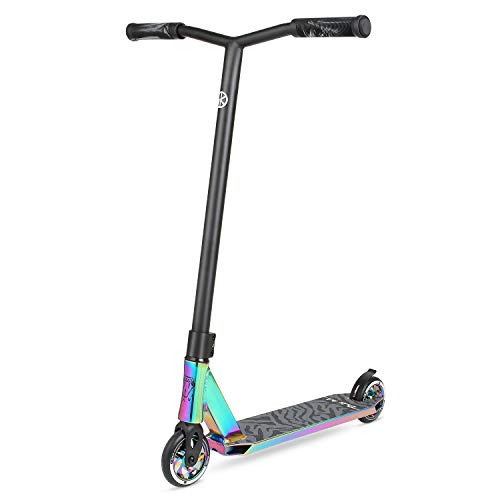
- 220-pound weight capacity
- ABEC-9 bearings and 88A PU wheels
- Three-bolt final assembly
Best For: Intermediate freestyle riders and older kids
Best for Teens and Beginners
VEVOR Pro Complete Trick Scooter

- 7.9-pound aluminum construction
- HIC compression and dual-layer deck
- Silent 110mm wheels with ABEC-9 bearings
Best For: Youth beginners learning freestyle tricks
Heavy-Duty Classic – Mongoose Rise Freestyle Scooter
The Mongoose Rise is a practical choice for riders seeking lightweight stunt scooters with a sturdy, high-capacity build. Its alloy deck, welded steel T-bar, MaxGrip surface, and 100 mm wheels are designed for recreational riding, tricks, and everyday transportation.
Best For: Kids age 8 and up, teens, and adults who want a durable freestyle scooter with a 220-pound weight capacity.
Pros:
- Lightweight alloy deck with an extended standing area.
- Heavy-duty frame supports riders up to 220 pounds.
- ABEC-7 bearings and high-impact alloy wheels support smooth riding.
- Triple anodized clamp collar enables precise steering.
Cons:
- At 5.21 kg, it is heavier than several lightweight stunt scooter options.
- The 100 mm wheels are smaller than those on some competing models.
The Rise emphasizes durability and rider capacity over minimum weight. It is a sensible pick for beginners and heavier riders who want a sturdy scooter for tricks and general use.
Hybrid Park Performer – Envy COLT S6 Trick Scooter
The Envy COLT S6 combines reduced weight with a roomy deck and hybrid street-and-park components. For shoppers comparing lightweight stunt scooters, its aluminum construction, cut-out deck, and professionally tested design make it a versatile option for progressing riders.
Best For: Beginner to advanced riders who split their time between skateparks, streets, and urban riding.
Pros:
- Lightweight 3.5 kg complete scooter with reduced-weight deck technology.
- Roomy deck with box ends and concave shaping for responsive control.
- Hybrid design suits both park and street riding.
- 220-pound maximum weight capacity and 12-month hardware warranty.
Cons:
- The warranty excludes wear and tear and can be voided by modifications or misuse.
- Its beginner-to-intermediate age description may not suit every advanced adult rider.
The COLT S6 is a balanced choice when versatility matters as much as weight. Its 110 mm wheels, roomy deck, and hybrid setup support riders developing skills across different environments.
Lightweight Learning Pick – BOLDCUBE Kids Stunt Scooter
At 2.9 kg, the BOLDCUBE stands out among lightweight stunt scooters for young beginners. Its aluminum deck, ABEC-7 wheels, four-bolt collar, and textured grip surface are aimed at making early trick practice easier to control.
Best For: Younger riders, especially beginners age 8 and up, learning basic freestyle scooter tricks.
Pros:
- Very light 2.9 kg design for easier handling.
- Micro-crystallized grip deck helps provide traction.
- Four-bolt collar reinforces the handlebar and deck connection.
- Quiet flex brake is designed for smooth, controlled stops.
Cons:
- The product notes describe it as an entry-level scooter, so advanced riders may outgrow it.
- Its listed age guidance and maximum age recommendation may be less suitable for adults.
The BOLDCUBE prioritizes manageable weight and beginner-friendly control. It is a strong starting point for children working toward their first tricks rather than a high-level performance setup.
Trick-Focused Lightweight – Limit LMT91AZ Pro Stunt Scooter
The Limit LMT91AZ is built for riders moving from intermediate skills toward more demanding tricks. It weighs about 3.0 kg according to the product highlights and pairs a hollowed aluminum deck and bar with 88A wheels and ABEC-9 bearings.
Best For: Intermediate and advanced riders around 140–165 cm tall who want a lightweight scooter for trick progression.
Pros:
- Lightweight 3.0 kg design intended to help with difficult tricks.
- Hollowed aluminum deck reduces weight while retaining strength.
- 88A high-rebound wheels and ABEC-9 bearings support a smooth ride.
- Quiet nylon-and-steel brake is designed to stop quickly.
Cons:
- Recommended rider height is limited to approximately 140–165 cm.
- The listed product details give a 6-month limited warranty.
- Its straight handlebar and rigid setup may not suit riders seeking adjustability or suspension.
The LMT91AZ is a focused option for riders who value low weight and trick response. Its height guidance makes fit especially important before buying.
Best Overall for Progression – Madd Gear MG3 Stunt Scooter
The Madd Gear MG3 is a strong option among lightweight stunt scooters for riders ages 8–12 who are ready to practice tricks at the skatepark or on the street. Its aluminum deck, steel handlebar, 110mm wheels, and ABEC-7 bearings balance durability with a smooth ride.
Best For: Young freestyle riders progressing from basic skills to tricks such as tail whips.
Pros:
- Aluminum deck, steel handlebar, and double clamp support regular stunt riding.
- 110mm polyurethane wheels and ABEC-7 bearings provide a smooth, quiet ride.
- Supports riders up to 220 pounds and includes a 3-year manufacturer warranty.
Cons:
- At 10 pounds, it is heavier than some entry-level alternatives.
- The fixed 32-inch handlebar may not suit every rider’s preferred setup.
Choose the MG3 if durability, controlled handling, and room to develop matter more than having the lightest possible scooter. It is a well-equipped choice for consistent practice and skatepark sessions.
Best Lightweight Entry-Level Pick – VOKUL S2 Pro Scooter
For beginners comparing lightweight stunt scooters, the VOKUL S2 offers an 8-pound setup designed for riders ages 7–14. Its 6061 aluminum construction, forged deck plates, chromoly bar, and triple clamp provide a stable platform for learning basic tricks.
Best For: New riders learning barspins, tail taps, and tailwhips for recreational or skatepark riding.
Pros:
- Light 8-pound design is easier for young riders to maneuver.
- Aircraft aluminum, a chromoly bar, and triple clamp are built for stability.
- Supports up to 220 pounds and requires only three clamp bolts for assembly.
Cons:
- The 1-year warranty is shorter than the coverage on the Madd Gear models here.
- It is positioned as an entry-level scooter, so advanced riders may want more specialized components.
The S2 stands out when low weight and beginner-friendly handling are priorities. It offers a practical starting point for children and teens building confidence before moving to more advanced freestyle equipment.
Best for Younger Beginners – Madd Gear MG2 Trick Scooter
The Madd Gear MG2 is a lightweight stunt scooter for younger riders ages 5–12 beginning freestyle practice. It combines an extruded aluminum deck, one-piece steel T-bar, 100mm polyurethane wheels, and ABEC-5 bearings for everyday riding and introductory tricks.
Best For: Younger beginners practicing basic tricks at the skatepark, on sidewalks, or in the street.
Pros:
- Designed specifically for riders ages 5–12 starting freestyle riding.
- Durable aluminum deck and one-piece steel T-bar handle beginner tricks.
- Includes a 3-year manufacturer warranty and U.S.-based support.
Cons:
- Its 10-pound weight is relatively substantial for a younger rider.
- 100mm wheels and ABEC-5 bearings are less performance-focused than the MG3’s setup.
The MG2 makes sense for families seeking a durable first trick scooter from an established brand. It is best suited to basic skill building rather than advanced skatepark performance.
Best Lightweight Pick for Younger Riders – Limit LMT08 Pro Trick Scooter
For kids ages 7 and up, the Limit LMT08 is a practical choice among lightweight stunt scooters. Its aircraft-grade aluminum deck, Chromoly handlebar, ABEC-9 bearings, and 110mm wheels provide a solid setup for learning freestyle riding while keeping the scooter relatively easy to handle.
Best For: Younger beginners and intermediate riders who want a colorful scooter for skatepark practice and everyday freestyle riding.
Pros:
- Lightweight 7003 aluminum deck with a 220-pound weight capacity.
- ABEC-9 bearings and 110mm wheels support a smooth ride.
- Soft grips and a nylon-and-steel rear brake add comfort and control.
- Arrives 95% assembled for a simpler setup.
Cons:
- The fixed handlebar is not adjustable.
- The listed 7-12 age range may limit long-term fit for taller riders.
The LMT08 combines a manageable size with sturdy components and straightforward assembly. It is a sensible entry point for young riders developing basic tricks and skatepark confidence.
Best for Smooth Freestyle Glide – VOKUL K1 Pro Stunt Scooter
The VOKUL K1 is one of the more versatile lightweight stunt scooters in this group, supporting riders from age 8 through teens and adults. Its aluminum deck, one-piece fork, ABEC-9 bearings, and 110mm alloy wheels are designed for quiet, responsive freestyle riding.
Best For: Intermediate riders who want a durable freestyle scooter with a high weight capacity and comfortable grips.
Pros:
- Supports up to 220 pounds despite its lightweight 9-pound design.
- ABEC-9 bearings and high-rebound 88A PU wheels promote a smooth glide.
- Includes a T-6061 aluminum deck and one-piece T4T6 fork.
- Only the three-bolt clamp needs tightening during assembly.
Cons:
- The handlebar is listed as adjustable, but the scooter is intended for freestyle use and may not suit every rider height.
- Its 110mm wheels are smaller than some options intended for faster cruising.
With quiet components, supportive grips, and a broad stated rider range, the K1 is a strong choice for riders progressing from basic tricks toward more demanding skatepark moves.
Best for Teens and Beginners – VEVOR Pro Complete Trick Scooter
The VEVOR Pro Complete Trick Scooter offers a stable starting point for teens and beginners shopping for lightweight stunt scooters. Its dual-layer 6063 aluminum deck, HIC compression system, reinforced fork, and silent 110mm PU wheels are suited to learning jumps, grinds, turns, and other basic tricks.
Best For: Youth riders ages 11-13 who need a ready-to-ride scooter for sidewalks, backyards, roads, or skateparks.
Pros:
- Lightweight 7.9-pound aluminum design with a 220-pound capacity.
- ABEC-9 bearings and silent 110mm PU wheels support smooth riding.
- Dual-layer deck and HIC compression system provide a sturdy freestyle setup.
- CPC certification is listed for added suitability for children.
Cons:
- The recommended maximum age is listed as 13, which may limit use for older riders.
- Its fixed handlebar cannot be adjusted as a rider grows.
- The listed front-braking configuration may feel different from the rear brakes on the other scooters.
The VEVOR is a well-equipped option for young riders beginning freestyle practice. Its relatively low weight and professional-style compression make it approachable without omitting key stunt-scooter features.
How We Picked These Lightweight Stunt Scooters
We selected models that are designed specifically for freestyle riding rather than casual commuting. Our comparison considers the materials used in the deck and frame, bar and fork construction, wheel size, bearing rating, stated rider range, assembly requirements, and suitability for park or street use. We also looked for complete setups that give buyers a usable starting point without requiring immediate upgrades.
Because product specifications and included components can vary by size or seller, check the current listing carefully before ordering. Weight limits, handlebar dimensions, and age recommendations are especially important for safety and fit.
Quick Comparison
| Rider type | What to prioritize | Best overall fit |
|---|---|---|
| Young beginners | Manageable weight, stable deck, simple assembly | Entry-level complete scooter with a suitable height |
| Intermediate riders | Stronger fork, responsive bars, reliable bearings | Freestyle scooter built for progression |
| Park riders | Low weight, compact deck, smooth rolling wheels | Lightweight setup optimized for aerial tricks |
| Street riders | Durable deck, robust wheels, stronger impact resistance | Heavier-duty scooter with reinforced components |
| Teens and adults | Correct bar height, deck length, and weight rating | Full-size pro model suited to the rider’s dimensions |
Key Buying Factors for Lightweight Stunt Scooters
Weight and Rider Fit
A lighter scooter is generally easier to lift, spin, and control, but extreme weight savings can reduce durability. Choose a model the rider can comfortably maneuver while staying within its stated weight limit. Handlebar height should allow a relaxed, controlled stance rather than forcing the rider to hunch or overreach.
Deck and Frame Construction
Look for an aluminum deck when low weight and quick response are priorities. A wider or longer deck can provide more landing stability, while a compact deck is often easier for park tricks. Reinforced frames and strong welds matter for riders practicing drops, grinds, and repeated landings.
Wheels, Bearings, and Fork
Hard wheels with quality bearings roll smoothly and respond quickly on ramps and polished surfaces. ABEC ratings can offer a useful reference, but bearing quality, wheel alignment, and maintenance also affect performance. A sturdy fork and secure compression system help the scooter withstand twisting forces during tricks.
Assembly and Maintenance
Most complete scooters require handlebar installation and bolt checks before the first ride. Regularly tighten the clamp, headset, axle, and brake hardware, and replace worn wheels or bearings promptly. Always use a helmet and appropriate protective gear.
Who Should Buy Which Lightweight Stunt Scooters?
Young or first-time riders should favor a manageable, stable complete scooter with a suitable height and straightforward setup. Intermediate riders who are learning 360s, tailwhips, and grinds should choose a stronger model with responsive handling and dependable compression. Park-focused riders will usually appreciate the lightest compatible setup, while street riders may prefer a slightly heavier scooter with a more robust deck and wheels. Teens and adults should prioritize dimensions and weight capacity over age labels alone, since a correctly sized scooter is easier to control and safer to progress on.