The right sleeping bag can make the difference between a restful night outdoors and a cold, uncomfortable one. This roundup compares 10 popular options for camping, backpacking, family trips, and varying weather conditions.
From roomy flannel-lined designs to lightweight mummy bags, these picks cover different temperature ranges, sizes, insulation styles, and packing needs so you can choose with greater confidence.
Best 10 Sleeping Bags Picks for 2026
Everyday 3-Season Pick
MalloMe Lightweight Sleeping Bag

- 50°F–80°F comfort range
- Water-resistant and machine washable
- Compression sack included
Best For: Backpacking, family camping, and three-season trips
Cold-Weather Big-and-Tall Choice
Coleman Heritage 10°F Sleeping Bag
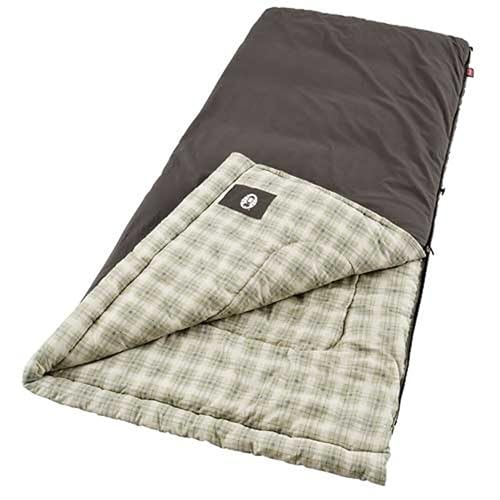
- 10°F cold-weather rating
- 40 x 84-inch big-and-tall fit
- Flannel lining and machine washable
Best For: Winter camping, hunting, and larger campers
Roomiest Flannel Option
HiZYNICE XXL Cold-Weather Sleeping Bag

- 39 x 90-inch oversized fit
- Cotton flannel lining
- Opens into a blanket
Best For: Big-and-tall sleepers, car camping, and guest use
Winter Mummy Design
Coleman North Rim 0°F Sleeping Bag

- Designed for temperatures to 0°F
- Thermolock draft tube and adjustable hood
- Big-and-tall mummy fit
Best For: Cold-weather camping and warmth-focused sleepers
Versatile Value
Compact 3-4 Season Sleeping Bag

- 55–60°F comfortable temperature range
- Hood, draft collar, and foot ventilation
- Compression sack included
Best For: Mild-weather camping, travel, and sleepovers
Packable 3-Season Choice
Lightweight Envelope Sleeping Bag
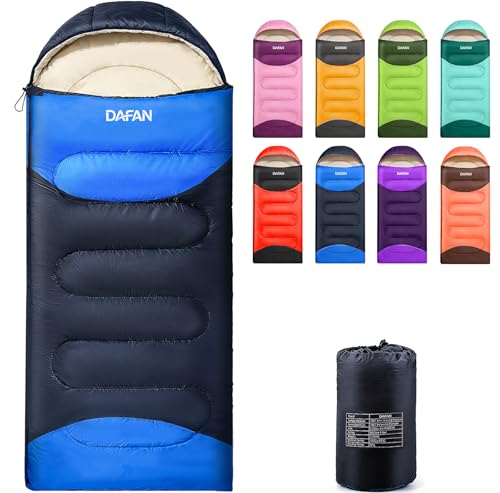
- 50–68°F comfort range
- 1.35 kg with compression sack
- Full-length and foot-end zippers
Best For: Mild-weather hiking, camping, and travel
Best Overall 3-Season Pick
PTEROMY Lightweight Sleeping Bag

- Machine washable and water resistant
- Roomy 87-inch design for taller adults
- Includes compression bag and ventilation zipper
Best For: Tall adults seeking an easy-care bag for moderate-weather camping
Best Feature-Rich Design
Sportneer 3-Season Sleeping Bag

- Two-way zipper improves ventilation flexibility
- Adjustable hood helps retain warmth
- Includes carry sack and one-year warranty
Best For: Campers wanting adjustable comfort for moderate three-season trips
Everyday 3-Season Pick – MalloMe Lightweight Sleeping Bag
For versatile sleeping bags that work across spring, summer, fall, and cool-weather trips, the MalloMe offers a practical balance of warmth, portability, and easy care. Its rectangular design fits adults up to 6 feet and includes a compression sack for transport.
Best For: Backpacking, family camping, and campers who want a lightweight three-season bag.
Pros:
- Rated for approximately 50°F to 80°F comfort.
- Water-resistant outer shell and compressible design.
- Double-sided, snag-resistant zippers and an adjustable headrest.
- Machine washable and easy to wipe clean.
Cons:
- Not designed for freezing winter conditions.
- Its approximately 3-pound weight may be heavier than ultralight backpacking bags.
Choose this sleeping bag when broad seasonal usefulness matters more than extreme cold protection. It is especially convenient for mixed-age camping groups because its fit and bright color options suit both adults and children.
Cold-Weather Big-and-Tall Choice – Coleman Heritage 10°F Sleeping Bag
The Coleman Heritage is one of the roomier cold-weather sleeping bags, measuring 40 by 84 inches and accommodating campers up to 6 feet 7 inches. Its flannel lining and substantial Holofill 808 insulation are suited to winter camping and other chilly overnight uses.
Best For: Big-and-tall campers, cold-weather camping, hunting trips, and guest use.
Pros:
- Rated to 10°F for cold-weather use.
- Five pounds of Holofill 808 insulation helps retain warmth.
- Soft flannel liner and durable cotton cover.
- Machine washable with a Wrap ’N’ Roll storage system.
Cons:
- At 8.9 pounds, it is considerably heavy for backpacking.
- The bulky big-and-tall construction may be excessive for smaller campers.
This is a comfort-focused sleeping bag rather than a lightweight trail option. Its generous dimensions, flannel interior, and 5-year limited warranty make it a strong choice for stationary winter camping or keeping an extra warm bag at home.
Roomiest Flannel Option – HiZYNICE XXL Cold-Weather Sleeping Bag
Campers who prefer extra room will appreciate this XXL sleeping bag, which measures 39 by 90 inches and fits users up to 6 feet 7 inches. The cotton flannel lining adds a cozy feel, while the water-resistant shell and compression sack support practical outdoor use.
Best For: Big-and-tall adults, side sleepers, cabin stays, RV trips, and overnight guests.
Pros:
- Generous 90-inch length and 39-inch width.
- 30°F comfort rating, with a 15°F limit and 0°F extreme rating.
- Two-way zipper supports ventilation and can pair with another compatible bag.
- Machine washable and supplied with a compression sack.
Cons:
- Seven-pound weight is not ideal for lightweight backpacking.
- The roomy rectangular shape may retain less heat than a close-fitting mummy design.
This sleeping bag stands out for space and softness. Its zipper flexibility also lets it open into a blanket, making it useful beyond tent camping, though its weight favors car camping and indoor guest use over long hikes.
Winter Mummy Design – Coleman North Rim 0°F Sleeping Bag
The Coleman North Rim uses a mummy shape, hollow polyester insulation, and a Thermolock draft tube to reduce heat loss in very cold conditions. Its adjustable hood and no-snag zipper add useful control for campers who prioritize warmth and ventilation.
Best For: Cold-weather camping and campers who want a warmer, more body-contoured sleeping bag.
Pros:
- Designed for temperatures as low as 0°F.
- Mummy shape, draft tube, and adjustable hood help retain warmth.
- Big-and-tall fit accommodates campers up to 6 feet 2 inches.
- Machine washable with a 5-year limited warranty.
Cons:
- Shorter maximum height than the other big-and-tall options listed here.
- Mummy styling provides less freedom to move than a rectangular sleeping bag.
For winter-oriented sleeping bags, the North Rim offers a focused combination of insulation and heat-sealing features without the oversized rectangular profile of some alternatives. It is a sensible fit for campers comfortable with a more enclosed mummy shape.
Versatile Value – Compact 3-4 Season Sleeping Bag
This versatile option is one of the more adaptable sleeping bags for campers who want a compact design for mild spring, summer, fall, and cool-weather outings. Its rectangular shape, adjustable hood, draft collar, and separate foot zipper provide useful comfort and ventilation, while the included compression sack simplifies transport.
Best For: Youth and adults up to 6 feet 1 inch using it for camping, road trips, sleepovers, and short hikes.
Pros:
- Designed for a stated comfortable range of 55–60°F, with a recommended limit of 40°F.
- Draft collar and drawstring hood help retain warmth around the neck and head.
- Two-way zipper, separate foot opening, and included compression sack add flexibility.
- Polyester ripstop shell is wipe-clean and machine washable according to the supplied instructions.
Cons:
- At 1.6 kg, it is not the lightest choice for extended backpacking.
- The stated comfort range makes it better suited to mild conditions than deep cold.
- It is designed for one person only.
This sleeping bag stands out for its practical feature set and broad everyday use. Choose it when packability, room to move, and flexible ventilation matter more than ultralight weight or cold-weather specialization.
Cozy Cold-Weather Pick – REDCAMP Cotton Flannel Sleeping Bag
For shoppers prioritizing a soft interior and multiple insulation options, this REDCAMP model offers cotton-flannel comfort in an envelope design. It comes in different filling weights, with temperature ranges that extend from mild spring conditions toward cooler nights, plus a waterproof polyester ripstop shell and compressed storage sack.
Best For: Adults up to 6 feet who want a roomier, softer sleeping bag for car camping and spring-to-cool-weather use.
Pros:
- Soft flannel lining and rebounded hollow cotton fiber are designed for warmth and comfort.
- Available in 2-, 3-, 4-, and 6-pound filling options for different conditions.
- Two-way zipper can connect two compatible sleeping bags.
- Includes an internal stuff pocket and compressed Oxford storage sack.
Cons:
- Its listed 4-pound pack weight may be less convenient for backpacking than lighter designs.
- The envelope shape and cotton fill favor comfort over compact ultralight packing.
- Temperature performance depends on the selected filling weight.
This is a comfort-focused choice with useful configuration options. It makes the most sense for campers who value flannel softness and adjustable warmth, particularly when vehicle transport makes weight less important.
Packable 3-Season Choice – Lightweight Envelope Sleeping Bag
This lightweight sleeping bag is built for spring, summer, and fall trips where compact storage and flexible ventilation are priorities. Its envelope shape offers room to stretch, while the full-length two-way zipper can open the bag as a blanket and the foot-end zipper helps release heat on warmer nights.
Best For: Campers, hikers, and travelers seeking a portable one-person bag for mild-weather outdoor or indoor use.
Pros:
- Designed for a stated 50–68°F comfort range across three seasons.
- Compresses to approximately 39 × 26 × 10 cm and weighs 1.35 kg.
- Includes a compression sack and adjustable straps for backpack storage.
- Water-repellent, tear-resistant polyester shell and machine-washable lining support routine use.
Cons:
- The 50–68°F range is intended for mild conditions rather than freezing weather.
- It is a single-person design.
- The supplied warranty is limited to three months.
This model balances portability, ventilation, and everyday durability. It is a strong fit for three-season campers who want a reasonably light sleeping bag that also works for road trips, sleepovers, and emergency use.
Best Overall 3-Season Pick – PTEROMY Lightweight Sleeping Bag
For campers wanting versatile sleeping bags with easy-care convenience, the PTEROMY model combines a roomy rectangular design with water resistance, machine washability, and a compression sack. Its stated comfort range of 50°F to 80°F makes it a practical choice for spring, summer, and fall outings.
Best For: Adults up to 7 feet tall who want a washable sleeping bag for camping, hiking, travel, or emergency vehicle use.
Pros:
- Roomy 87-inch length and 31-inch width accommodate taller adults.
- Machine-washable construction is designed to retain warmth without clumping.
- Adjustable head and neck drawstring, inner pocket, and ventilating bottom zipper add useful functionality.
- Includes a compression bag and weighs about 3 pounds.
Cons:
- The listed comfort range is aimed at mild to warm conditions rather than severe cold.
- At 3 pounds, it is not the lightest option for minimalist backpacking.
Choose this PTEROMY sleeping bag if washability, generous dimensions, and everyday versatility matter more than minimizing pack weight. The 3-season positioning and temperature guidance make it best suited to moderate-weather trips.
Best Budget-Friendly Option – Lightweight Waterproof Sleeping Bag
These sleeping bags offer a straightforward, affordable setup for casual camping and family trips. The polyester shell, pongee lining, hollow-fiber filling, and weather-resistant design support use across three seasons, while the included compression bag helps reduce bulk.
Best For: Campers up to 5 feet 11 inches who need a compact sleeping bag for class trips, summer camp, hiking, or emergency storage.
Pros:
- Three-season design with a stated comfort range of 50°F to 68°F.
- Waterproof, breathable outer fabric helps protect against damp conditions.
- Hood drawstring helps retain warmth around the head.
- Foot zipper allows additional ventilation, and the packed size is listed as 7.9 to 14.2 inches.
Cons:
- The 5-foot-11-inch height recommendation may feel limiting for taller users.
- At 3.3 pounds, it is heavier than some compact backpacking alternatives.
- The stated comfort range is narrower than some other options in this roundup.
This model makes sense when price, basic weather resistance, and portability are the priorities. Check the dimensions carefully if the user is near the maximum recommended height.
Best Feature-Rich Design – Sportneer 3-Season Sleeping Bag
The Sportneer sleeping bag focuses on flexible comfort and practical packability. Its 87-by-31.5-inch rectangular shape, adjustable hood, two-way zipper, and polyester construction make it a versatile choice for camping, hiking, and backpacking in moderate conditions.
Best For: Adults and older children who want a roomy rectangular bag with adjustable ventilation and a portable carry sack.
Pros:
- Comfort temperature is listed at 50°F to 80°F for spring, summer, and fall use.
- Two-way separating bottom zipper lets users free their feet or increase airflow.
- Adjustable semi-circular hood helps retain warmth around the head.
- Includes a carry bag and has a listed one-year warranty.
Cons:
- At 1.5 kg, it is not an ultralight sleeping bag for weight-focused trips.
- The stated comfort range is better suited to moderate weather than consistently cold conditions.
- The rectangular shape may take more pack space than a tapered design.
Sportneer is a good fit for shoppers who value adjustable ventilation and hood coverage. Its feature set is particularly useful for campers who want one sleeping bag for several moderate-weather activities.
How We Picked the Best Sleeping Bags
We focused on the features that matter most outdoors: intended temperature range, insulation and lining, packed size, weight, weather resistance, zipper design, washability, and overall versatility. The selection includes cold-weather mummy bags, spacious rectangular models, lightweight three-season options, and budget-friendly choices for adults and children.
Temperature ratings should be treated as guidance rather than a guarantee. Personal sleep habits, clothing, shelter, humidity, and the sleeping pad beneath you all affect warmth. A well-insulated sleeping pad is especially important because it reduces heat loss to the ground.
Quick Comparison
- Best for cold-weather camping: Look for a lower temperature rating, a hood, draft protection, and sufficient insulation.
- Best for backpacking: Prioritize low weight, compact compression, and a practical warmth-to-weight ratio.
- Best for tall or larger sleepers: Choose an XL or XXL design with enough shoulder and foot room to avoid compressed insulation.
- Best for families: Consider machine-washable materials, simple zippers, and flexible temperature performance.
- Best for warm-weather trips: A lighter three-season bag with a breathable lining is generally more comfortable.
Key Buying Factors for Sleeping Bags
Temperature Rating
Match the bag to the coldest conditions you expect, not the average daytime temperature. For shoulder-season or winter camping, choose extra margin rather than relying on the limit rating. Summer and mild-weather bags can be lighter, less bulky, and easier to ventilate.
Shape, Size, and Comfort
Mummy bags conserve heat efficiently but feel more restrictive. Rectangular and envelope styles provide more room for changing positions and may suit casual camping better. Check the listed height and shoulder dimensions, especially when buying for tall users or wearing layers.
Weight, Packability, and Materials
Backpackers should compare both total weight and compressed size. Water-resistant shells help with condensation and light moisture, while flannel or cotton interiors can feel comfortable but may add weight and dry more slowly than synthetic performance fabrics.
Insulation and Maintenance
Synthetic insulation is typically affordable, easy to maintain, and more forgiving in damp conditions. Confirm whether the bag is machine washable, whether it includes a compression sack, and how easily the zipper operates without snagging.
Who Should Buy Which Sleeping Bags?
Choose a cold-weather mummy bag if you camp in freezing temperatures or want a hood and close-fitting design that retain heat efficiently. Choose a roomy XL or XXL bag if comfort, mobility, or extra space for layers matters more than minimum packed size.
Choose a lightweight three-season bag for hiking and backpacking in mild to moderate conditions. Choose a flannel-lined or cotton envelope bag for car camping, cabins, and family use where comfort and generous space outweigh pack weight. For children or occasional campers, prioritize manageable weight, simple operation, and a temperature range appropriate for the intended trip.