The best gravel bikes balance road speed with the stability, gearing, and tire clearance needed for dirt roads, rough paths, and long mixed-surface rides. The right choice depends on where you ride most—not simply the number of speeds or the lightest advertised frame.
This roundup compares carbon and aluminum options, drop-bar road bikes, and versatile commuter-friendly designs. Use the guide below to narrow your choices by terrain, comfort, components, and budget before you buy.
Best 10 Gravel Bikes Picks for 2026
Best All-Terrain Value

- 10.4 kg T800 carbon frame and fork
- Shimano U6000 11-speed drivetrain
- Hydraulic brakes with 700x40c tires
Best For: Mixed-surface riding and versatile everyday adventures
Best Budget Road-to-Gravel Option
HILAND 700C Aluminum Road Bike

- Lightweight aluminum frame
- 14-speed drivetrain with 700C wheels
- Available in three rider-size ranges
Best For: Commuting, paved roads, and occasional unpaved riding
Best Performance Upgrade
SAVADECK Gelaro S8 Carbon Gravel Bike

- 9.8 kg T800 carbon frame and fork
- Shimano GRX820 12-speed drivetrain
- Hydraulic brakes and 700x40c adventure tires
Best For: Long mixed-terrain rides and performance-focused adventures
Best Small-Frame Commuter Pick
- Small aluminum frame for shorter riders
- 14-speed drivetrain and 700C wheels
- Listed for road, gravel, and commuting
Best For: Commuting and light gravel riding for smaller riders
Lightweight Adventure Pick

- 10.4 kg T800 carbon frame and fork
- Shimano GRX400 20-speed drivetrain
- 700x40c tires with hydraulic disc brakes
Best For: Mixed road and trail adventures where low weight matters
Urban Value Option

- 21-speed Shimano drivetrain
- 700x28C tires for roads and city streets
- Dual-disc brakes and aluminum frame
Best For: Commuting and paved urban riding with occasional rough surfaces
Trail-Ready Carbon Choice

- Lightweight 10.4 kg carbon construction
- Shimano GRX400 20-speed setup
- 700x40c tires and hydraulic disc brakes
Best For: Mixed-surface riding with a stronger focus on unpaved trails
Versatile Value Pick
Tommaso Sterrata Sport Gravel Bike
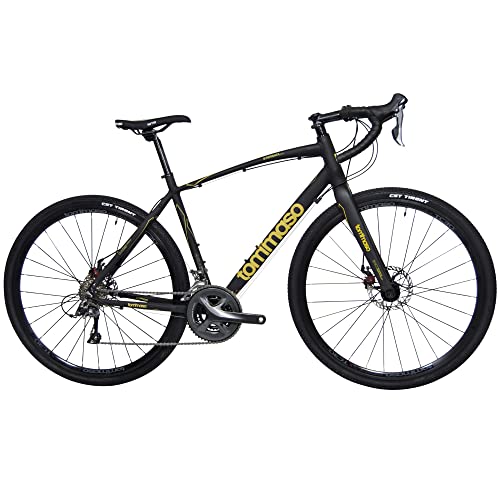
- 24-speed Shimano drivetrain
- Carbon fork with 700x40c tires
- Lifetime frame warranty
Best For: New or intermediate riders tackling roads and unpaved trails
Lightweight Carbon Choice

- 8.7 kg T800 carbon build
- Shimano Sora 18-speed drivetrain
- 700x40c tires and disc brakes
Best For: Beginners and commuters wanting a light road-and-gravel bike
Hydraulic Brake Upgrade

- Shimano U6000 11-speed groupset
- Hydraulic disc brakes
- 700x40c tires with 45-spoke wheels
Best For: Mixed-surface riders prioritizing braking confidence and stability
Best All-Terrain Value – SAVADECK Carbon Gravel Bike
For riders comparing gravel bikes for commuting, weekend adventures, and mixed-surface routes, this SAVADECK combines a lightweight T800 carbon frame with wide 700x40c tires and hydraulic disc brakes. Its upright geometry and 90% pre-assembled delivery also make it approachable for newer riders.
Best For: Riders seeking a versatile carbon gravel bike for paved roads and unpaved trails.
Pros:
- Lightweight 10.4 kg T800 carbon frame and fork
- Shimano U6000 11-speed drivetrain for dependable shifting
- Hydraulic disc brakes and 700x40c tires support mixed-terrain riding
- Includes tools and arrives 90% pre-assembled
Cons:
- The listed 51 cm size is specified for riders approximately 5’7″ to 5’11”
- Rigid suspension provides no added shock absorption
This is a strong all-rounder for riders who want carbon construction, broad tire clearance, and confident braking without stepping up to a more specialized race setup. Check the available sizing carefully before ordering.
Best Budget Road-to-Gravel Option – HILAND 700C Aluminum Road Bike
This HILAND is a road-oriented choice among gravel bikes, using a lightweight aluminum frame, 700C wheels, and a 14-speed drivetrain. It is designed for paved roads, urban terrain, and some unpaved riding, making it a practical option for commuting and sport riding.
Best For: Riders prioritizing efficient road riding, commuting, and occasional gravel use.
Pros:
- Lightweight, stiff, and durable aluminum frame
- 14-speed drivetrain offers a broad range of gears
- 700C wheels reduce rolling resistance and handle bumps efficiently
- Multiple sizes and 85% pre-assembled delivery simplify setup
Cons:
- Caliper brakes are less gravel-focused than hydraulic disc brakes
- The product is listed primarily as a road bike
- Only a one-year manufacturer warranty is specified
Choose this model if most of your riding is on pavement and you want the efficiency of a road bike with some capability on unpaved paths. Its caliper brakes and road-focused design make it less suited to demanding off-road routes.
Best Performance Upgrade – SAVADECK Gelaro S8 Carbon Gravel Bike
The Gelaro S8 stands out among gravel bikes with a 9.8 kg T800 carbon frame and fork, Shimano GRX820 components, and hydraulic disc brakes. Its 700x40c tires and upright geometry are suited to riders who want efficient road performance without giving up capability on rougher trails.
Best For: Enthusiasts wanting a lightweight, higher-spec carbon gravel bike for long mixed-terrain rides.
Pros:
- Very light 9.8 kg T800 carbon frame and fork
- Shimano GRX820 12-speed drivetrain delivers a wide gear range
- Hydraulic disc brakes provide controlled stopping on loose terrain
- 700x40c tires and 45-spoke rims support traction and stability
Cons:
- The listed 53 cm size may not suit every rider
- Rigid suspension offers no suspension damping
With its low weight, GRX820 drivetrain, and hydraulic braking, the Gelaro S8 is the most performance-oriented option in this selection. It is particularly attractive for riders planning longer adventures where climbing efficiency and off-road control matter.
Best Small-Frame Commuter Pick – HILAND 700C Road Bike
For riders who want gravel bikes with a road-oriented feel, this HILAND offers a lightweight aluminum frame, 14-speed drivetrain, and 700C wheels in a small size. The product details specifically include road, gravel, and commuting use, making it a flexible choice for everyday riding.
Best For: Smaller riders seeking an aluminum bike for commuting, paved routes, and light gravel.
Pros:
- Small frame size is listed with a 63 cm minimum user height
- Lightweight aluminum construction is suited to daily use
- 14-speed drivetrain supports varied road and gravel terrain
- Includes adjustable and quick-release seat features
Cons:
- Caliper brakes are less suited to demanding off-road conditions than disc brakes
- Its road-style setup is better for light gravel than rough trails
- One-year manufacturer warranty is specified
This model makes the most sense when fit and everyday practicality are priorities. Its small sizing and commuting features are useful, but riders planning frequent technical gravel should consider a bike with hydraulic disc brakes and wider off-road tires.
Lightweight Adventure Pick – T800 Carbon Gravel Bike
For riders comparing gravel bikes for mixed road and trail use, this SAVADECK model combines a lightweight T800 carbon frame and fork with a Shimano GRX400 20-speed drivetrain. Its 700x40c tires, rigid design, and hydraulic disc brakes are suited to paved roads and unpaved trails alike.
Best For: Riders seeking a lightweight carbon gravel bike for road rides, rougher surfaces, and longer adventures.
Pros:
- Lightweight 10.4 kg T800 carbon frame and fork.
- Shimano GRX400 20-speed drivetrain for controlled shifting.
- Hydraulic disc brakes and 700x40c tires support mixed-terrain riding.
- Internal cable routing and a tapered head tube contribute to a clean design and stable handling.
Cons:
- The listed 51cm size may not suit every rider.
- Its rigid suspension offers no added cushioning from a suspension fork.
This is a performance-oriented choice for buyers who prioritize low weight, hydraulic braking, and dependable gravel versatility. Confirm the 51cm fit before ordering.
Urban Value Option – 21-Speed Aluminum Road Bike
Although positioned as a road and commuter bicycle rather than a dedicated gravel bike, this aluminum model may suit riders who mainly use paved roads, city streets, and occasional lighter gravel. It pairs a 21-speed Shimano drivetrain with 700x28C tires, dual-disc brakes, and a front suspension listing.
Best For: Urban commuters and road riders who want multiple gears, disc brakes, and a lightweight aluminum frame.
Pros:
- 21-speed Shimano drivetrain offers a broad range for urban riding.
- 700x28C tires and double-wall rims are designed for city streets and lighter rough surfaces.
- Dual-disc brakes provide braking support in varied weather conditions.
- Listed as 95% pre-built with included assembly steps for quicker setup.
Cons:
- It is specified for road and urban terrain, not dedicated gravel riding.
- The 28C tires are narrower than the tires on the two carbon gravel models.
- Only a 49cm frame size is listed.
This bike makes more sense as a commuter or city road option than as an all-purpose gravel bike. Choose it if paved riding is the priority and occasional rougher streets are all you expect.
Trail-Ready Carbon Choice – T800 Gravel Bike
This SAVADECK is one of the more trail-focused gravel bikes in the group, with a T800 carbon frame and fork, 700x40c tires, and a Shimano GRX400 20-speed setup. Hydraulic disc brakes and 45-spoke rims add practical equipment for riders moving between paved roads and unpaved trails.
Best For: Riders wanting a carbon gravel bike with wide tires and hydraulic braking for mixed-surface exploration.
Pros:
- 10.4 kg T800 carbon construction keeps the listed weight low.
- Shimano GRX400 controls and RX400 derailleurs provide a gravel-oriented 20-speed setup.
- 700x40c tires offer a wider contact patch for unpaved trails.
- Hydraulic disc brakes, internal routing, and a two-year warranty description add useful ownership features.
Cons:
- The listed 49cm size may limit fit options.
- The rigid suspension does not provide suspension-fork travel.
- The product details list a freewheel, so drivetrain specifications should be checked carefully before purchase.
Compared with a narrower-tire road bike, this model is better aligned with gravel routes and trail transitions. Verify the frame fit and the drivetrain configuration before making a final decision.
Versatile Value Pick – Tommaso Sterrata Sport Gravel Bike
The Tommaso Sterrata Sport is one of the more approachable gravel bikes for riders who want dependable performance on paved roads and unpaved trails. Its aluminum frame, carbon fork, 700x40c tires, Shimano 24-speed drivetrain, and disc brakes create a practical setup for mixed-surface riding. Professional assembly is required to validate the warranty.
Best For: New or intermediate riders seeking an affordable, versatile gravel bike for commuting, road riding, and light off-road adventures.
Pros:
- Carbon fork helps add vibration damping while keeping the build performance-oriented.
- 700x40c tires provide stability across pavement and rougher trails.
- Shimano drivetrain offers 24 speeds and consistent shifting.
- Lifetime frame warranty and two-year component coverage provide added ownership confidence.
Cons:
- Professional assembly is required to validate the warranty.
- The bike has no suspension, so rough terrain may feel less forgiving.
- Its 2021 model-year specification may not suit shoppers seeking the newest design.
The Sterrata makes a strong case for riders who want a capable entry point without immediately outgrowing their bike. Its combination of wider tires, disc brakes, and a carbon fork favors versatile everyday use rather than highly specialized racing.
Lightweight Carbon Choice – KABON Carbon Gravel Road Bike
The KABON Carbon Gravel Road Bike is a lightweight option among gravel bikes, combining a T800 carbon frame, fork, handlebar, and seatpost with 700x40c tires. Its Shimano Sora 2×9 drivetrain and mechanical disc brakes are suited to paved roads, gravel, and entry-level racing. The bike arrives almost completely pre-assembled and includes a tool kit.
Best For: Beginners and commuters who want a lightweight carbon bike with wider tires for road and gravel use.
Pros:
- Carbon construction brings the listed weight down to 8.7 kg (19.2 lb).
- 700x40c tires add stability and traction on uneven surfaces.
- Shimano Sora 18-speed drivetrain is designed for smooth, durable shifting.
- Mechanical disc brakes provide dependable stopping power across varied conditions.
Cons:
- Mechanical disc brakes may require more manual adjustment than hydraulic systems.
- The listed 53 cm size may not fit every rider.
- Accessory coverage is limited to six months, while the frame warranty is three years.
With its low listed weight and full carbon contact points, the KABON emphasizes comfort and efficiency without abandoning gravel versatility. Confirming the 53 cm fit before ordering is especially important, but the nearly assembled design can simplify setup.
Hydraulic Brake Upgrade – SAVADECK Carbon Gravel Bike
The SAVADECK Carbon Gravel Bike pairs a T800 carbon frame and fork with a Shimano U6000 11-speed groupset and hydraulic disc brakes. Among gravel bikes, it stands out for its all-terrain focus: 700x40c tires, 45-spoke wheels, internal cable routing, and an upright frame design support mixed-surface riding. It arrives 90% pre-assembled with the required tools.
Best For: Riders seeking a modern carbon gravel bike with hydraulic braking and a wide-range, 11-speed drivetrain.
Pros:
- Hydraulic disc brakes offer consistent stopping power in varied conditions.
- Shimano U6000 components provide an 11-speed drivetrain with coordinated shifting parts.
- 700x40c tires and 45-spoke wheels are designed for traction and stability on gravel.
- Internal cable routing gives the bike a clean appearance and helps protect components.
Cons:
- The 47 cm size is specifically listed for riders below 5 feet 5 inches, limiting fit range for this configuration.
- At 10.4 kg (22.92 lb), it is heavier than the listed KABON carbon model.
- The warranty is limited to two years.
The SAVADECK is a compelling choice when confident braking and modern component integration matter more than minimum weight. Its tire clearance, upright geometry, and hydraulic discs make it well suited to riders moving between pavement and rougher trails.
How We Picked These Gravel Bikes
We focused on the features that matter most for mixed-surface riding: frame material, fork construction, drivetrain range, braking performance, tire size, and overall versatility. The selection includes carbon Gravel Bikes aimed at lower weight and ride comfort, along with aluminum models that can offer practical durability and value.
We also considered whether each bike is better suited to fast paved rides, maintained gravel, rougher trails, commuting, or light bikepacking. Because listed specifications and sizing can vary by seller, confirm the current component details, available frame sizes, assembly requirements, and return policy before ordering.
Quick Comparison
| Best For | Look For | Typical Advantage |
|---|---|---|
| Fast road and smooth gravel | Light frame, narrower 35–40mm tires, efficient gearing | Quicker handling and easier pavement mileage |
| Mixed road and rough gravel | 40mm or wider tires, hydraulic disc brakes, broad gearing | More control, comfort, and braking confidence |
| Commuting and casual riding | Aluminum frame, practical gearing, easy-to-service parts | Lower ownership cost and everyday durability |
| Long-distance adventure | Comfortable fit, tire clearance, mounting points, low climbing gears | Better versatility for loaded or remote rides |
Key Buying Factors for Gravel Bikes
Frame and Fork Material
Carbon can reduce weight and help mute vibration, but aluminum is often the sensible choice for riders prioritizing value, durability, or frequent locking and commuting. The fork matters too: a carbon fork may improve comfort, while a rigid aluminum fork can emphasize durability and cost control.
Gearing
Do not judge a drivetrain by speed count alone. A wide-range setup with a low climbing gear is more useful on steep gravel than a closely spaced road cassette. Consider your local hills, fitness, expected cargo, and whether you will spend more time on pavement or loose surfaces.
Brakes and Tires
Hydraulic disc brakes generally provide stronger modulation and easier control, especially on long descents or in wet conditions. Mechanical discs can be simpler to maintain. Tires around 40mm are a useful compromise for many riders, while wider clearance adds comfort and traction on rougher routes.
Fit, Clearance, and Setup
Correct frame size and reach are essential. Check the manufacturer’s size chart rather than relying only on height. Also verify maximum tire clearance, wheel size, rack and bottle mounts, tubeless compatibility, pedals included, and whether professional assembly or a post-delivery tune-up is recommended.
Who Should Buy Which Gravel Bikes?
Choose a carbon model if low weight, vibration reduction, and faster climbing are priorities and the added cost fits your budget. An aluminum gravel bike is usually the better value for commuting, training, and riders who want a sturdy all-purpose platform. Select a road-oriented model if most rides are paved with occasional hard-packed paths.
For rougher gravel, prioritize 40mm tires or wider, hydraulic brakes, stable handling, and a low gear for climbs. Riders planning bikepacking or long unsupported trips should favor mounting options, easy-to-source replacement parts, comfortable contact points, and dependable gearing over headline weight. Finally, compare the final delivered price—including shipping, assembly, accessories, and potential fit adjustments—rather than judging by the listed bike price alone.