The right heart rate monitor can turn cycling data into more useful training decisions. Chest-strap sensors typically deliver responsive, consistent readings without requiring a premium bike computer or smartwatch.
We compared 10 popular options across connectivity, comfort, water resistance, battery life, and device compatibility to help you find a reliable heart rate monitor for cycling.
Best 10 Heart Rate Monitor for Cycling Picks for 2026
Precision Pick
- Highly accurate heart rate sensing
- Bluetooth, ANT+ and 5 kHz connectivity
- Waterproof with up to 400-hour battery life
Best For: Cyclists prioritizing precision and broad compatibility
Data-Driven Choice

- Provides real-time heart rate and HRV
- Records and syncs workouts through Garmin Connect
- Rechargeable battery lasts up to two months
Best For: Garmin athletes wanting expanded training data
Rechargeable Performer

- ANT+ and Bluetooth connectivity
- Over 100 hours of active battery life
- Soft, secure strap with status LEDs
Best For: Cyclists seeking simple, rechargeable connectivity
Long-Life Essential

- Real-time heart rate and HRV transmission
- Up to one year of battery life
- Machine-washable strap with 3 ATM water rating
Best For: Garmin cyclists seeking durable everyday monitoring
Comfortable Armband Pick

- Breathable, easy-clean armband design
- Bluetooth pairing with up to three devices
- Up to 38 hours of operating battery life
Best For: Bluetooth-based cyclists who prefer an armband
Long-Battery Cycling Sensor

- Bluetooth and ANT+ connectivity
- Up to 365 hours of battery life
- IPX7 waterproof construction
Best For: Cyclists wanting long battery life and water resistance
Versatile Dual-Protocol Pick
- ANT+ and Bluetooth connectivity
- More than 400 hours of claimed battery life
- Soft, seamless, adjustable chest strap
Best For: Cyclists using varied ANT+ and Bluetooth equipment
Best Long-Battery Pick

- 800-hour replaceable-battery rating
- ANT+ and Bluetooth connectivity
- IP67 protection with LED status light
Best For: Cyclists wanting long battery life and broad device compatibility
Best Budget Training Option
- ANT+ and Bluetooth dual-mode transmission
- Works with bike computers and fitness equipment
- 300-hour replaceable-battery rating
Best For: Cyclists using a mix of GPS computers, apps, and indoor trainers
Best for Long Training Blocks

- 1,000-hour battery-life rating
- Simultaneous ANT+ and Bluetooth transmission
- IP67 protection for daily training
Best For: Frequent riders recording workouts on multiple devices
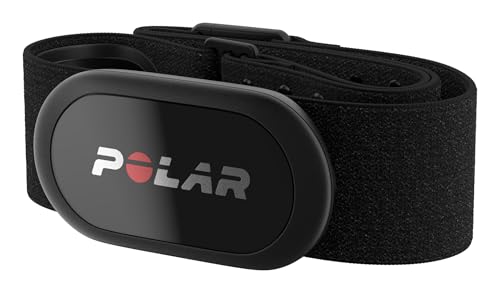
Precision Pick – Polar H10
The Polar H10 is a strong heart rate monitor for cycling when measurement precision and broad device compatibility are priorities. Its chest strap supports Bluetooth, ANT+ and 5 kHz connections, with simultaneous Bluetooth and ANT+ use.
Best For: Cyclists who want a highly accurate, versatile chest-strap monitor with waterproofing and onboard memory.
Pros:
- Recognized for highly accurate heart rate measurement.
- Supports Bluetooth, ANT+ and 5 kHz connectivity.
- Waterproof and includes internal memory for multiple hours.
- Battery lasts up to 400 hours.
Cons:
- Uses a chest strap rather than a wrist-based design.
- Requires the specified CR2025 battery.
The H10 is especially appealing for riders using multiple cycling computers, phones or training platforms. Its comfortable Pro chest strap and flexible connection options make it a dependable choice for structured training.
Data-Driven Choice – Garmin HRM 600
The Garmin HRM 600 is a feature-rich heart rate monitor for cycling that sends real-time heart rate and HRV data to compatible Garmin devices, fitness equipment and apps. It also records workouts when wearing a watch is inconvenient.
Best For: Garmin users and data-focused athletes who want heart rate, HRV and activity recording in one chest-strap system.
Pros:
- Transmits real-time heart rate and HRV data.
- Records workouts and syncs data to Garmin Connect.
- Machine-washable strap is available in two sizes.
- Rechargeable battery lasts up to two months.
Cons:
- Some running-dynamics features require a compatible smartwatch.
- Its broader feature set may be more than casual riders need.
For cyclists already using Garmin’s ecosystem, the HRM 600 offers useful training data and the convenience of storing workouts independently. Its rechargeable design also avoids routine disposable battery replacement.
Rechargeable Performer – Wahoo TRACKR
The Wahoo TRACKR is a practical heart rate monitor for cycling with ANT+ and Bluetooth connectivity. It delivers real-time heart rate data, works with training apps and equipment, and uses a rechargeable battery designed for frequent training.
Best For: Riders who want a comfortable, rechargeable chest strap that connects easily to phones, apps and fitness equipment.
Pros:
- Supports both ANT+ and Bluetooth connections.
- Offers over 100 hours of active battery life.
- Slim strap is designed for comfort and a secure fit.
- LEDs indicate heart rate detection, battery status and connection.
Cons:
- One-size strap may be less adaptable than models offered in multiple sizes.
- Supplied notes list smartphone compatibility but do not specify onboard workout storage.
The TRACKR keeps the essentials straightforward: reliable real-time readings, wide wireless compatibility and long rechargeable runtime. It is a sensible option for cyclists who prefer simple setup and fewer battery changes.
Long-Life Essential – Garmin HRM 200
The Garmin HRM 200 is a straightforward heart rate monitor for cycling that transmits real-time heart rate and HRV data to compatible Garmin cycling computers, smartwatches, equipment and apps. Its replaceable battery and washable strap emphasize everyday convenience.
Best For: Cyclists wanting a durable Garmin-compatible chest strap with long battery life and simple maintenance.
Pros:
- Captures and transmits heart rate and HRV data.
- Offers up to one year of battery life.
- Uses a user-replaceable CR2032 battery.
- Machine-washable strap and 3 ATM water rating support regular use.
Cons:
- Does not list onboard workout storage in the supplied features.
- The included strap size is listed as X-Small–Small; fit should be checked carefully.
The HRM 200 focuses on the core features most cyclists need without emphasizing extra training metrics. Its long-lasting replaceable battery and washable strap make it a low-maintenance choice for routine rides.
Comfortable Armband Pick – COROS Heart Rate Monitor
The COROS Heart Rate Monitor is an armband-style option for cyclists who want a comfortable heart rate monitor for cycling without the feel of a chest strap. Its Bluetooth-only connection supports up to three paired devices, including compatible bike computers, phones, watches, and indoor trainers.
Best For: Cyclists who prioritize a breathable, easy-clean armband and use Bluetooth-compatible training devices.
Pros:
- Soft, breathable band lays flat around the arm for comfortable wear.
- Can connect to up to three devices simultaneously through Bluetooth.
- Wear detection can power the monitor on and off automatically.
- Provides up to 38 hours of operation and 80 days of standby.
Cons:
- Bluetooth only; it is not compatible with ANT+ devices.
- Designed for sports and activities rather than daily heart-rate tracking.
- Includes a USB charging cable but no Type-C adapter.
This is a practical choice for Bluetooth-based cycling setups, especially if you prefer an armband over a chest strap. Check device compatibility carefully if your bike computer relies on ANT+.
Long-Battery Cycling Sensor – iGPSPORT HR50 Chest Strap
The iGPSPORT HR50 is a chest-strap heart rate monitor for cycling, running, and other fitness activities. Its adjustable elastic strap, IPX7 waterproof rating, and claimed 365-hour battery life make it suited to riders who want a low-maintenance sensor for regular training.
Best For: Cyclists seeking extended battery life and a water-resistant chest strap for use with compatible bike computers or sports watches.
Pros:
- Supports Bluetooth and ANT+ connectivity for cycling equipment and sports watches.
- Offers up to 365 hours of battery life using a CR2032 battery.
- IPX7 waterproof construction helps it handle wet training conditions.
- Adjustable elastic strap accommodates a 65–120 cm chest circumference.
Cons:
- Chest-strap design may be less appealing than an armband for some riders.
- The supplied notes identify the sensor as optical but do not provide an accuracy specification.
- Compatibility should be checked with your particular smartphone or cycling device.
The HR50 stands out primarily for its long stated battery life and broad Bluetooth/ANT+ connectivity. It is a sensible option for cyclists who want to avoid frequent charging and regularly train in wet conditions.
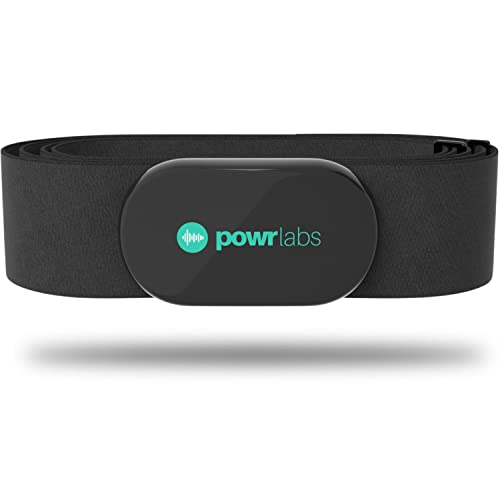
Versatile Dual-Protocol Pick – POWR LABS Heart Rate Monitor
The POWR LABS Heart Rate Monitor is a dual ANT+ and Bluetooth chest strap designed for cycling computers, smartwatches, Peloton, Garmin, Wahoo, Polar, and compatible fitness apps. For riders comparing a heart rate monitor for cycling, its wide device support and replaceable-battery design are key advantages.
Best For: Cyclists who use a mix of ANT+ and Bluetooth equipment and want a soft strap with a long-lasting replaceable battery.
Pros:
- Supports both ANT+ and Bluetooth connections with many cycling and fitness devices.
- Soft, seamless fabric is designed to reduce chafing during longer sessions.
- Claims more than 400 hours of battery life with a replaceable battery included.
- IPX67 sweatproof and water-resistant construction suits demanding workouts.
Cons:
- Must be worn before pairing, according to the supplied instructions.
- Chest strap requires battery replacement rather than USB charging.
- Fit details vary in the supplied notes, so confirm the strap range for your needs.
This model is a strong fit for cyclists who move between ANT+ and Bluetooth ecosystems. Its fabric strap and long stated battery life also make it well suited to frequent or extended training.
Best Long-Battery Pick – GEOID HS500
If you want a heart rate monitor for cycling that can run for long periods between battery changes, the GEOID HS500 combines ANT+ and Bluetooth connectivity with an 800-hour battery rating. Its IP67 protection and movement-focused algorithm make it a practical choice for regular training.
Best For: Cyclists who want long battery life, broad device compatibility, and a visible connection indicator.
Pros:
- Supports both ANT+ and Bluetooth connections with bike computers, sports watches, smartphones, and fitness equipment.
- Offers up to 800 hours of battery life with a replaceable CR2032 battery.
- IP67 waterproof construction is suitable for rainy-day and sweaty workouts.
- Flashing LED confirms heart-rate and connection status during setup.
Cons:
- Swimming is not recommended.
- Bluetooth pairing should be completed through the fitness app rather than the phone’s Bluetooth settings.
The HS500 stands out for endurance and compatibility, making it a strong all-around option for cyclists who use multiple training platforms and prefer infrequent battery replacement.
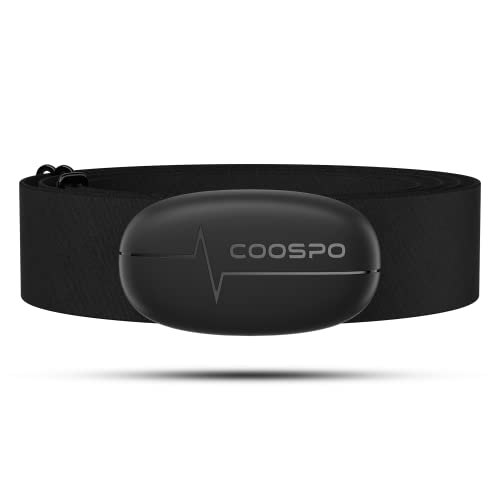
Best Budget Training Option – COOSPO H6
The COOSPO H6 is a straightforward heart rate monitor for cycling with dual-mode ANT+ and Bluetooth transmission. It is designed to work with bike computers, sports watches, cycling apps, and indoor training equipment, making it useful for riders building a connected setup.
Best For: Riders who need broad compatibility with bike computers, apps, gym equipment, and sports watches.
Pros:
- Uses ANT+ and Bluetooth for stable connections to multiple device types.
- Compatible with Garmin and other GPS bike computers, as well as Peloton and other fitness equipment.
- Rated for ±1 BPM heart-rate data during exercise.
- IP67 protection supports rainy-day training and sweaty workouts.
Cons:
- Its 300-hour battery rating is shorter than the other listed options.
- The electrode areas should be moistened before use, especially in dry conditions.
- The sensor and strap should be separated after each workout.
The H6 focuses on practical compatibility and training utility. It is a sensible choice if you want one chest strap to work across cycling hardware, apps, and indoor exercise equipment.
Best for Long Training Blocks – Magene H64
The Magene H64 is a heart rate monitor for cycling built around long battery life and simultaneous ANT+ and Bluetooth transmission. Its optimized hardware and algorithm are intended to improve reliability during exercise, while IP67 protection suits everyday training conditions.
Best For: Cyclists who want extended battery life and the ability to send heart-rate data to an ANT+ device and Bluetooth app at the same time.
Pros:
- Provides up to 1,000 hours of battery life with a replaceable battery.
- Can transmit through ANT+ and Bluetooth simultaneously for dual recording.
- Compatible with bike computers, sports watches, cycling apps, and fitness equipment.
- IP67 dustproof and waterproof protection supports regular outdoor use.
Cons:
- The sensor must be searched for inside the app rather than through the phone’s system Bluetooth menu.
- The electrode area should be wetted and positioned close to the skin for reliable detection.
- The stated battery life is based on laboratory testing and may vary in use.
With the longest stated battery rating in this group, the H64 is particularly appealing for riders who train frequently and want flexible recording across a cycling computer and smartphone app.
How We Picked the Best Heart Rate Monitor for Cycling
We focused on the features that matter most during real rides: dependable heart-rate readings, stable ANT+ and Bluetooth connectivity, comfortable fit, water resistance, battery performance, and compatibility with cycling computers, phones, smartwatches, and indoor platforms. We also included models at different price points so casual riders, structured-training athletes, and multi-device households can find a suitable option.
Chest straps generally provide faster and more consistent readings than wrist-based sensors during intervals, climbs, and other efforts where heart rate changes quickly. However, comfort, strap adjustment, and app or device support still have a major effect on everyday usability.
Quick Comparison
| What to Compare | Best For | Why It Matters |
|---|---|---|
| ANT+ and Bluetooth | Using multiple devices | Lets the sensor connect to bike computers, phones, watches, and indoor-training equipment. |
| Chest-strap design | Accurate training data | Usually responds quickly to intensity changes and stays reliable during movement. |
| Water resistance | Outdoor and sweaty rides | Helps protect the sensor during rain, hard workouts, and regular cleaning. |
| Battery life | Frequent cyclists | Longer runtime reduces charging or battery-replacement interruptions. |
| App compatibility | Training analysis | Useful if you want to review sessions directly on a phone or fitness platform. |
Key Buying Factors for a Heart Rate Monitor for Cycling
Connectivity
Choose dual ANT+ and Bluetooth if you may use a bike computer and a phone, smartwatch, or indoor trainer at the same time. Bluetooth is especially useful for mobile apps and many smart-training platforms, while ANT+ remains common on cycling computers.
Fit and Comfort
A secure, adjustable strap should stay in place without feeling restrictive. Look for a soft, flexible band and washable materials if you ride frequently. Proper electrode contact is important, particularly during the first few minutes of a workout.
Water Resistance and Durability
Water-resistant construction is valuable for sweaty sessions and unpredictable weather. Higher ratings can make a sensor easier to maintain, but always follow the manufacturer’s cleaning and battery instructions.
Battery and Maintenance
Consider whether you prefer a replaceable coin-cell battery or a rechargeable design. Long battery life is convenient, but simple battery access may matter more for riders who travel or train regularly.
Who Should Buy Which Heart Rate Monitor for Cycling?
Choose a premium established model if training accuracy, dependable pairing, and long-term reliability are your priorities. These are strong choices for structured workouts and riders who use several devices.
Choose a midrange dual-protocol strap if you want broad compatibility without paying for advanced features. This category suits most recreational cyclists, indoor riders, and athletes who track workouts on a phone or bike computer.
Choose a budget sensor if you mainly need basic heart-rate broadcasting for occasional rides, yoga, jogging, or Peloton-style workouts. Before buying, confirm that its ANT+ or Bluetooth profile works with your exact device.
For the best everyday experience, prioritize a comfortable fit and reliable compatibility over extra specifications you are unlikely to use.