Training indoors can keep your triathlon plan moving when weather, traffic, or limited daylight gets in the way. The right trainer should match your workout goals, bike setup, space, and budget.
This roundup compares 10 bike trainers for triathlons, including high-end smart trainers for precise power-based sessions and simpler stands for reliable aerobic riding.
Best 10 Bike Trainers for Triathlons Picks for 2026
Premium Power
Wahoo KICKR V6 Smart Indoor Trainer
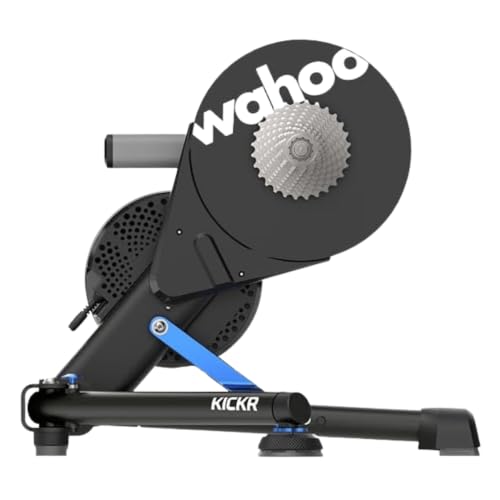
- 2,200+ watts of resistance with +/- 1% stated accuracy
- Wi-Fi connectivity and automatic calibration
- AXIS feet support a more natural ride feel
Best For: Power-focused triathlon training at home
Quiet Simulation
ThinkRider X2Max Smart Bike Trainer

- Simulates gradients up to 18%
- ANT+ and BLE support for connected training
- Up to 2,000 watts with approximately 58 dB noise at 30 km/h
Best For: Zwift-style workouts and indoor hill simulation
Integrated Training
Wahoo KICKR V6 with Zwift Click and Cog
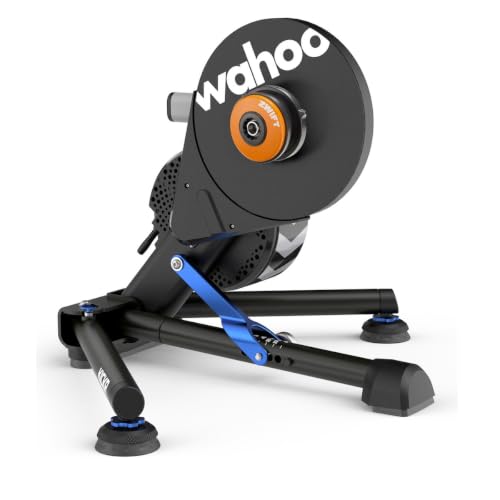
- Includes Zwift Click and Cog
- 2,200+ watts with +/- 1% stated accuracy
- Wi-Fi connectivity and automatic calibration
Best For: Connected Zwift-focused triathlon workouts
Portable Simplicity
Alpcour Fluid Bike Trainer Stand

- Progressive fluid resistance for road and hill-style workouts
- Foldable stainless-steel frame with carrying bag
- Fits most 26–29-inch and 700c wheels
Best For: Portable, non-smart indoor conditioning
Smart Training Pick

- Wheel-on setup
- ANT+ and Bluetooth app connectivity
- Electronic resistance with ±5% accuracy
Best For: Connected triathlon training with automatic resistance control
Budget Resistance Stand
Six-Level Magnetic Bike Trainer
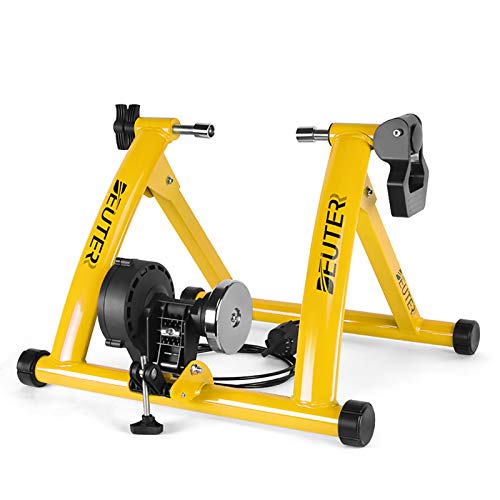
- Six manual resistance levels
- Folds for storage and transport
- Fits 26- to 29-inch wheels and 700c
Best For: Simple, portable indoor training on a budget
Smooth Road Feel
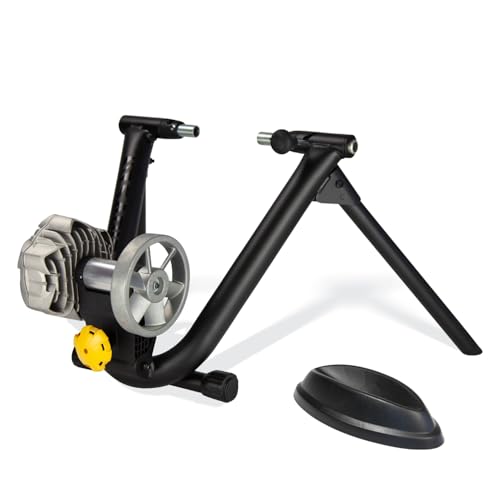
- Progressive fluid resistance
- Foldable wheel-on design
- App compatible with a separate sensor
Best For: Quiet-feeling endurance rides with natural resistance
Best Adjustable Trainer
Sportneer Magnetic Bike Trainer

- Six magnetic resistance levels
- Stable, low-profile steel frame
- Fits many 26–28-inch and 700C bikes
Best For: Structured indoor endurance rides and intervals
Best Portable Trainer
Alpcour Foldable Magnetic Bike Trainer
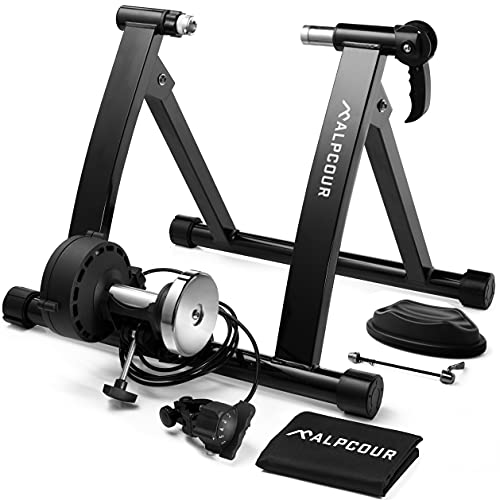
- Foldable frame with carrying bag
- Six fixed resistance settings
- Quick, tool-free bike connection
Best For: Traveling triathletes and compact home setups
Best Simple Budget Trainer
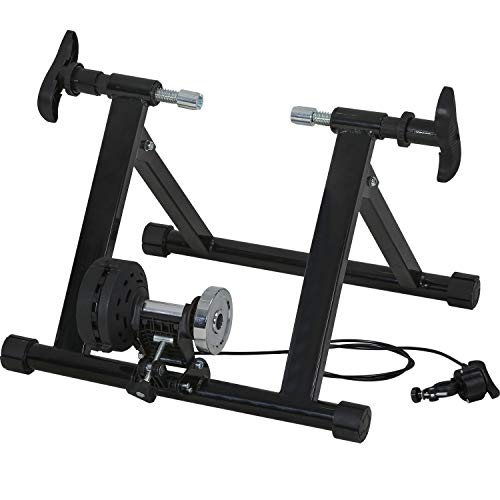
- Five magnetic resistance levels
- Foldable, space-saving design
- Up to 300-pound stated capacity
Best For: Basic indoor conditioning and occasional training
Premium Power – Wahoo KICKR V6 Smart Indoor Trainer
For athletes comparing bike trainers for triathlons, the Wahoo KICKR V6 emphasizes accurate, high-output resistance and a connected training experience. Its Wi-Fi connectivity, automatic calibration, and outdoor-like ride feel make it a strong option for structured indoor sessions.
Best For: Triathletes who want precise power training, high resistance, and a realistic ride feel.
Pros:
- Provides more than 2,200 watts of electromagnetic resistance with stated accuracy of +/- 1%.
- Wi-Fi connectivity helps transfer ride data to compatible computers, tablets, and smartphones.
- AXIS feet and a high-inertia flywheel are designed to mimic outdoor riding movement and feel.
- Automatic calibration supports consistent power readings without manual calibration.
Cons:
- At 22 kg, it is relatively heavy to move or store.
- The supplied specifications list a one-year manufacturer warranty.
The KICKR V6 is best suited to dedicated triathlon training where reliable power data and demanding resistance matter more than portability. Its broad adapter support also accommodates several road, mountain, and hybrid bike configurations.
Quiet Simulation – ThinkRider X2Max Smart Bike Trainer
The ThinkRider X2Max is a practical choice among bike trainers for triathlons when software compatibility, simulated climbs, and quiet operation are priorities. It supports ANT+ and Bluetooth Low Energy while delivering up to 2,000 watts of electromagnetic resistance.
Best For: Indoor riders seeking connected virtual training with simulated gradients and a relatively quiet setup.
Pros:
- Supports ANT+ and BLE protocols and works with mainstream cycling software such as Zwift.
- Simulates slopes up to 18% through intelligent variable resistance.
- Delivers up to 2,000 watts of power with a stated power-meter error of +/- 2%.
- Noise is listed at about 58 dB when riding at 30 km/h.
Cons:
- A cassette is not included, so one is needed for setup.
- At 35.2 pounds, it is less convenient to transport than a lightweight trainer.
- The stated one-year warranty is relatively limited.
With its 18% gradient simulation and dual wireless protocols, the X2Max offers useful features for structured virtual riding. Its I-beam triangular frame is designed to provide stability, though buyers should plan for the additional cassette purchase.
Integrated Training – Wahoo KICKR V6 with Zwift Click and Cog
For triathletes looking for bike trainers for triathlons with a ready-made virtual training focus, this KICKR V6 package includes Zwift Click and Cog. It combines Wi-Fi connectivity, high-output resistance, automatic calibration, and the KICKR ride feel in one smart-trainer setup.
Best For: Riders who want KICKR performance with included Zwift Click and Cog components.
Pros:
- Includes Zwift Click and Cog alongside the trainer and required adapters.
- Offers more than 2,200 watts of electromagnetic resistance with stated +/- 1% accuracy.
- Wi-Fi connectivity supports fast data transfer to compatible training devices.
- AXIS feet and the high-inertia flywheel are designed for a realistic, responsive ride.
Cons:
- The supplied specifications list a one-year manufacturer warranty.
- Its connected features are most useful with compatible devices and training software.
- The package is less focused on portability than a foldable wheel-on trainer.
This version is a compelling fit for athletes who plan to train through connected platforms and want the Zwift Click and Cog included. Its precision resistance and calibration-free operation are particularly useful for repeatable interval and power sessions.
Portable Simplicity – Alpcour Fluid Bike Trainer Stand
The Alpcour Fluid Trainer is a straightforward option among bike trainers for triathlons when portability and simple indoor conditioning matter more than smart connectivity. Its fluid resistance progressively increases as you pedal faster, and the foldable stainless-steel frame is designed for storage and travel.
Best For: Triathletes who want a portable, non-smart trainer for general conditioning and interval work.
Pros:
- Fluid resistance increases progressively with pedaling speed to help simulate roads and hills.
- Foldable frame and included carrying bag make storage and transport easier.
- Compatible with most 26–29-inch and 700c wheels.
- Front riser block, anti-slip pads, and a dual-lock system support stability.
Cons:
- It does not list smart connectivity or electronic power measurement.
- The wheel-on design uses the bike’s rear tire against the resistance unit.
- The supplied specifications identify only one resistance setting.
The Alpcour is a practical budget-style training stand for riders who need a flexible indoor setup without virtual-training electronics. Its progressive fluid resistance and compact folding design make it particularly suitable for basic endurance, conditioning, and interval sessions.
Smart Training Pick – Saris M2 Smart Trainer
Saris M2 Smart Indoor Bike Trainer, Compatible with Zwift App, Black, Made in the USA
Check Price On AmazonFor triathletes comparing bike trainers for triathlons, the Saris M2 offers app-connected, electronically controlled resistance without removing the bike’s rear wheel. Its Zwift certification, dual ANT+ FE-C and Bluetooth connectivity, and stated ±5% accuracy make it suited to structured indoor sessions.
Best For: Triathletes who want connected training with automatic resistance control and a straightforward wheel-on setup.
Pros:
- Wheel-on design avoids removing the rear wheel or disassembling the bike.
- Electromagnetic resistance provides controlled, consistent workouts.
- Connects to compatible apps through ANT+ FE-C and Bluetooth; Zwift certified.
- Includes a steel quick-release skewer and one month of Rouvy.
Cons:
- At 69 decibels at 20 mph, it may not be the quietest option.
- Its stated accuracy is ±5%, rather than a tighter precision rating.
The M2 is a practical choice when interactive training and electronic resistance matter more than eliminating wheel and tire noise. Its 300-pound load capacity and included quick-release skewer add useful flexibility for many road and mountain-bike setups.
Budget Resistance Stand – Six-Level Magnetic Bike Trainer
This folding magnetic stand is a basic option for athletes seeking bike trainers for triathlons without app-dependent features. It supports six handlebar-adjustable resistance levels, fits 26- to 29-inch wheels including 700c, and folds for storage.
Best For: Triathletes who need an affordable, portable wheel-on trainer for straightforward indoor workouts.
Pros:
- Six resistance levels can be changed from the handlebars.
- Folding design supports convenient setup, transport, and storage.
- Stable pyramid-style frame is rated for up to 330 pounds.
- Fits bicycles with 26- to 29-inch wheels, including 700c.
Cons:
- It does not list smart connectivity or virtual-training app support.
- Rough mountain-bike tires may create more noise and vibration.
- Magnetic resistance offers manual levels rather than automatic workout control.
This trainer covers the essentials for indoor riding and can be a sensible choice for base miles, warm-ups, or bad-weather sessions. Choose it over a smart model only if manual resistance and portability meet your training needs.
Smooth Road Feel – Saris Fluid2 Indoor Trainer
The Saris Fluid2 is a wheel-on choice for triathletes evaluating bike trainers for triathlons and prioritizing a road-like feel. Its fluid resistance progressively increases as you pedal harder, while the foldable frame keeps setup and storage simple.
Best For: Riders who want smooth progressive resistance for endurance sessions and occasional compatibility with virtual training platforms.
Pros:
- Fluid resistance provides progressive, road-like pedaling feedback.
- Precision-balanced flywheel is designed for smooth, quiet operation.
- Wheel-on installation and foldable frame simplify use and storage.
- Works with Zwift and Rouvy when paired with a separately sold speed or cadence sensor.
Cons:
- App compatibility requires a separate speed or cadence sensor.
- It does not provide the listed electronic resistance control of the Saris M2.
- Wheel-on trainers can still transmit tire noise indoors.
Fluid2 is a strong fit for steady triathlon training when natural-feeling resistance matters more than integrated smart control. Its durable frame and simple operation make it suitable for repeated indoor sessions without a complicated setup.
Best Adjustable Trainer – Sportneer Magnetic Bike Trainer
For triathletes comparing bike trainers for triathlons, the Sportneer offers practical control for structured indoor sessions. Its six magnetic resistance levels, bar-mounted remote, front wheel riser, and broad wheel compatibility make it suitable for endurance rides, intervals, and simulated climbs.
Best For: Triathletes who want adjustable resistance and a stable, easy-to-mount trainer for regular home workouts.
Pros:
- Six resistance levels can simulate flat riding through steeper efforts.
- Fits many 26–28-inch and 700C bikes, with a thru-axle version available.
- Wide base, low center of gravity, and adjustable anti-slip feet support stability.
- Includes a quick-release lever and front wheel riser block.
Cons:
- Noise varies by tire material and tread; slick or road tires are recommended.
- Thru-axle users need the compatible non-standard version with adapter.
The Sportneer is a well-rounded choice when resistance adjustment and secure positioning matter more than advanced connected features. Its 300-pound load capacity and one-year warranty add practical reassurance for consistent indoor training.
Best Portable Trainer – Alpcour Foldable Magnetic Bike Trainer
The Alpcour is a convenient option for athletes seeking bike trainers for triathlons that can be stored or transported easily. It converts many road and mountain bikes into stationary bikes and combines six resistance settings with a foldable frame and carrying bag.
Best For: Triathletes who need a portable indoor trainer for travel, compact storage, or flexible all-season conditioning.
Pros:
- Foldable design and included bag simplify transport and storage.
- Six handlebar-mounted resistance settings support varied workouts.
- Wide base, low stance, riser block, and anti-slip pads help maintain balance.
- Quick lever setup requires no tools.
Cons:
- Compatibility is described for most 26–28-inch and 700C wheels, so bike fit should be checked.
- Its stated load-capacity range is lower than some competing options.
Choose the Alpcour when portability is a major part of your training setup. The magnetic mechanism, noise-reduction design, and six resistance levels make it useful for everyday sessions, while the foldable stainless-steel frame is convenient for limited spaces.
Best Simple Budget Trainer – FDW Magnetic Bike Trainer
For a straightforward approach to bike trainers for triathlons, the FDW provides magnetic resistance in a foldable steel stand. Its five resistance settings cover easier riding through hill-like efforts, while the compact design supports storage between workouts.
Best For: Triathletes who want a basic indoor trainer for conditioning, steady rides, and occasional resistance work.
Pros:
- Five resistance levels provide a simple range for varied sessions.
- Foldable design is convenient for car transport and home storage.
- Carbon-steel construction is rated for up to 300 pounds.
- Designed to fit wheel sizes from 66 cm to 700C.
Cons:
- Assembly takes about 15 minutes according to the supplied instructions.
- It has five settings rather than the six offered by the other listed trainers.
- The warranty period is 90 days.
The FDW is best suited to buyers who prioritize basic functionality and easy storage. It lacks the extra setup conveniences of some alternatives, but its foldable frame, magnetic resistance, and high stated load capacity cover the essentials for indoor cycling.
How We Picked the Best Bike Trainers for Triathlons
We evaluated these trainers by focusing on the features that matter most during triathlon preparation: resistance control, compatibility, stability, noise, portability, and indoor-training software support. Smart models were considered for their ability to connect with platforms such as Zwift and to support structured workouts. Fluid and magnetic trainers were included for athletes who want straightforward indoor mileage without the cost or setup of a fully connected system.
We also considered wheel and bike compatibility, resistance range, reported slope simulation, connectivity standards such as ANT+ and Bluetooth, and whether each design is practical for frequent home use.
Quick Comparison
| Trainer type | Best for | Main advantage | Potential limitation |
|---|---|---|---|
| Direct-drive smart | Serious structured training | Accurate, controllable resistance and no rear-tire wear | Higher price and more setup |
| Wheel-on smart | Connected training on a budget | App compatibility with simpler installation | Can be noisier and requires tire maintenance |
| Fluid | Road-feel and endurance riding | Progressive resistance and smooth operation | Usually less automated than smart models |
| Magnetic | Basic indoor workouts | Affordable, compact, and easy to store | Limited resistance control and app integration |
Key Buying Factors for Bike Trainers for Triathlons
Resistance and Workout Control
Triathletes doing intervals, threshold work, or race-specific simulations will benefit from electronically controlled resistance and a broad power range. For steady endurance sessions, a fluid or magnetic trainer may be sufficient.
Trainer Style and Bike Compatibility
Direct-drive trainers remove the rear wheel and generally provide a more stable, realistic setup. Wheel-on models are faster to install but require the correct axle adapters, wheel size, and often a trainer-specific tire. Check cassette, drivetrain, axle, and frame compatibility before buying.
Connectivity and Accuracy
ANT+ and Bluetooth support makes it easier to connect to training apps, bike computers, heart-rate monitors, and virtual racing platforms. If your plan depends on power zones, look for dependable power measurement and calibration guidance rather than relying only on advertised maximum wattage.
Noise, Stability, and Storage
A stable frame matters during hard efforts, while lower noise is important in shared living spaces. Foldable magnetic and fluid stands are convenient to store; heavier smart trainers are typically less portable but can feel more secure during sprints.
Who Should Buy Which Bike Trainers for Triathlons?
Choose a premium direct-drive smart trainer if you train by power, follow structured workouts, or want the most engaging virtual-cycling experience. Choose a smart wheel-on model if you want app connectivity while keeping installation and cost more manageable.
Choose a fluid trainer for smooth endurance rides and progressive resistance without needing extensive electronics. Choose a magnetic trainer if affordability, simplicity, and occasional indoor sessions matter more than automatic resistance or advanced data.
Finally, confirm your bike’s wheel size and axle type, place the trainer on a stable surface, and use a suitable mat to reduce vibration and protect the floor. Those details can make a noticeable difference in comfort and consistency throughout a triathlon training block.