The best direct-drive bike trainers deliver stable resistance, realistic climbing simulations, and a more secure indoor ride than traditional wheel-on designs. They are a strong choice for structured training, virtual cycling, and year-round fitness.
This roundup compares 10 options across smart connectivity, power capacity, gradient simulation, drivetrain compatibility, and price. Whether you use Zwift regularly or simply want a dependable indoor setup, the right trainer depends on how you ride and what features you will actually use.
Best 10 Direct Drive Bike Trainers Picks for 2026
Top Smart Trainer Pick
Wahoo KICKR CORE 2 with Zwift Cog

- Smooth road-like resistance for structured training
- Integrated Wi-Fi supports pairing and updates
- Includes Zwift Cog, Click, and multiple adapters
Best For: Connected indoor training and Zwift users
Premium Performance Choice
Garmin TacX NEO 2T Smart Trainer

- Up to 2,200 watts of load capacity
- ANT+ and Bluetooth connectivity
- Foldable design with included axle adapters
Best For: High-power training across multiple devices and platforms
Budget Manual Option
Folding Magnetic Bike Trainer Stand
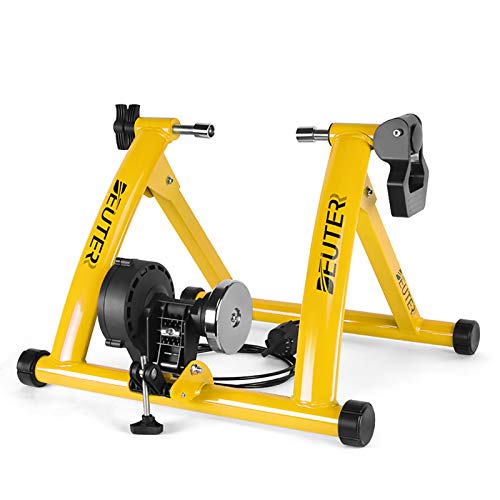
- Six handlebar-adjustable resistance levels
- Folds for transport and storage
- Fits 26- to 29-inch wheels and 700c
Best For: Casual indoor exercise on a budget
Climbing Simulation Pick
Elite Direto XR Interactive Trainer
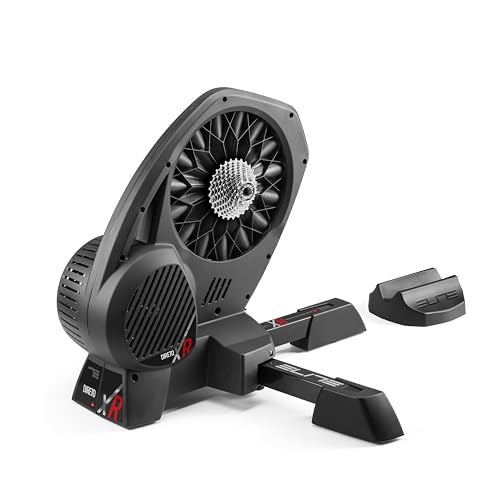
- ±1.5% stated power accuracy
- Simulates gradients up to 24%
- ANT+ FE-C and Bluetooth app integration
Best For: Structured workouts and realistic virtual climbing
Best Self-Powered Option

- 2,500W maximum power with 25% gradient simulation
- Self-power generation plus ANT+ and Bluetooth connectivity
- Direct motor drive with claimed ±1% accuracy
Best For: Riders seeking high resistance and a flexible, self-powered setup
Best Ride Feel
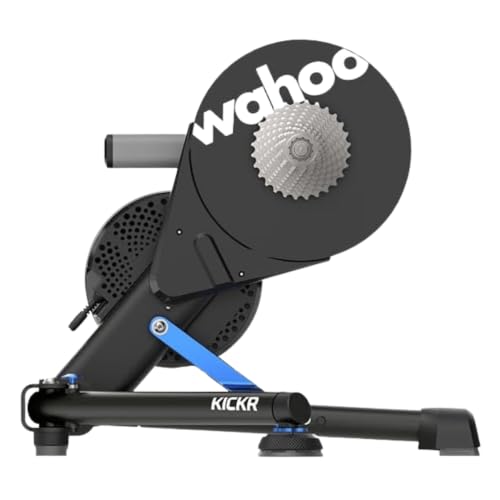
- Over 2,200W resistance with claimed ±1% accuracy
- Wi-Fi connectivity for stable ride-data transfer
- AXIS feet simulate outdoor side-to-side movement
Best For: Cyclists prioritizing realistic handling and reliable connectivity
Best Quiet Value

- 2,000W maximum power with 18% slope simulation
- ANT+ and Bluetooth support for compatible training software
- Approximately 58 dB at 30 km/h, according to the supplied notes
Best For: Riders wanting a stable, quieter trainer for app-based workouts
Quiet Direct-Drive Pick
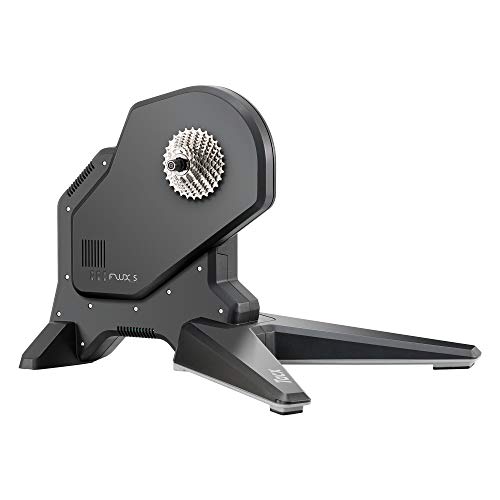
- Power accuracy within 3%
- Next-to-silent direct-drive operation
- Simulates gradients up to 10%
Best For: Quiet, realistic home training
High-Power Training Choice

- Up to 2,200 watts of peak power
- Simulates gradients up to 20%
- Quiet operation under 55 dB
Best For: High-intensity climbing and interval workouts
Simple Wheel-On Alternative

- No rear-wheel removal required
- ANT+ FE-C and Bluetooth connectivity
- Zwift certified with ±5% accuracy
Best For: Convenient, low-setup indoor riding
Top Smart Trainer Pick – Wahoo KICKR CORE 2 with Zwift Cog
The Wahoo KICKR CORE 2 is a strong choice among direct drive bike trainers for riders who want a smooth road-like feel, straightforward setup, and integrated connectivity. Its Zwift Cog and Click package is designed to simplify indoor riding, while integrated Wi-Fi supports faster pairing and automatic updates.
Best For: Riders starting or upgrading a connected indoor training setup, especially Zwift users.
Pros:
- Smooth, road-like resistance suited to hard efforts and structured training.
- Integrated Wi-Fi helps with pairing and automatic updates.
- Includes Zwift Cog and Click plus adapters for common QR and thru-axle configurations.
- Backed by a two-year manufacturer warranty.
Cons:
- The 13.6 kg trainer is substantial for frequent moving or storage.
- Its Zwift-focused Cog and Click setup may be less appealing to riders who prefer a traditional cassette arrangement.
The KICKR CORE 2 combines practical setup improvements with the stable, controlled resistance expected from a serious indoor trainer. It is a well-rounded option for structured workouts and connected riding.
Premium Performance Choice – Garmin TacX NEO 2T Smart Trainer
The Garmin TacX NEO 2T is a premium-feeling option among direct drive bike trainers, using magnetic resistance and wireless ANT+ and Bluetooth connectivity. Its foldable design and included axle hardware make it practical for riders who need a capable trainer that can also be stored between sessions.
Best For: Riders seeking a high-power smart trainer with broad device and platform compatibility.
Pros:
- Supports ANT+ and Bluetooth connections across iOS, Android, macOS, and Windows.
- Rated for up to 2,200 watts of load capacity.
- Foldable construction helps with storage.
- Includes a front wheel support, axle adapters, and one month of Tacx Premium software.
Cons:
- At 47.4 pounds, it is relatively heavy to move.
- The product information lists five settings, which may offer less adjustment detail than trainers with more levels.
The NEO 2T is built for demanding indoor sessions and flexible wireless use. Its high load rating and foldable frame make it a compelling choice when performance and compatibility matter more than portability.
Budget Manual Option – Folding Magnetic Bike Trainer Stand
This folding magnetic stand is a budget-minded alternative to direct drive bike trainers for riders who want simple indoor exercise without a smart-training setup. It fits 26- to 29-inch wheels, including 700c, and provides six handlebar-adjustable resistance levels.
Best For: Casual indoor riding and basic weather-proof workouts on compatible road or mountain bikes.
Pros:
- Six resistance levels can be adjusted from the handlebars.
- Folding design supports convenient transport and storage.
- Fits 26- to 29-inch wheels, including 700c.
- Strong frame is listed with a 330-pound load capacity.
Cons:
- This is a wheel-on magnetic stand, not a direct-drive trainer.
- Rough mountain-bike tires may create more noise and vibration.
- It does not provide the supplied smart connectivity features of electronic trainers.
For straightforward indoor exercise, this trainer keeps the setup uncomplicated and relatively portable. Choose it when manual resistance and broad wheel compatibility are more important than app integration or direct-drive performance.
Climbing Simulation Pick – Elite Direto XR Interactive Trainer
The Elite Direto XR is a versatile direct drive bike trainer for structured workouts, virtual riding, and performance tracking. It measures power with stated accuracy of plus or minus 1.5%, simulates climbs up to 24%, and connects to popular training platforms through ANT+ FE-C and Bluetooth.
Best For: Riders who want accurate power data and realistic gradient simulation for structured training.
Pros:
- Optical Torque Sensor provides stated power accuracy of ±1.5%.
- Simulates gradients up to 24% for challenging virtual climbs.
- Works with Zwift, TrainerRoad, ROUVY, and other compatible software.
- Includes adapters for common QR and 142x12mm thru-axle setups plus a 12-month My E-Training subscription.
Cons:
- Additional axle adapters and freehubs are sold separately.
- Compatible cassette options depend on the included freehub and listed drivetrain support.
- Its 40-pound weight may make frequent relocation inconvenient.
The Direto XR stands out for combining measured power accuracy with substantial climb simulation. It is particularly well suited to riders who use structured apps and want training data that supports consistent performance tracking.
Best Self-Powered Option – ThinkRider XXPRO
The ThinkRider XXPRO is a versatile choice among direct drive bike trainers, combining self-power generation with strong virtual-training performance. It delivers up to 2,500 watts, simulates gradients up to 25%, and supports ANT+ and Bluetooth connections for compatible cycling apps and devices.
Best For: Riders who want high resistance, downhill simulation, and the convenience of using the trainer without always connecting a power adapter.
Pros:
- Up to 2,500W of power and 25% simulated gradient.
- Direct motor drive with claimed ±1% data accuracy and no calibration required.
- Can generate its own electricity and supports ANT+ and Bluetooth.
- Simulates both uphill and downhill riding.
Cons:
- Its 242-pound load capacity is lower than the supplied figure for the Wahoo KICKR V6.
- A one-year warranty is relatively limited for a long-term indoor-training investment.
With its high power ceiling and self-powered design, the XXPRO stands out for riders prioritizing immersive gradients and flexible setup. It is a strong fit for structured indoor training, provided its compatibility and dimensions suit your space.
Best Ride Feel – Wahoo KICKR V6
The Wahoo KICKR V6 is a premium option among direct drive bike trainers, emphasizing stable connectivity and a realistic outdoor-style ride feel. Its 2,200-plus watts of resistance, automatic calibration, Wi-Fi connectivity, and AXIS feet support demanding indoor sessions.
Best For: Cyclists who value precise resistance, dependable Wi-Fi data transfer, and side-to-side movement that more closely mimics outdoor riding.
Pros:
- Provides more than 2,200 watts of resistance with claimed ±1% accuracy.
- 2.4 GHz Wi-Fi supports stable, immediate ride-data transfer.
- AXIS feet add simulated side-to-side movement.
- Automatic calibration is designed to maintain accurate power readings.
Cons:
- The supplied specifications do not list a maximum simulated gradient.
- At 22 kg, it may be less convenient to move than lighter trainers.
- It requires AC power, according to the included power-adapter listing.
The KICKR V6 is a compelling choice when ride feel and connection stability matter more than self-powered operation or a stated gradient range. Its calibration-free workflow can also reduce setup maintenance.
Best Quiet Value – ThinkRider X2Max
The ThinkRider X2Max is a practical direct drive bike trainer for riders who want smart resistance and broad app compatibility without the XXPRO’s higher power rating. It offers up to 2,000 watts, simulates an 18% slope, and is rated at about 58 dB while running at 30 km/h.
Best For: Road and mountain-bike riders looking for a stable, relatively quiet trainer for Zwift and other compatible cycling software.
Pros:
- Supports ANT+ and Bluetooth dual-mode connectivity.
- Simulates gradients up to 18% through intelligent variable resistance.
- Produces up to 2,000 watts with stated power-meter error of ±2%.
- I-beam triangular construction is designed for balance and stability.
Cons:
- A cassette is not included.
- Its ±2% stated power-meter error is less precise than the claimed ±1% figures of the other listed trainers.
- It has a lower maximum power and gradient rating than the XXPRO.
The X2Max makes sense for everyday indoor riding where noise, stability, and software compatibility are key considerations. Budget separately for a cassette and check drivetrain requirements before ordering.
Quiet Direct-Drive Pick – Tacx Flux S Smart Trainer
The Tacx Flux S is one of the more practical direct drive bike trainers for riders who want quiet indoor sessions and app-based resistance control. It measures power within 3% accuracy, simulates gradients up to 10%, and supports popular platforms including Zwift and TacX.
Best For: Home cyclists seeking a sturdy, next-to-silent trainer for structured workouts and realistic virtual riding.
Pros:
- Power measurement is accurate within 3%.
- Direct-drive design operates next to silently.
- Simulates inclines up to 10% and provides up to 1,500 watts of sprint resistance.
- Sturdy frame supports riding full-out and standing on the pedals.
Cons:
- At 50 pounds, it is relatively heavy to move.
- A cassette is not listed among the supplied included components.
Choose the Flux S if low noise, solid construction, and dependable app compatibility matter more than portability. Its 3% power accuracy and 10% gradient simulation make it a capable option for regular indoor training.
High-Power Training Choice – CYCPLUS T2H Smart Trainer
The CYCPLUS T2H stands out among direct drive bike trainers for riders who want high resistance and broad wireless connectivity. Its brushless motor delivers up to 2,200 watts, simulates gradients up to 20%, and connects through BLE or ANT+ to apps such as Zwift.
Best For: Performance-focused riders who want steep virtual climbs, high peak power, and quiet indoor training.
Pros:
- Brushless motor provides up to 2,200 watts and 85 N·m of maximum torque.
- Simulates gradients up to 20%.
- Supports BLE and ANT+ connectivity with popular cycling apps.
- Triple-layer noise reduction keeps operation under 55 dB.
Cons:
- Requires the separately sold CYCPLUS BC2 Shifter for virtual shifting.
- Virtual shifting is not compatible with ERG mode.
- Cassette is not included.
The T2H is a strong fit for demanding training plans and steep virtual terrain. Confirm the cassette and shifting requirements before buying, particularly if you plan to use virtual shifting instead of your bike’s mechanical drivetrain.
Simple Wheel-On Alternative – Saris M2 Smart Trainer
Saris M2 Smart Indoor Bike Trainer, Compatible with Zwift App, Black, Made in the USA
Check Price On AmazonThe Saris M2 takes a simpler approach than direct drive bike trainers: it connects to the rear wheel, so you do not need to remove the wheel or disassemble the bike. It offers electromagnetic resistance, dual ANT+ FE-C and Bluetooth connectivity, and Zwift certification for app-based workouts.
Best For: Riders who want convenient indoor training with minimal bike setup and broad app compatibility.
Pros:
- Wheel-on design avoids removing the rear wheel.
- Connects through ANT+ FE-C and Bluetooth.
- Provides controlled electromagnetic resistance with ±5% accuracy.
- Includes a steel quick-release skewer for common road and mountain bike frames.
Cons:
- Its stated noise level is 69 dB at 20 mph.
- It is not a direct-drive trainer, so the rear tire remains in contact with the unit.
- It has lower stated power accuracy than the Tacx Flux S.
The M2 is worth considering when quick setup and bike compatibility are priorities. Its wheel-on format is less specialized than a direct-drive design, but it avoids drivetrain removal and includes useful Zwift and Bluetooth support.
How We Picked the Best Direct Drive Bike Trainers
We focused on trainers that cover the main needs of indoor cyclists: reliable resistance control, broad bike compatibility, useful power limits, realistic gradient simulation, and support for popular training platforms. Smart models were evaluated for ANT+ and Bluetooth connectivity, app support, and electronically controlled resistance. We also included simpler and more affordable designs for riders who do not need full virtual-training integration.
Because specifications can vary by bundle and region, confirm the included cassette, Zwift Cog, Click controller, adapters, and required accessories before ordering. A direct-drive trainer usually requires removing the rear wheel, so drivetrain compatibility is just as important as headline wattage.
Quick Comparison
- Best connected all-rounder: Wahoo KICKR CORE 2 or KICKR V6 Smart Indoor Trainer.
- Best premium ride feel: Garmin TacX Neo 2T Smart Trainer.
- Best value-oriented smart options: Elite Direto XR, Tacx Flux S, or CYCPLUS T2H.
- Best high-power alternatives: ThinkRider XXPRO, ThinkRider X2Max, and CYCPLUS T2H.
- Best for basic indoor exercise: The magnetic bicycle stationary stand, if smart control is not a priority.
Key Buying Factors for Direct-Drive Bike Trainers
Compatibility and Setup
Check your bike’s axle type, cassette speed, freehub standard, and frame clearance. Some packages include a cassette or Zwift Cog, while others require a separate purchase. Also verify whether your bike uses a standard derailleur setup, thru-axle, or another configuration.
Power and Gradient Simulation
Higher maximum wattage matters most for sprinting, steep virtual climbs, and powerful riders. Gradient simulation is useful for immersive routes, but it does not tell the whole story. Resistance responsiveness and power accuracy can have a greater effect on training quality.
Connectivity and Noise
For Zwift, TrainerRoad, Rouvy, and similar services, look for dependable ANT+ or Bluetooth support and an electronically controlled resistance system. Direct-drive trainers are generally quieter than wheel-on models, although drivetrain noise and vibration still depend on your bike and riding surface.
Accuracy, Portability, and Maintenance
Consider stated power accuracy, calibration requirements, trainer weight, folding features, and storage space. A heavier unit may feel more stable, while a lighter model is easier to move. Regular firmware updates and correct drivetrain lubrication can also improve the experience.
Who Should Buy Which Direct Drive Bike Trainers?
Choose a premium Wahoo or Garmin model if you train frequently and want polished software integration, strong ride feel, and long-term convenience. The Elite Direto XR, Tacx Flux S, and CYCPLUS T2H make more sense for riders seeking smart features without moving to the highest price tier. ThinkRider models are worth considering when high power and steep gradient simulation are priorities.
If you only need occasional indoor exercise and do not care about automatic resistance or virtual worlds, a basic magnetic stand may be sufficient. For everyone else, a well-matched direct-drive trainer offers better stability, cleaner power measurement, and a more natural foundation for structured indoor cycling.