Reliable power data can make indoor cycling more productive, whether you are following structured intervals, training for an event, or simply tracking fitness progress. The best bike trainers with power meter options combine consistent resistance with accurate wattage readings and broad app compatibility.
This roundup includes direct-drive smart trainers, power-meter pedals, and crank-based systems. Use the buying guide below to match the right setup to your bike, training goals, budget, and preferred cycling apps.
Best 10 Bike Trainers with Power Meter Picks for 2026
Best Overall
Wahoo KICKR V6 Smart Indoor Trainer
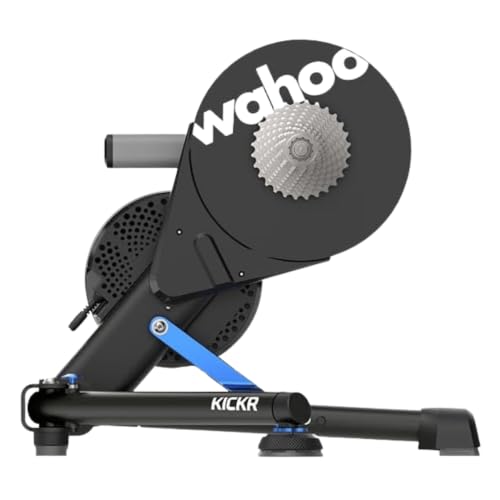
- ±1% power accuracy and over 2,200W resistance
- Automatic calibration for consistent power data
- Wi-Fi connectivity and realistic AXIS-foot ride feel
Best For: Premium, frequent indoor training
Best Pedal Upgrade
Magene P715 Power Meter Pedals

- ±1% power accuracy with 120-hour battery life
- Bluetooth and ANT+ connectivity
- Quick installation and easy bike switching
Best For: Portable power measurement across bikes
Best High-Power Alternative
CYCPLUS R200 Smart Bike Trainer

- 2,200W peak power and ±1% power accuracy
- Simulates gradients up to 19%
- BLE/ANT+ connectivity with active cooling
Best For: High-intensity virtual hill training
Best Single-Sided Option
Favero Assioma Uno Power Meter Pedal

- Left-pedal power measurement with ±1% accuracy
- Bluetooth and ANT+ connectivity
- Built-in cadence sensor and gyroscope
Best For: Road cyclists wanting simple power data
Best Smart Trainer

- Up to 2,000W with ±2% stated power accuracy
- Simulates gradients up to 18%
- ANT+ and Bluetooth connectivity
Best For: Software-connected indoor training with high resistance
Best Pedal Power Meter

- Single-sided left-pedal power measurement
- Stated ±1% accuracy with temperature compensation
- Bluetooth and ANT+ connectivity
Best For: Portable road-bike power tracking
Best Wheel-On Trainer

- Wheel-on setup keeps the rear wheel installed
- ANT+ FE-C and Bluetooth connectivity
- Zwift certified with ±5% stated accuracy
Best For: Convenient app-based indoor training
Lightweight Data Upgrade
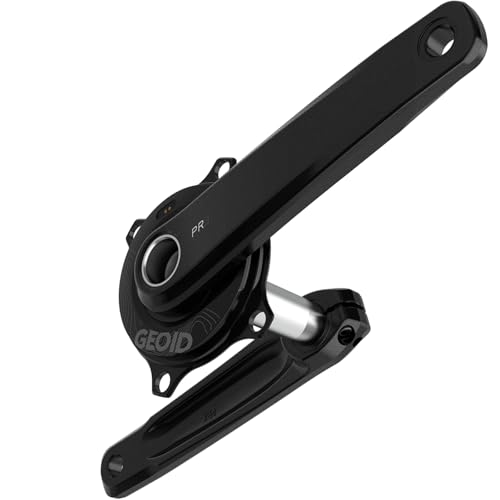
- ±1.5% power accuracy with multiple training metrics
- Bluetooth and ANT+ support for computers and apps
- Up to 300 hours of battery life; IPX7 rated
Best For: Road riders seeking indoor and outdoor power tracking
Smart Trainer Powerhouse

- 2,200 W motor output with ±1% power accuracy
- Simulates gradients up to 20% for app-based training
- BLE/ANT+ connectivity and operation below 55 dB
Best For: Structured indoor training with realistic resistance control
Precision Crank-Based Training

- ±1% accuracy with dual-sided power measurement
- Bluetooth 5.0 and ANT+ support for trainers and apps
- 300-hour battery, IPX7 rating, and app calibration
Best For: Easton-compatible riders wanting detailed power analysis
Best Overall – Wahoo KICKR V6 Smart Indoor Trainer
The Wahoo KICKR V6 is a strong all-around choice among bike trainers with power meter functionality, combining automatic calibration with power accuracy within ±1%. Built-in Wi-Fi, ANT+/Bluetooth-style app connectivity support through its smart-trainer ecosystem, and a high-inertia flywheel make it practical for structured indoor training.
Best For: Riders who want a premium, calibration-free direct-drive trainer with realistic ride feel and dependable power data.
Pros:
- Power accuracy within ±1% with more than 2,200 watts of resistance
- Automatic calibration continually supports precise power measurement
- Wi-Fi connectivity helps provide a stable, responsive data connection
- AXIS feet and a high-inertia flywheel create a more outdoor-like ride feel
Cons:
- At 22 kg, it is a substantial trainer to move or store
- Its premium feature set may be more than casual riders need
The KICKR V6 stands out when accurate power, connection stability, and realistic resistance matter most. Its calibration-free design also reduces setup maintenance for frequent indoor sessions.
Best Pedal Upgrade – Magene P715 Power Meter Pedals
The Magene P715 pedals offer a flexible way to add power measurement without replacing your existing trainer. These bike trainers with power meter setups benefit from the pedals’ ±1% claimed accuracy, dual Bluetooth and ANT+ support, and one-minute installation for riders who switch between compatible bikes.
Best For: Cyclists who want portable power data that can move easily between road, time-trial, and triathlon bikes.
Pros:
- ±1% power accuracy for consistent effort tracking
- Up to 120 hours of battery life
- Bluetooth and ANT+ dual-protocol connectivity
- IPX7 waterproofing and compatibility with multiple bikes
Cons:
- Pedal-based measurement may not suit riders seeking trainer-integrated power
- At 318 g per pair, they are not the lightest pedal option
- Designed as clipless pedals, limiting footwear compatibility
The P715 is a practical choice when portability is more important than a dedicated indoor-trainer installation. Its long battery life and broad wireless compatibility make it convenient for regular training and outdoor rides alike.
Best High-Power Alternative – CYCPLUS R200 Smart Bike Trainer
The CYCPLUS R200 is a high-output smart trainer for riders comparing bike trainers with power meter capability. Its brushless motor delivers up to 2,200W peak power, reports ±1% power accuracy, and simulates gradients up to 19% through compatible riding software.
Best For: Riders seeking high-power indoor training with uphill and downhill simulation and BLE/ANT+ app support.
Pros:
- Up to 2,200W peak power with ±1% power-meter accuracy
- Simulates inclines up to 19% for varied virtual terrain
- BLE and ANT+ support works with apps such as Zwift and MyWhoosh
- Built-in cooling fan helps manage heat during longer sessions
Cons:
- Cassette is not included
- Virtual shifting requires the separately sold CYCPLUS BC2 Shifter
- Virtual shifting is not compatible with ERG mode
The R200 combines substantial resistance with useful software features for demanding indoor workouts. Buyers should account for the cassette and optional shifter requirements when planning a complete setup.
Best Single-Sided Option – Favero Assioma Uno Power Meter Pedal
Favero Assioma Uno Power Meter Pedal | Why We Like The Favero Assioma UNO Pedal
Check Price On AmazonThe Favero Assioma Uno provides a compact way to add power data to indoor sessions without changing the trainer itself. For cyclists evaluating bike trainers with power meter options, its left-pedal sensor, Bluetooth and ANT+ connectivity, and built-in cadence measurement offer a straightforward single-sided solution.
Best For: Road cyclists who want a single power-meter pedal with cadence data and broad wireless compatibility.
Pros:
- Left-pedal power sensor detects power with ±1% accuracy
- Bluetooth and ANT+ connectivity support compatible devices
- Includes cadence sensing and a gyroscope
- Provides IAV Power Phase and IAV Rider Position metrics
Cons:
- Measures power from one side rather than both pedals
- Listed for road cycling and may not suit every bike setup
- Single-pedal design may offer less complete balance data than dual-sided systems
The Assioma Uno is a focused, road-oriented power solution for riders who want useful training data without purchasing a smart trainer. Its single-sided design keeps the system relatively simple, though riders seeking bilateral measurement should look elsewhere.
Best Smart Trainer – ThinkRider X2Max
For cyclists comparing bike trainers with power meter functionality, the ThinkRider X2Max combines electronically controlled resistance with built-in power measurement. It delivers up to 2,000 watts, reports power within ±2%, and works with ANT+ and Bluetooth cycling platforms such as Zwift.
Best For: Riders who want a quiet direct-drive-style indoor trainer with substantial resistance range and software connectivity.
Pros:
- Power output up to 2,000 watts with stated ±2% accuracy.
- Simulates gradients up to 18% through variable electromagnetic resistance.
- Supports both ANT+ and Bluetooth and is rated at about 58 dB at 30 km/h.
- I-beam triangular frame is designed for riding stability.
Cons:
- Cassette is not included.
- At 35.2 pounds, it is less convenient to move than a lighter trainer.
- Warranty coverage is listed as one year.
The X2Max is a strong choice when accurate built-in power data, steep virtual climbs, and broad app compatibility matter more than portability. Confirm that you have the required cassette before setup.
Best Pedal Power Meter – Favero Assioma UNO
The Favero Assioma UNO is a single-sided pedal power meter for road cyclists who want power data without replacing their indoor trainer. It measures through the left pedal, installs like a conventional pedal, and connects to bike computers, GPS units, and smartphones over Bluetooth or ANT+.
Best For: Road riders who want a portable power meter that can be moved between compatible bikes.
Pros:
- Installs and transfers between bikes without special tools.
- Stated ±1% accuracy with automatic temperature compensation from -10°C to 60°C.
- Bluetooth and ANT+ connectivity support a range of cycling devices.
- Rechargeable battery provides at least 50 hours per charge.
Cons:
- Single-sided sensing measures power from the left pedal only.
- Designed for road-bike use rather than a broad range of bike types.
- Uses Look Keo-compatible cleats and may require compatibility checks.
Unlike a trainer with integrated power measurement, the Assioma UNO lets you carry power data onto outdoor rides and between bikes. Its single-sided design is the key trade-off for its straightforward installation and portability.
Best Wheel-On Trainer – Saris M2 Smart Trainer
Saris M2 Smart Indoor Bike Trainer, Compatible with Zwift App, Black, Made in the USA
Check Price On AmazonThe Saris M2 is a wheel-on smart trainer for cyclists seeking bike trainers with power meter-style training data and app-controlled resistance. It keeps the rear wheel installed, uses electromagnetic resistance, and connects to Zwift and other indoor cycling apps through ANT+ FE-C or Bluetooth.
Best For: Riders who prioritize simple setup and broad smart-app compatibility over maximum power-measurement precision.
Pros:
- Wheel-on design avoids removing the rear wheel or disassembling the bike.
- Electromagnetic resistance provides controlled, repeatable workouts.
- Connects through dual ANT+ FE-C and Bluetooth standards and is Zwift certified.
- Includes a steel quick-release skewer for common road and mountain bike frames.
Cons:
- Listed accuracy is ±5%, less precise than the other power-measuring options here.
- Noise is rated at 69 decibels at 20 mph.
- Wheel-on trainers can require more setup attention than systems that replace the rear wheel.
The M2 offers an accessible way to train indoors with connected resistance while retaining a familiar bike setup. Choose it if convenience and app support are more important than the tighter accuracy range of premium power meters.
Lightweight Data Upgrade – GEOID PM500 Crankset
For riders comparing bike trainers with power meter setups, the GEOID PM500 is a crank-based option that adds power data to indoor and outdoor training. It provides claimed ±1.5% accuracy, Bluetooth and ANT+ connectivity, and compatibility with Zwift, STRAVA, TrainingPeaks, and multiple bike computers.
Best For: Road cyclists who want one power meter for indoor apps and outdoor rides, provided their bike uses a compatible 110 BCD, four-bolt chainring setup.
Pros:
- Tracks power, cadence, left-right balance, and pedaling smoothness.
- Offers up to 300 hours of battery life with a magnetic charger.
- Supports Bluetooth and ANT+ connections, plus IPX7 water resistance.
- Includes a crank and spider combination designed for 110 BCD, four-bolt chainrings.
Cons:
- Compatibility depends on the bike’s crank, chainring, and 165 mm crank-length requirements.
- The listed ±1.5% accuracy is not as tight as some ±1% alternatives.
The PM500 is a versatile choice when you need power data across both smart-trainer sessions and road rides. Confirm the crank length and 110 BCD fit before ordering.
Smart Trainer Powerhouse – CYCPLUS T2H Smart Trainer
The CYCPLUS T2H is a direct smart-trainer choice for cyclists shopping for bike trainers with power meter functionality built in. Its brushless motor delivers up to 2,200 W, simulates gradients up to 20%, and reports power with claimed ±1% accuracy while connecting through BLE or ANT+.
Best For: Indoor riders who want app-controlled resistance, substantial climbing simulation, and quiet operation for structured training at home.
Pros:
- Provides up to 2,200 W peak power and 85 N·m maximum torque.
- Simulates gradients up to 20% through compatible riding software.
- Supports BLE and ANT+ connectivity, including Zwift compatibility.
- Triple-layer noise reduction is rated below 55 dB.
Cons:
- The cassette is not included.
- Virtual shifting requires the separately sold CYCPLUS BC2 Shifter.
- Virtual shifting is not compatible with ERG mode.
Choose the T2H if you want the trainer itself to provide measured power and electronically controlled resistance. Budget for a cassette and consider the separate shifter only if virtual shifting fits your training setup.
Precision Crank-Based Training – CooSpo S10 Power Meter
The CooSpo S10 is a crank-based power meter for cyclists who already use a compatible Easton 110 BCD, four-bolt system. As an alternative to a trainer with integrated power measurement, it supplies claimed ±1% power data, cadence, and dual-sided leg analysis for indoor smart-trainer sessions and outdoor riding.
Best For: Riders with an Easton 110 BCD, four-bolt crankset who want detailed left-right power and pedaling-smoothness data with long battery life.
Pros:
- Claims ±1% accuracy and measures total, left/right power, and cadence.
- Connects simultaneously through ANT+ and Bluetooth 5.0 to computers and apps.
- Provides up to 300 hours of rechargeable battery life and IPX7 water resistance.
- App-based calibration and pedaling-smoothness analysis support training adjustments.
Cons:
- Designed specifically for Easton 110 BCD, four-bolt crankset systems.
- It is a power-meter component rather than a complete smart trainer.
- The listed warranty is 12 months.
The S10 makes sense when your existing crankset meets its exact interface requirements and you want one power source for indoor and outdoor training. Verify the Easton 110 BCD, four-bolt compatibility before purchase.
How We Picked These Bike Trainers with Power Meter Options
We selected products that provide measurable cycling power through an integrated smart trainer, pedal-based meter, or crank-based power meter. We considered stated power accuracy, maximum resistance, simulated gradient, connectivity, battery life, compatibility, and practical installation requirements.
Because these products are not identical, the list includes both complete indoor-training solutions and power meters that can be paired with a conventional trainer. That distinction matters: a smart trainer controls resistance and reports power, while pedals or cranksets measure your output on the bike and can work indoors or outdoors.
Quick Comparison
| Type | Best For | Main Advantage | Watch For |
|---|---|---|---|
| Direct-drive smart trainer | Structured indoor workouts | Automatic resistance control and realistic ride feel | Bike compatibility, cassette, and storage space |
| Power-meter pedals | Indoor and outdoor versatility | Easy transfer between compatible bikes | Pedal installation, cleat system, and battery charging |
| Crank-based power meter | Permanent bike setup | Low-profile power measurement with long battery life | Crank, chainring, and bottom-bracket compatibility |
| Wheel-on smart trainer | Lower-cost indoor training | Simple setup and broad bike compatibility | Tire pressure, tire wear, and less direct-drive feel |
Key Buying Factors for Bike Trainers with Power Meter
Choose the Right Power-Measurement Format
Pedal meters are usually the most flexible because they can move between bikes quickly. Crank-based meters offer a cleaner permanent installation, but you must confirm crank length, chainring bolt pattern, drivetrain clearance, and bottom-bracket fit. Smart trainers are often the simplest choice for dedicated indoor use because resistance and power reporting are handled together.
Check Accuracy and Connectivity
Look for a clearly stated accuracy figure, but also consider calibration requirements and temperature compensation. ANT+ and Bluetooth support improves compatibility with cycling computers, phones, tablets, and platforms such as Zwift. Dual-sided measurement can provide more detailed left-right data, while single-sided systems may cost less and be easier to install.
Match Resistance to Your Training
Maximum wattage and simulated gradient matter most for sprinting, climbing simulations, and high-intensity intervals. A quieter, smoothly controlled trainer may be more valuable than the highest published wattage for everyday endurance sessions. Direct-drive models also require the correct cassette or freehub body.
Consider Setup and Maintenance
Verify axle standards, frame clearance, pedal thread direction, crank dimensions, and app requirements before buying. Keep firmware updated, calibrate when recommended, and maintain consistent tire pressure on wheel-on trainers. Long battery life is useful for power meters, but rechargeable models may be more convenient for frequent riders.
Who Should Buy Which Bike Trainers with Power Meter?
Choose a Direct-Drive Smart Trainer If
You primarily train indoors and want automatic resistance, virtual gradients, and a stable platform for structured workouts. The Wahoo, CYCPLUS, and ThinkRider options are aimed at riders who value high resistance and app-based control.
Choose Power-Meter Pedals If
You want one measurement system for indoor and outdoor riding or regularly switch between bikes. The Magene and Favero options are especially relevant when portability and straightforward installation matter more than built-in trainer resistance.
Choose a Crank-Based Meter If
You prefer a discreet, bike-mounted solution with extended battery life and do not need the power meter to control trainer resistance. Confirm every drivetrain specification before ordering.
Choose a Wheel-On Trainer If
You want a more economical entry into smart indoor cycling or need broad compatibility with multiple bikes. A wheel-on design can be practical, but it requires careful tire pressure and roller adjustment for consistent readings.