The best fitness trackers make it easier to understand your daily movement, workouts, sleep, and recovery without adding unnecessary complexity. The models in this roundup range from simple screenless wearables to feature-rich GPS smartwatches.
Use the comparisons below to narrow your choices by battery life, coaching features, health monitoring, comfort, and smartwatch functionality before deciding which tracker fits your routine.
Best 10 Fitness Trackers Picks for 2026
Best Overall GPS Fitness Tracker

- AMOLED display and up to 11-day smartwatch battery
- Built-in GPS with 30+ sports apps
- Advanced sleep, recovery, and Body Battery insights
Best For: Multisport training and detailed everyday wellness tracking
Best Screenless Fitness Tracker

- Discreet, lightweight design with no screen
- Up to a week of battery life and fast charging
- Tracks activity, sleep, heart rate, and more
Best For: Distraction-free all-day and sleep tracking
Best Battery Life Fitness Tracker

- 1.6-inch AMOLED display with 100+ watch faces
- Up to 14 days of battery life
- 101+ workout modes with automatic detection
Best For: Android users who prioritize battery life and a large display
Best Budget Screenless Fitness Tracker
FITVII Screenless Fitness Tracker

- Slim, distraction-free design with no display
- No subscription required for core tracking
- Monitors activity, sleep, heart rate, and wellness metrics
Best For: Beginners seeking simple, low-profile tracking without monthly fees
Best Everyday Tracker

- Up to 10-day battery life
- Tracks activity, sleep, stress, and heart rate
- GPS works through a connected smartphone
Best For: Everyday wellness and sleep tracking
Best Screen-Free Coaching
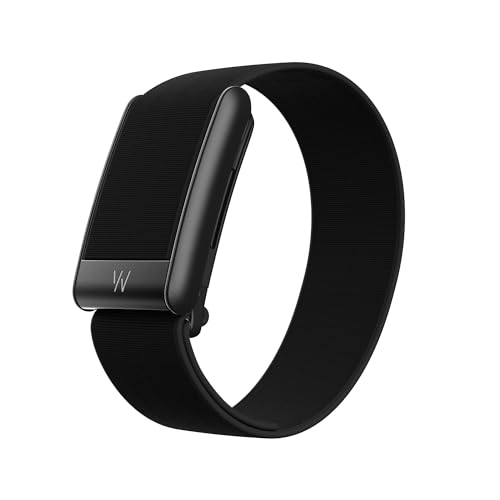
- Includes a 12-month membership
- Up to 14-plus days of battery life
- Personalized sleep, strain, and recovery insights
Best For: Training and recovery-focused users
Best Connected Fitness Tracker
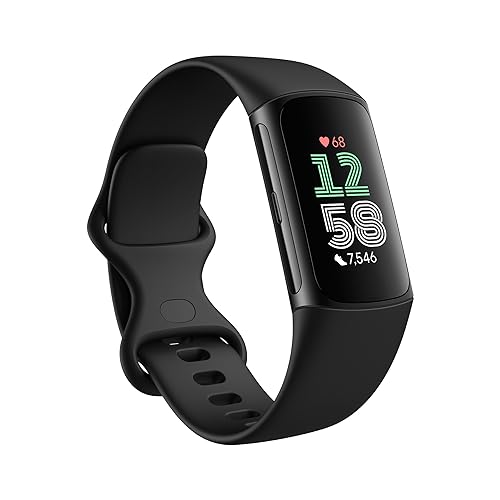
- Built-in GPS and 40-plus exercise modes
- Includes Google Maps and Google Wallet features
- Up to seven days of battery life
Best For: Multisport workouts and connected daily use
Best All-Around Fitness Tracker

- 140 sports modes with heart-rate and sleep tracking
- 1.83-inch display with Bluetooth calling
- IP68 design and up to 5–7 days of typical use
Best For: Broad workout tracking plus everyday smartwatch features
Best Dual-Band Fitness Tracker

- Tracks heart rate, blood pressure, SpO2, and sleep
- 112 sports modes with detailed activity metrics
- Includes two bands and up to 7 days of battery life
Best For: Wellness tracking and customizable everyday wear
Best Compact Fitness Tracker

- Compact 1.10-inch AMOLED touchscreen
- 24/7 heart-rate and sleep monitoring
- 25 sports modes with connected GPS
Best For: Smaller daily tracker with core wellness features
Best Overall GPS Fitness Tracker – Garmin vívoactive 5
The Garmin vívoactive 5 is a versatile choice among fitness trackers for users who want a bright AMOLED display, built-in GPS, broad workout support, and detailed wellness insights. Its battery can last up to 11 days in smartwatch mode, making it practical for everyday wear and regular training.
Best For: Runners, multisport users, and anyone who wants comprehensive health and training features in a smartwatch-style tracker.
Pros:
- Built-in GPS and more than 30 indoor and outdoor sports apps
- AMOLED touchscreen with music downloads for phone-free listening
- Detailed sleep, stress, Body Battery, heart-rate, and recovery features
- Includes wheelchair mode with push and handcycle tracking
Cons:
- Its extensive features may be more than casual users need
- Some tracked health metrics are estimates and not intended for medical use
The vívoactive 5 stands out when training tools and health context matter more than a minimalist design. It is a strong all-around option for users who want GPS and smartwatch capabilities alongside fitness tracking.
Best Screenless Fitness Tracker – Fitbit Google Air
The Fitbit Google Air takes a screenless approach to fitness trackers, letting you wear it throughout the day and night without notifications or display distractions. It offers a lightweight, adjustable fit, smartphone-connected GPS, and up to a week of battery life.
Best For: Users who prefer discreet, comfortable activity and sleep tracking rather than an on-wrist screen.
Pros:
- Screen-free design can transition from daily wear to workouts and sleep
- Lightweight, micro-adjustable band fits wrists from 130 to 210 mm
- Fast charging provides up to one day of battery in five minutes
- Water resistant to 50 meters and compatible with Android and iOS
Cons:
- No display for viewing metrics directly on the tracker
- GPS functionality requires a connected smartphone
- Some coaching features require a separately sold premium membership
The Fitbit Google Air is a good fit for people who want passive tracking with minimal interruption. Choose it over a screen-based model if comfort and discretion are priorities, but expect to use the companion phone app for your data.
Best Battery Life Fitness Tracker – Samsung Galaxy Fit3
The Samsung Galaxy Fit3 is a screen-based fitness tracker with a 1.6-inch AMOLED display, more than 100 workout modes, and a battery rated for up to 14 days. Its water-resistant design and automatic workout detection make it convenient for everyday activity tracking.
Best For: Android users who want a large display, long battery life, and straightforward workout and sleep tracking.
Pros:
- Bright 1.6-inch AMOLED touchscreen with numerous watch faces
- Up to 14 days of battery life according to the supplied specifications
- 101+ exercise modes with automatic detection for common workouts
- 5ATM and IP68 water- and dust-resistance ratings
Cons:
- Compatible with Android devices only, not iPhone or iOS
- No built-in GPS; supported GPS functionality is listed as unavailable or phone-dependent
- International model has no U.S. warranty, and Samsung Pay is not supported
The Galaxy Fit3 offers useful basics in an easy-to-read format, especially for Android owners who value fewer charging sessions. Confirm phone compatibility and warranty limitations before buying this international model.
Best Budget Screenless Fitness Tracker – FITVII Screenless Fitness Tracker
The FITVII Screenless Fitness Tracker is designed for simple, background wellness monitoring without a display or subscription requirement. It tracks activity, sleep, heart rate, blood oxygen, HRV, and other metrics through its smartphone app while maintaining a slim, unobtrusive profile.
Best For: Fitness beginners and privacy-conscious users who want screenless tracking with no monthly subscription.
Pros:
- Ultra-slim, screenless design minimizes distractions and bulk
- Core tracking features are included without a recurring subscription
- Tracks steps, calories, distance, sleep, heart rate, blood oxygen, and HRV
- Includes small and large adjustable bands for wrists from 6.22 to 9.45 inches
Cons:
- Typical battery life is only 3–5 days, and sports modes may reduce it to 1–3 days
- GPS is available through a smartphone rather than built into the tracker
- No display for on-device metric or workout readouts
This FITVII model is best suited to users who want low-profile tracking and app-based insights at no ongoing cost. Its shorter battery life and phone dependence make it less appropriate for those seeking a standalone training device.
Best Everyday Tracker – Fitbit Inspire 3
The Fitbit Inspire 3 is a slim, approachable option for shoppers comparing fitness trackers for everyday activity, sleep, and wellness monitoring. It tracks heart rate, activity, stress, sleep, blood oxygen, and more, while its battery lasts up to 10 days.
Best For: Everyday wellness tracking, sleep monitoring, and users who want a lightweight band with broad iOS and Android compatibility.
Pros:
- Up to 10 days of battery life and a water-resistant design rated to 50 meters.
- Includes Daily Readiness, Active Zone Minutes, 40+ exercise modes, and automatic exercise tracking.
- Offers sleep scoring, stress management tools, SpO2, heart-rate monitoring, and menstrual health tracking.
Cons:
- GPS is provided through a connected smartphone rather than built into the tracker.
- The 0.76-inch display is compact, which may limit at-a-glance readability.
Choose the Inspire 3 if you want a simple fitness tracker focused on core activity, sleep, and wellness features. Its smartphone-assisted GPS makes it less suitable for people who want phone-free route tracking.
Best Screen-Free Coaching – WHOOP 5.0 Activity Tracker
WHOOP 5.0 takes a different approach to fitness trackers by omitting a screen and focusing on app-based health and performance insights. The included package combines the tracker, band, charger, and a 12-month membership, with up to 14-plus days of battery life.
Best For: Athletes and performance-minded users who want personalized guidance on sleep, strain, recovery, stress, and training habits without on-device notifications.
Pros:
- Provides personalized Sleep, Strain, Recovery, VO2 max, HRV, stress, and menstrual-cycle insights.
- Screenless design avoids buzzing notifications and distractions during the day.
- WHOOP AI analyzes more than 140 metrics, while the Journal supports tracking 300-plus daily behaviors.
- Up to 14-plus days of battery life and integrations with Apple Health, Google Health Connect, Strava, and Natural Cycles.
Cons:
- A 12-month membership is part of the package, so ongoing access depends on membership service.
- There is no screen for viewing metrics or notifications directly on the device.
WHOOP 5.0 is most compelling when coaching and recovery analysis matter more than traditional smartwatch-style interaction. It is a specialized choice for users comfortable reviewing their data in the companion experience.
Best Connected Fitness Tracker – Fitbit Charge 6
The Fitbit Charge 6 is a versatile choice among fitness trackers, combining built-in GPS, exercise tracking, sleep and stress tools, and selected Google features. It also offers heart-rate readings during compatible gym-machine workouts and a battery rated for up to seven days.
Best For: Users who want built-in GPS, multisport tracking, Google Maps directions, Google Wallet, and a more connected fitness-band experience.
Pros:
- Built-in GPS supports phone-free tracking for runs and rides.
- Tracks 40-plus exercise modes, activity, heart rate, sleep, stress, calories, and Daily Readiness.
- Includes Google Maps turn-by-turn directions, Google Wallet payments, and YouTube Music controls.
- Offers up to seven days of battery life and water resistance to 50 meters.
Cons:
- Some enhanced coaching features require a separately sold Google Health Premium membership after the trial.
- Its listed compatibility requires Android 11 or newer or iOS 16.4 or newer.
The Charge 6 is a strong middle ground for shoppers who want more connected features than a basic band while retaining a fitness-tracker format. Its built-in GPS and Google tools are particularly useful for outdoor workouts and daily errands.
Best All-Around Fitness Tracker – 140-Sport Smart Watch
If you want fitness trackers with broad workout coverage and smartwatch conveniences, this model combines 140 sports modes with heart-rate and sleep monitoring. Its larger 1.83-inch display, Bluetooth calling, and IP68 rating make it suitable for everyday wear as well as workouts.
Best For: Users who want extensive activity tracking, phone notifications, and Bluetooth calling in one affordable smartwatch.
Pros:
- Tracks 140 sports modes, including walking, running, cycling, and swimming.
- Includes heart-rate detection, sleep analysis, step counting, and practical wellness tools.
- Offers a 1.83-inch HD display, customizable watch faces, Bluetooth calls, and up to 5–7 days of typical battery life.
- IP68 waterproof design supports workouts, splashes, and short-time water immersion.
Cons:
- GPS is provided through a connected smartphone rather than built into the watch.
- Notifications can be viewed, but messages cannot be replied to from the watch.
- Actual battery life varies with usage.
This is a feature-rich choice among fitness trackers, especially if you value a larger screen and calling features. Keep your phone nearby for GPS and remember that the health measurements are intended for general tracking rather than medical use.
Best Dual-Band Fitness Tracker – MorePro AIR2 Health Tracker
Among fitness trackers, the MorePro AIR2 stands out for including two interchangeable bands and a wide range of wellness metrics. It tracks heart rate, blood pressure, blood oxygen, sleep, and activity while also displaying calls, texts, and supported app notifications.
Best For: Adults who want wellness tracking, sleep insights, two band styles, and practical daily reminders.
Pros:
- Provides continuous heart-rate, blood-pressure, and blood-oxygen tracking, plus high heart-rate alerts.
- Offers sleep-stage tracking and daily or weekly trends through the FitCloudPro app.
- Includes 112 sports modes and records steps, distance, calories, speed, and workout duration.
- Comes with silicone and nylon bands, 200+ watch faces, IP68 water resistance, and up to 7 days of battery life.
Cons:
- The health features are not a substitute for medical advice or a medical device.
- GPS works through a connected smartphone.
- It is not compatible with iPads, tablets, or PCs.
The AIR2 is a versatile option for users who want more than step counting, particularly those interested in sleep trends and multiple wellness measurements. Its app and smartphone requirements are worth checking before purchase.
Best Compact Fitness Tracker – AMOLED Activity Watch
This compact fitness tracker pairs a 1.10-inch AMOLED touchscreen with 24/7 heart-rate monitoring, sleep tracking, and 25 sports modes. It also adds connected GPS, notifications, and everyday reminders while maintaining a lightweight, water-resistant design.
Best For: Users who prefer a smaller AMOLED tracker for daily activity, sleep monitoring, and basic workout guidance.
Pros:
- Uses an AMOLED display with customizable watch faces.
- Tracks heart rate continuously and provides activity, calorie, distance, and exercise-time data across 25 sports modes.
- Monitors sleep stages and duration through the Keep Health app.
- Includes connected GPS, IP68 water resistance, notifications, and up to 7 days of battery life.
Cons:
- GPS requires connection to a smartphone.
- The 1.10-inch screen is smaller than the displays on the other listed models.
- Health and sleep data are for reference and do not replace professional medical advice.
This is a sensible pick if you want a discreet fitness tracker with a vivid AMOLED screen and core health features. Its 25 sport modes cover common activities, though it offers less workout variety than the 112- and 140-mode alternatives.
How We Picked These Fitness Trackers
We selected these Fitness Trackers to represent the main categories shoppers consider: lightweight activity bands, screenless recovery wearables, affordable health monitors, and full-featured GPS smartwatches. We focused on practical differences such as activity and sleep tracking, exercise support, battery claims, water resistance, display quality, comfort, and whether a subscription is required for core insights.
Specifications and features can vary by phone compatibility, region, software version, and account plan. Treat blood pressure, heart-rate, sleep, and other wellness readings as informational rather than medical diagnoses.
Quick Comparison
| Best For | Look For | Featured Options |
|---|---|---|
| GPS workouts and smartwatch features | Built-in GPS, exercise profiles, notifications, and a larger display | Garmin vívoactive 5 |
| Simple daily activity and sleep tracking | Small design, comfortable bands, and long battery life | Fitbit Inspire 3, Samsung Galaxy Fit3 |
| Recovery and coaching | Continuous data collection, strain or recovery insights, and membership terms | WHOOP 5.0/MG |
| Budget health tracking | Core heart-rate, steps, sleep, and exercise features at a lower price | FITVII, MorePro, and generic fitness bands |
| Calls and broad smartwatch functions | Large touch display, Bluetooth calling, and multiple sport modes | Featured HD touchscreen smartwatch |
Key Buying Factors for Fitness Trackers
Tracking and Workout Features
Decide which measurements you will actually use. Step counting and heart-rate tracking cover basic activity, while GPS, elevation, pace, training load, and advanced workout profiles matter more for runners, cyclists, and outdoor athletes. Sleep and recovery tools are useful when they help you change habits, not simply produce more data.
Battery Life and Charging
Long battery life reduces gaps in sleep and activity records. Compact trackers commonly last longer than bright touchscreen watches, while GPS use can shorten runtimes considerably. Check the advertised battery estimate alongside charging time and whether features such as always-on display affect it.
Comfort, Durability, and Compatibility
A tracker must be comfortable enough to wear overnight. Consider case size, band options, weight, water resistance, and how securely it fastens. Confirm compatibility with your Android or iPhone before buying, especially if you want notifications, calls, GPS syncing, or health app integration.
Subscriptions and Data Access
Some wearables provide basic tracking without a fee but reserve deeper coaching, historical analysis, or recovery scores for a subscription. Calculate the total cost over one or two years, and check whether the features you value remain available if you cancel.
Who Should Buy Which Fitness Trackers?
- Choose the Garmin vívoactive 5 if you want a polished fitness watch with GPS, broad workout support, and everyday smartwatch features.
- Choose Fitbit Inspire 3 or Samsung Galaxy Fit3 if you prefer a slim band for daily movement, sleep, and basic exercise tracking.
- Choose WHOOP 5.0/MG if recovery, sleep coaching, and continuous training insights matter more than having a conventional watch display, and you accept the membership model.
- Choose Fitbit Charge 6 if you want a middle ground between a compact tracker and a more capable fitness-focused wearable.
- Choose FITVII, MorePro, or the other budget bands if you want inexpensive access to common activity and wellness measurements and can accept less mature apps or less consistent advanced data.
- Choose a touchscreen smartwatch if Bluetooth calling, notifications, a larger screen, and many sport modes are priorities alongside fitness tracking.