The best balance bikes help young riders develop steering, stability, and confidence before they transition to a pedal bike. The right choice depends on more than age: inseam fit, weight, tire type, and adjustability all affect how easily a child can learn.
We’ve gathered 10 options ranging from compact first bikes for one-year-olds to larger models for preschoolers, including convertible designs with pedals, brakes, or push handles. Use the guide below to narrow the list by riding stage, terrain, and family priorities.
Best 10 Balance Bikes Picks for 2026
Top Overall

- Lightweight 6.7-pound frame
- Adjustable for ages 1 to 4
- Never-flat, maintenance-free tires
Best For: Young beginners learning balance skills
Best First Bike
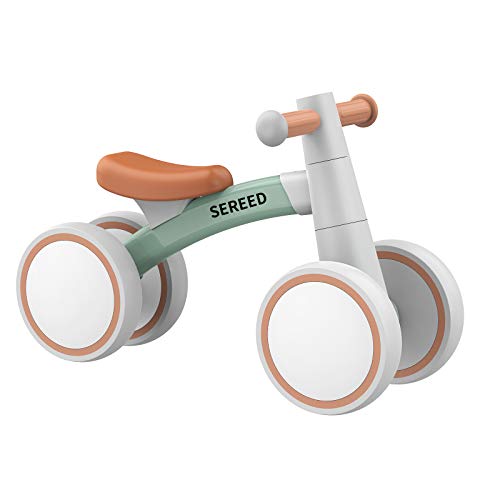
- Designed for ages 12 to 24 months
- Lightweight 3.5-pound construction
- Closed wheels and limited steering
Best For: Babies taking their first riding steps
Best for Growing Riders
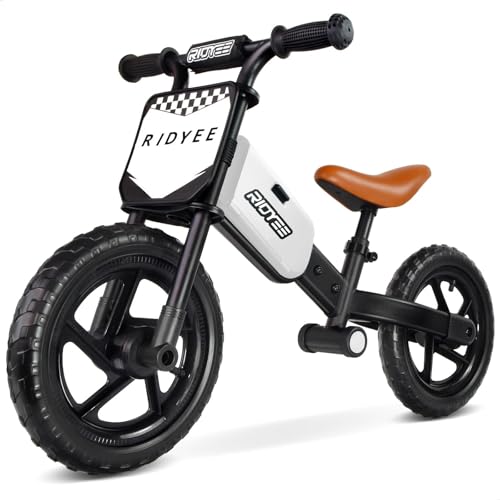
- Adjustable seat for ages 2 to 5
- All-terrain EVA tires
- Includes customizable plate and stickers
Best For: Kids wanting an adventurous, personalized ride
Most Versatile

- Six convertible riding configurations
- Adjustable seat, handlebar, and push handle
- Folds and includes a hand brake
Best For: Families wanting one bike for multiple riding stages
Best Adjustable Starter

- Tool-free adjustable seat and handlebars
- Quiet, puncture-free EVA tires
- Lightweight carbon steel frame
Best For: Young beginners learning balance and steering
Best All-Terrain Ride

- Air-filled tires cushion uneven terrain
- Lightweight frame supports up to 110 pounds
- Adjustable seat for ages 3 to 6
Best For: Outdoor riding on pavement, grass, and gravel
Best Low-Seat Toddler Pick
SEREED Adjustable Balance Bike
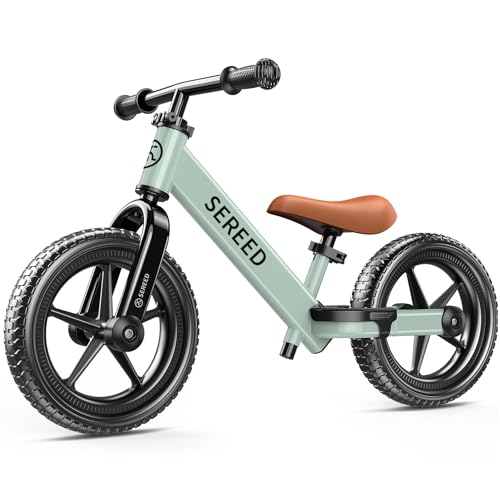
- Low 11.8-inch starting seat height
- Tool-free fit adjustments
- Flat-free EVA tires for indoor or outdoor use
Best For: Smaller toddlers beginning balance-bike practice
Best Adjustable Balance Bike for Growing Toddlers

- Adjustable seat and handlebars for ages 2 to 5
- Puncture-resistant tires and 110-pound capacity
- Customizable removable plate with stickers
Best For: Growing toddlers who want a durable, personalized starter bike
Best First Balance Bike for 1-Year-Olds

- Designed for toddlers ages 12 to 24 months
- Lightweight 3.6-pound aluminum frame
- Enclosed wheels and 135-degree steering limit
Best For: Very young beginners starting balance practice around age one
Best Footrest Balance Bike for Ages 2-5

- Wide footrest supports gliding practice
- Tool-free seat and handlebar adjustments
- Puncture-resistant tires with 110-pound capacity
Best For: Growing toddlers learning to glide and balance outdoors
Top Overall – Strider 12 Sport
The Strider 12 Sport is a straightforward balance bike for toddlers ages 1 to 4. Its lightweight frame, broad adjustment range, and maintenance-free tires make it a practical starting point for building riding confidence.
Best For: Young beginners who need a lightweight, adjustable balance bike for indoor and outdoor riding.
Pros:
- Adjustable seat and handlebars accommodate ages 1 to 4.
- Lightweight 6.7-pound steel frame is easier for young riders to manage.
- Never-flat 12-inch foam tires require no maintenance.
- Includes a safety pad and tools for straightforward assembly.
Cons:
- It has no pedals or hand brake, so it is focused specifically on balance skills.
- The fit is limited to children with a 12- to 18-inch inseam.
With a 60-pound weight capacity and a two-year limited warranty, the Strider 12 Sport is a well-rounded choice when simplicity and easy adjustability matter most.
Best First Bike – SEREED Baby Balance Bike
The SEREED Baby Balance Bike is designed as an early introduction to balance bikes for toddlers 12 to 24 months old. Its compact, lightweight build and enclosed wheels are aimed at making first rides approachable and controlled.
Best For: Babies and young toddlers beginning to practice balance, steering, and coordination.
Pros:
- Very light at about 3.5 pounds, making it easier to carry and move.
- Fully widened closed wheels help keep feet from being clamped.
- A 135-degree turning limit and gravity steering are designed to reduce tip-over risk.
- Soft seat, non-slip handle, and floor-friendly EVA wheels support comfortable use indoors or outdoors.
Cons:
- Its recommended age range is limited to 12 to 24 months.
- There is no brake, so speed control comes from the rider and supervising adult.
This compact model is a sensible pick for a child’s first balance-bike experience, especially when low weight and stability-focused features are priorities.
Best for Growing Riders – RIDYEE Toddler Balance Bike
The RIDYEE Toddler Balance Bike combines a sporty motocross-inspired look with features for children ages 2 to 5. Its tool-free adjustable seat, all-terrain tires, and customizable plate make it appealing for kids who want a more adventurous balance-bike experience.
Best For: Ages 2 to 5 who want an adjustable bike for indoor and outdoor riding with a personalized look.
Pros:
- Seat adjusts from 13.4 to 15.8 inches without tools.
- All-terrain EVA tires are intended for smooth rides indoors and outdoors.
- Safety angle limit and shock-absorbing seat support controlled, comfortable riding.
- DIY plate and sticker sets let children personalize the bike.
Cons:
- The carbon-steel frame may be heavier than an alloy-frame alternative.
- The product notes identify a foot brake, but do not specify braking details or adjustment range.
The RIDYEE stands out when appearance, personalization, and a growing fit are as important as basic balance practice.
Most Versatile – JMMD 6-in-1 Toddler Bike
The JMMD 6-in-1 Toddler Bike is more than a basic balance bike: it converts between parent-push trike, tricycle, balance bike, and toddler-bike configurations for ages 18 to 60 months. It suits families that want one adjustable system rather than several early-childhood bikes.
Best For: Families seeking a convertible bike that supports guided rides and gradual progression toward independent riding.
Pros:
- Multiple configurations include a push trike, tricycle, balance bike, and pedal-bike setup.
- Adjustable seat, handlebar, and push handle help accommodate growing children and parents.
- Includes puncture-proof 12-inch rubber wheels, a hand brake, and a 60-degree steering limiter.
- Folds for storage or transport and arrives 95% pre-assembled.
Cons:
- Its larger, multi-part design may be less simple than a dedicated balance bike.
- Conversion requires changing components as the child progresses.
- At up to 55 pounds recommended capacity, it has less capacity than the Strider 12 Sport.
The JMMD is a strong practical option for parents prioritizing longevity and flexibility, particularly for travel, storage, and step-by-step skill development.
Best Adjustable Starter – SEREED Toddler Balance Bike
This SEREED balance bike is a sturdy, lightweight option for beginners ages 2 to 3. Its no-pedal design helps children practice balance and steering, while tool-free adjustments let parents fine-tune the fit as they grow.
Best For: Young beginners who need a durable, adjustable bike for indoor and paved outdoor riding.
Pros:
- Adjustable seat and handlebars require no tools.
- Airless EVA tires are quiet, anti-slip, and puncture-free.
- Lightweight 7.8-pound design is easy for children to move and parents to transport.
- Includes a customizable plate and stickers.
Cons:
- Has no brakes, so children stop with their feet.
- Rigid frame and EVA tires may provide less cushioning than air-filled tires.
With its low starting seat height, footrest, soft saddle, and durable carbon steel frame, this model is a practical first balance bike for building confidence before transitioning to pedals.
Best All-Terrain Ride – Ridego 14-Inch Balance Bike
For children ages 3 to 6, this Ridego balance bike combines a lightweight frame with air-filled rubber tires for a smoother ride across pavement, grass, and gravel. The pedal-free setup encourages children to develop balance and control at their own pace.
Best For: Growing riders who want a balance bike suitable for varied outdoor terrain.
Pros:
- Air-filled rubber tires provide shock absorption on uneven surfaces.
- Deep anti-slip tread supports grip across grass, gravel, and pavement.
- Lightweight fiber-reinforced composite frame weighs 8.16 pounds.
- Adjustable seat and padded saddle accommodate growing children.
Cons:
- Air tires may require inflation and maintenance.
- The listed minimum user height is 36 inches, making it less suitable for smaller toddlers.
This is the strongest choice in the group for outdoor versatility, especially if your child will ride beyond smooth sidewalks and you prefer the cushioning of pneumatic tires.
Best Low-Seat Toddler Pick – SEREED Adjustable Balance Bike
This SEREED balance bike is designed for toddlers ages 2 to 5 and starts with an 11.8-inch seat height, making it a useful choice for smaller beginners. The no-pedal format, footrest, and adjustable handlebars support early balance and steering practice.
Best For: Smaller toddlers who need a low starting seat and a simple, maintenance-free ride.
Pros:
- Low 11.8-inch starting seat height suits smaller riders.
- Seat and handlebars adjust without tools as children grow.
- Quiet, anti-slip EVA tires never go flat and are suitable for indoor use.
- Includes a customizable plate and stickers.
Cons:
- Has no brakes, so stopping depends on foot control.
- Rigid construction may feel less cushioned on rough surfaces.
- At 9 pounds, it is slightly heavier than the other SEREED model listed.
The low seat and broad adjustment range make this a practical toddler-focused option, while its airless tires reduce upkeep for everyday play around the home and neighborhood.
Best Adjustable Balance Bike for Growing Toddlers – KRIDDO Toddler Balance Bike
The KRIDDO Toddler Balance Bike is a sturdy option for children ages 2 to 5 who are beginning to learn balance, steering, and confidence before moving to a pedal bike. Adjustable seat and handlebar heights, puncture-resistant tires, and a customizable plate make it a practical choice for everyday outdoor riding.
Best For: Toddlers who need an adjustable balance bike with a durable frame and personalized details.
Pros:
- Adjustable seat and handlebars help accommodate growing children.
- Extra-thick, puncture-resistant tires are designed for grass and sidewalks.
- Carbon-steel frame supports up to 110 pounds.
- Removable name plate includes three sticker sets for customization.
Cons:
- At 6.6 pounds, it is heavier than some compact toddler bikes.
- Its recommended age range starts at 24 months, so it may not suit younger beginners.
With its broad age range, quick-release adjustments, and sturdy construction, this balance bike is suited to families looking for a longer-lasting starter bike rather than an ultra-light model.
Best First Balance Bike for 1-Year-Olds – SEREED Baby Balance Bike
The SEREED Baby Balance Bike is designed for younger riders ages 12 to 24 months who are taking their first steps toward riding. Its lightweight 3.6-pound build, enclosed wheels, and limited steering range make it an approachable balance bike for beginner practice indoors or outdoors on suitable paved surfaces.
Best For: Babies and young toddlers learning balance, steering, and coordination from around their first birthday.
Pros:
- Lightweight 3.6-pound design is easy for children and parents to carry.
- Fully widened closed wheels help avoid foot clamping.
- 135-degree turning limit and gravity steering are designed to reduce tipping.
- Non-slip, floor-friendly wheels work indoors or outdoors.
Cons:
- The 55-pound maximum weight recommendation limits long-term use.
- It has no brake, so riding requires close adult supervision.
- The compact design is intended for ages 12 to 24 months rather than older children.
This is a particularly suitable entry point for very young riders. Families seeking a bike for a one-year-old may appreciate its light weight and stability-focused features, while older toddlers will likely need a larger model.
Best Footrest Balance Bike for Ages 2-5 – WETIFY Toddler Balance Bike
The WETIFY Toddler Balance Bike combines a wide footrest with tool-free seat and handlebar adjustments, giving children ages 2 to 5 a way to practice gliding as they develop balance and coordination. Its puncture-resistant tires and one-piece frame are suited to outdoor riding on grass and sidewalks.
Best For: Children ages 2 to 5 who are ready to practice gliding on a balance bike that can adjust as they grow.
Pros:
- Wide footrest gives children a place to lift their feet while gliding.
- Quick-release lever adjusts the seat and handlebars without tools.
- Puncture-resistant tires offer stability and shock absorption across several surfaces.
- Frame supports up to 110 pounds.
Cons:
- At 6.8 pounds, it is not the lightest option for carrying.
- The listed intended terrain is paved roads, despite the tires being described for grass and sidewalks.
The footrest is the standout feature for children ready to move from walking to gliding. Combined with broad adjustment ranges and a two-year warranty, it makes this a flexible option for continued balance-bike practice.
How We Picked These Balance Bikes
We focused on factors that directly affect a child’s learning experience and a parent’s day-to-day use. The lineup includes first Balance Bikes for younger toddlers, lightweight no-pedal models, adjustable bikes for growing children, and convertible designs that can adapt beyond the earliest riding stage.
Our comparison considers stated age and size ranges, seat and handlebar adjustability, overall weight, wheel and tire design, frame usability, and practical features such as footrests, brakes, kickstands, push handles, and folding mechanisms. Because fit varies considerably between children of the same age, published age ranges should be treated as guidance rather than a guarantee.
Quick Comparison
| Best For | Look For | Why It Matters |
|---|---|---|
| First-time riders | Low seat, light frame, simple controls | Children can mount, balance, and steer with less help. |
| Growing toddlers | Adjustable seat and handlebars | Extends useful life and supports a comfortable fit. |
| Outdoor paths | Durable wheels or air tires | Improves traction and ride comfort on uneven surfaces. |
| Long-term value | Convertible configuration | Can add pedals or other features as skills develop. |
| Travel and storage | Lightweight or foldable construction | Makes carrying, transporting, and storing easier. |
Key Buying Factors for Balance Bikes
Fit and Sizing
A child should be able to sit on the saddle with both feet flat on the ground and knees slightly bent. Check the bike’s minimum seat height against the child’s inseam, not just the recommended age. A handlebar that is easy to reach without hunching also helps with steering control.
Weight and Control
Choose a bike light enough for the child to move and recover from a wobble independently. Heavy frames can be stable, but they may frustrate smaller toddlers. A simple no-pedal layout is usually easiest for beginners; hand brakes are more useful once a child has the reach and coordination to operate them safely.
Tires and Riding Surface
Foam tires are lightweight and maintenance-free, making them convenient for indoor use, sidewalks, and smooth playgrounds. Air-filled rubber tires generally provide a more cushioned ride and better grip on rougher paths, but they require occasional inflation and inspection.
Adjustability and Build Details
Look for secure adjustment points, rounded edges, comfortable grips, and a saddle that supports an upright posture. Convertible models can offer more longevity, but extra parts may add weight and complexity. Confirm which accessories are included and whether assembly is required.
Who Should Buy Which Balance Bikes?
For a first birthday: Choose a compact, lightweight model with a low saddle and uncomplicated controls. These are best for short practice sessions and supervised indoor or sidewalk riding.
For active toddlers aged two to three: An adjustable no-pedal bike is a practical choice because it provides room to grow while keeping the focus on balance and steering.
For preschoolers or rougher outdoor use: Consider a larger frame with a suitable seat range, durable wheels, and air tires if comfort and traction matter most.
For families seeking flexibility: A convertible bike with pedals, training wheels, a push handle, or a kickstand may offer added utility, provided the child can manage its weight and controls.
Whichever model you choose, inspect fasteners and tires regularly, use a properly fitted helmet, and supervise every ride. Balance skills develop best through frequent, low-pressure practice on a flat, traffic-free surface.