The best wooden balance bikes give toddlers a simple, low-pressure way to practice steering, coordination, and balance before moving to a pedal bike. This roundup compares 10 options across different ages, designs, and budgets.
Whether you need a stable first ride-on toy, a convertible tricycle, or a lightweight balance bike for independent practice, use the guide below to match the bike’s size and features to your child.
Best 10 Wooden Balance Bikes Picks for 2026
Best Stable Toddler Balance Bike

- Stable three-wheel configuration
- Adjustable padded seat
- Quiet indoor and outdoor wheels
Best For: Ages 1–3 learning balance on paved surfaces
Best Lightweight First Balance Bike
- Lightweight 3.5-pound design
- Enclosed, floor-friendly wheels
- Steering limit for beginner stability
Best For: Very young toddlers learning to walk and ride
Best Convertible Wooden Balance Bike

- Converts from tricycle to balance bike
- Adjustable cushioned seat
- Birchwood construction with water-based lacquer
Best For: Toddlers transitioning gradually to two-wheel riding
Adjustable Everyday Pick
- Tool-free seat and handlebar adjustment
- Flat-free EVA tires for indoor or outdoor use
- Supports up to 110 pounds
Best For: Growing toddlers who need a portable, adjustable starter bike
Best Convertible Wooden Design

- Converts from tricycle to balance bike
- Handmade birchwood construction
- Adjustable cushioned seat and airless tires
Best For: Very young toddlers beginning with three wheels
Best Four-Wheel Starter
Retrospec Cricket Baby Balance Bike

- Stable four-wheel design for early walkers
- Quiet, non-slip wheels for indoor or outdoor use
- 95% assembled and lightweight
Best For: Toddlers ages 12 to 24 months learning to scoot and steer
Classic Pick
Janod Wooden Scooter Balance Bike

- Adjustable seat for growing riders
- Inflatable tires for indoor or outdoor use
- Vintage wooden design for ages 3–5
Best For: Young beginners seeking a stylish, versatile balance bike
Eco-Friendly Choice
Kinderfeets Sustainable Wooden Balance Bike

- Low step-through frame encourages easy mounting
- 12–15-inch adjustable cushioned seat
- Airless EVA tires require no inflation
Best For: Families seeking sustainable materials and a comfortable toddler fit
Budget-Friendly Design
Wooden Motorcycle-Style Balance Bike

- Smooth natural-wood construction
- Inflation-free rubber wheels for indoor play
- Includes a bike stand and one-year warranty
Best For: Beginners wanting a lightweight, low-maintenance bike with playful styling
Best Wooden Starter Ride-On – Hape Scoot Around
For toddlers just beginning to move independently, the Hape Scoot Around offers a stable four-wheel introduction to wooden balance bikes. Its rubberized wheels help protect floors, while the compact ride-on design supports early scooting and motor-skill development.
Best For: Toddlers 12 months and up who need a stable indoor-friendly first ride-on.
Pros:
- Four rubberized wheels are designed to protect floors and provide durability.
- Supports mobility, balance, strength, and active motor-skill development.
- Uses water-based paint and non-toxic finishes.
- Received the Oppenheim Toy Portfolio Gold Seal and Parent’s Choice Recommended Award.
Cons:
- Its four-wheel design is more of a stable push bike than a traditional two-wheel balance bike.
- Best suited to early scooting rather than advanced balance-bike practice.
This is a practical choice for introducing movement and riding confidence at home, especially when floor protection and stability matter more than two-wheel training.
Best Stable Toddler Balance Bike – Radio Flyer Steady Start
The Radio Flyer Steady Start is a stable option for families comparing wooden balance bikes and other toddler training rides. Its three-wheel layout helps the bike stand on its own, while the adjustable padded seat lets it accommodate growing children ages 1 to 3.
Best For: Toddlers learning balance and coordination on indoor floors, sidewalks, and paved paths.
Pros:
- Wide front wheel and dual rear wheels provide a self-standing, stable design.
- Wide treaded wheels are intended for a quiet indoor and outdoor ride.
- Tool-free adjustable padded seat and comfort handgrips support a growing fit.
- Helps develop gross motor skills, balance, coordination, and confidence.
Cons:
- The alloy-steel frame makes it heavier than some lightweight toddler bikes.
- Designed for paved surfaces rather than broad off-road use.
- Its three-wheel format is a stepping stone to balance-bike riding, not a traditional two-wheel setup.
Choose this model when stability and low-noise riding are priorities. The self-standing frame and adjustable seat make it especially approachable for a first training bike.
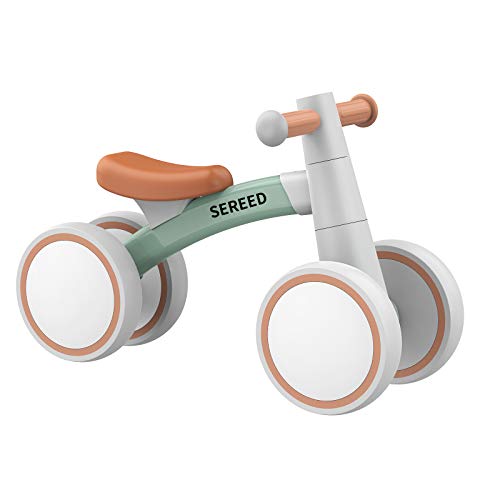
Best Lightweight First Balance Bike – SEREED Baby Balance Bike
The SEREED Baby Balance Bike is a lightweight first ride for children ages 12 to 24 months. While it is not wooden, its compact aluminum-alloy frame, enclosed wheels, and limited steering angle provide features worth considering alongside wooden balance bikes for very young beginners.
Best For: Lightweight indoor or outdoor practice for beginner toddlers around their first birthday.
Pros:
- Weighs about 3.5 pounds, making it easy for children and adults to carry.
- Fully widened closed wheels help keep feet from being clamped.
- A 135-degree turning limit and gravity steering are designed to reduce tipping risk.
- Adjustable-free, supportive features include a soft seat, non-slip handle, and floor-friendly EVA wheels.
Cons:
- It has no brake, so children stop by putting their feet down.
- The small 6.7-inch wheels and 12–24-month recommendation limit its long-term use.
- Its aluminum frame does not provide the wooden construction some buyers specifically seek.
This model stands out for portability and beginner-focused safety features. It is a sensible alternative when low weight and easy handling matter more than a wood frame.
Best Convertible Wooden Balance Bike – Kinderfeets Tiny Tot 2-in-1
The Kinderfeets Tiny Tot is a true wooden option for families seeking a balance bike that can begin as a tricycle. Designed for toddlers 12 to 24 months and up, it converts from three wheels to two, giving children a gradual path toward balance-bike riding.
Best For: Tiny toddlers who need a convertible wooden ride with an adjustable seat and stable starting configuration.
Pros:
- Converts from a tricycle to a two-wheel balance bike as riding skills develop.
- Adjustable cushioned seat fits heights from 8.5 to 11 inches.
- Airless 7-inch tires, a wide base, and padded grips support comfortable cruising.
- Made with birchwood, water-based lacquer, and non-toxic handlebar grips.
Cons:
- Its 44-pound maximum capacity and toddler sizing limit use as children grow.
- The tricycle-to-balance-bike conversion requires changing the configuration.
- It is intended for early riders rather than older children needing a larger bike.
Among wooden balance bikes, this is one of the more adaptable choices for starting early. The conversion feature makes it useful for building confidence gradually without immediately requiring two-wheel balance.
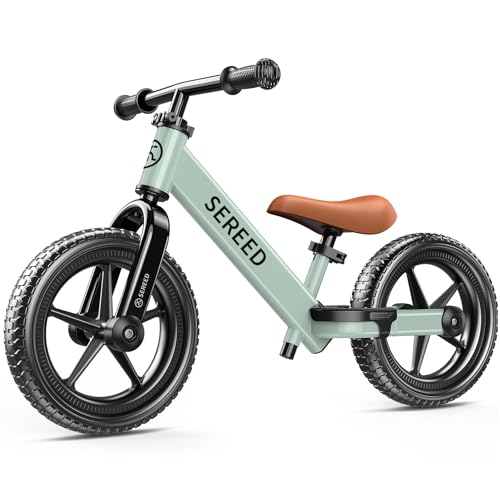
Adjustable Everyday Pick – SEREED Toddler Balance Bike
The SEREED toddler balance bike is a practical option for young riders who need a sturdy, adjustable bike for indoor and outdoor practice. Its no-pedal design supports early balance and steering skills, while the tool-free adjustments help accommodate growth.
Best For: Toddlers who want a lightweight, adjustable first bike for general terrain and family outings.
Pros:
- Adjustable seat and handlebars accommodate growing children without tools.
- Wide carbon-steel frame supports up to 110 pounds.
- Flat-free, anti-slip EVA tires are quiet and suitable for indoor or outdoor use.
- Lightweight design, customizable plate, and stickers add convenience and fun.
Cons:
- It has no brakes, so children must control speed with their feet.
- The carbon-steel frame is less aligned with shoppers specifically seeking a wooden balance bike.
Choose this model if adjustability, portability, and durable tires matter more to you than a wood frame. Its wide age range and straightforward design make it a flexible starter option.
Best Convertible Wooden Design – Kinderfeets Tiny Tot 2-in-1
The Kinderfeets Tiny Tot is a wooden balance bike that starts as a tricycle and converts to a two-wheel balance bike. Its compact sizing, adjustable cushioned seat, and stable early configuration make it especially approachable for very young riders.
Best For: Children ages 12 to 24 months who need a gentle transition from three wheels to two.
Pros:
- Converts from a tricycle to a balance bike as riding skills develop.
- Handmade birchwood construction uses water-based lacquers and nontoxic grips.
- Adjustable cushioned seat, wide base, and airless tires support comfort and stability.
- Safety tested for European, North American, and Australian markets.
Cons:
- Its 44-pound weight capacity limits usefulness as children grow.
- It is designed for tiny tots and may feel too small for older preschoolers.
This is the strongest fit for families specifically seeking wooden balance bikes with a convertible starting configuration. The tricycle mode offers a lower-pressure introduction before a child moves to two wheels.
Best Four-Wheel Starter – Retrospec Cricket Baby Balance Bike
The Retrospec Cricket is a four-wheel baby balance bike designed for early walkers ages 12 to 24 months. Its feet-to-floor setup lets toddlers walk, scoot, and ride while stable wheels, a soft seat, and limited steering help support controlled practice.
Best For: Early walkers who need a stable first ride-on toy for indoor and outdoor play.
Pros:
- Four wheels help prevent tipping while toddlers build balance and coordination.
- Non-slip, quiet wheels protect indoor floors and grip outdoor surfaces.
- Soft handlebars, a cushioned seat, and steering limit support comfort and control.
- Arrives 95% assembled and weighs only 4 pounds for easy carrying.
Cons:
- The 44-pound capacity and 12-to-24-month recommendation limit its longer-term use.
- Its plastic construction does not suit shoppers specifically looking for wooden balance bikes.
For a first birthday gift or an especially cautious beginner, the Cricket prioritizes stability and easy handling over a traditional two-wheel balance-bike experience. It is a convenient choice for short practice sessions at home or on the go.
Classic Pick – Janod Wooden Scooter Balance Bike
The Janod Wooden Scooter Balance Bike is a vintage-style option for families looking for wooden balance bikes for children ages 3 to 5. Its pedal-free design helps beginners practice balance, while the adjustable seat accommodates growing riders.
Best For: Young beginners who want a stylish wooden bike for indoor and outdoor use.
Pros:
- Adjustable seat ranges from 12.6 to 13.4 inches.
- Ergonomic rubber handles are designed for small hands.
- Inflatable tires are suitable for indoor and outdoor riding.
- Meets European and American safety standards.
Cons:
- Recommended age starts at 3 years, so it may not suit younger toddlers.
- Inflatable tires may require more upkeep than airless tires.
- No manufacturer warranty is listed.
Choose this Janod model if design, adjustable fit, and versatile tires matter most. It offers a classic wooden-bike look with practical features for early balance practice.
Eco-Friendly Choice – Kinderfeets Sustainable Wooden Balance Bike
The Kinderfeets Balance Bike is a thoughtfully designed choice among wooden balance bikes, combining a low step-through frame with a broad adjustable seat range. Its airless tires and lightweight construction make it practical for beginner riders and everyday play.
Best For: Families prioritizing sustainable materials, ergonomic design, and a generous fit for toddlers.
Pros:
- Low step-through frame supports comfortable mounting and posture.
- Cushioned seat adjusts from 12 to 15 inches.
- Airless EVA tires never need inflation.
- Uses birch wood, non-toxic grips, and water-based inks in its packaging.
Cons:
- Maximum recommended rider weight is 65 pounds.
- Designed primarily for paved roads.
- Warranty coverage is limited to 30 days against manufacturer defects.
With its ergonomic frame, wide seat adjustment, and sustainable construction, this Kinderfeets bike is a strong option for families seeking a durable beginner platform with low tire maintenance.
Budget-Friendly Design – Wooden Motorcycle-Style Balance Bike
This motorcycle-inspired wooden balance bike is a simple beginner model for indoor and backyard play. Its smooth natural-wood structure, non-inflatable rubber wheels, and included stand make it an appealing option for children developing early balance and coordination.
Best For: Beginners who want a lightweight, easy-care bike with a playful motorcycle look.
Pros:
- Natural wooden frame has a smooth finish and non-toxic materials.
- Rubber wheels never need inflation and help protect flooring.
- Lightweight 3.5-kilogram design is easy to handle.
- Includes a wood bike stand and a one-year warranty.
Cons:
- No brake is included.
- No adjustable seat or rider weight limit is listed.
- Small size may offer less room for growth than adjustable models.
This model suits shoppers focused on straightforward indoor and backyard riding. Its maintenance-free wheels and distinctive styling are useful, though buyers wanting a customizable fit may prefer an adjustable-seat alternative.
How We Picked the Best Wooden Balance Bikes
We focused on the features that matter most for early riders: appropriate age and weight ranges, seat adjustability, stability, wheel design, construction, and ease of use. The selection includes four-wheel ride-on models for beginners, convertible designs that can change as a child develops, and traditional two-wheel balance bikes for children ready to practice steering and balance.
We also considered practical ownership details, including puncture-proof tires, rubberized wheels, rounded wooden components, portability, and whether the design can accommodate growth. Always confirm the manufacturer’s measurements and safety guidance before buying.
Quick Comparison
| Best For | Look For | Recommended Style |
|---|---|---|
| First-time riders | Four wheels, low seat, stable base | Ride-on balance bike |
| Growing toddlers | Adjustable seat and convertible frame | 2-in-1 tricycle or balance bike |
| Independent balance practice | Two wheels, light frame, responsive steering | Traditional balance bike |
| Indoor use | Quiet, non-marking rubberized wheels | Wooden ride-on model |
| Outdoor convenience | Puncture-proof tires and durable finish | Adjustable balance bike |
Key Buying Factors for Wooden Balance Bikes
Age, Size, and Seat Height
Age labels are useful starting points, but inseam and seat height are more important. A child should be able to place both feet flat on the floor while seated, with slightly bent knees. This position helps children stop confidently and reduces frustration during early practice.
Stability and Wheel Layout
Four-wheel designs provide the most support for children who are still learning to sit, steer, and push. Two-wheel models offer a more direct balance-bike experience but require greater coordination. Choose the least challenging design that still suits your child’s current abilities.
Adjustability and Growth
An adjustable seat can extend useful life and maintain a comfortable riding position as your child grows. Convertible models may begin as tricycles or ride-on toys before becoming balance bikes, making them useful for families who want one product to cover several stages.
Construction and Tires
Look for smooth, rounded surfaces, secure hardware, and a finish designed for regular handling. Rubberized or puncture-proof tires are quieter and reduce maintenance, while durable wheels are especially useful for outdoor paths and uneven surfaces.
Safety and Supervision
Use the bike only on appropriate surfaces and supervise every ride. A properly fitted helmet is essential, even for low-speed indoor or driveway use. Avoid roads, stairs, steep slopes, and areas with vehicle traffic.
Who Should Buy Which Wooden Balance Bikes?
Choose a four-wheel wooden balance bike for a young toddler taking a first ride-on step. A convertible Kinderfeets-style design suits families that want a tricycle and balance bike in one. For children already comfortable pushing and steering, a lightweight two-wheel model offers more room to develop balance. If quiet indoor play is the priority, select rubberized wheels and a compact frame; for frequent outdoor use, prioritize puncture-proof tires, sturdy construction, and an adjustable seat.